
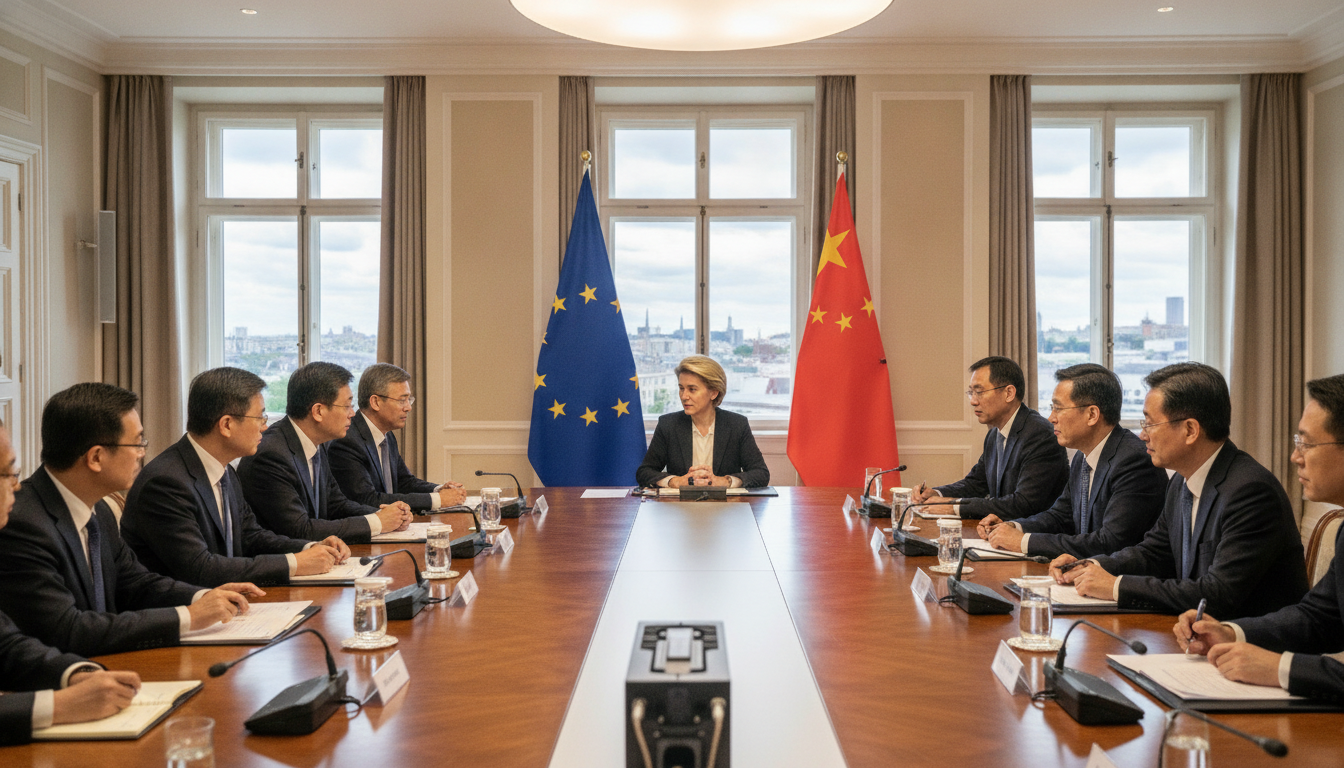
EU-China trade tensions push Brussels to open ministerial talks and weigh new trade-defence tools
EU-China trade tensions prompt Brussels to launch a ministerial dialogue while considering trade-defence and industrial policy measures to curb Beijing’s widening surplus and market barriers.
The European Union and China have agreed to start a ministerial-level dialogue aimed at addressing longstanding trade imbalances and recent Chinese export controls, deepening EU-China trade tensions and prompting Brussels to demand tangible outcomes. EU officials say the bloc faces an increasingly large goods surplus in its trade with China and persistent market access problems that they describe as structurally unsustainable. European leaders are now weighing a package of trade-defence instruments and industrial-policy measures to protect strategic sectors and press for fairer rules. The new talks are intended to move beyond rhetoric and produce measurable changes in how goods, technology and investments flow between the two economies.
Details of the ministerial dialogue
Brussels has proposed a focused, ministerial-level channel to tackle specific frictions, rather than leaving all issues to routine diplomatic contacts. The discussions will target export controls, market access barriers, regulatory reciprocity and state support that EU officials say distort competition. European diplomats stress the dialogue will be results-driven, with follow-up steps tied to compliance and verified changes in Chinese policy where possible. Officials hope the format will allow quicker escalation to dispute settlement if bilateral progress stalls.
Brussels’ concerns over export controls and market access
EU authorities have spotlighted recent Chinese export controls as a growing problem for European exporters and supply chains. According to EU statements, these measures have affected inputs and technologies critical to European manufacturing and energy transition projects. The bloc argues that selective restrictions create an uneven playing field and complicate long-term investment decisions by European firms. Brussels has said these controls, combined with difficulties in obtaining market access across services and procurement, form the core of the structural imbalance.
Consideration of new trade-defence and industrial policies
European capitals are reviewing several policy options to respond, including more robust trade-defence instruments, targeted subsidies for strategic industries, and tightened foreign investment screening. Proposals under discussion range from quicker anti-subsidy and anti-dumping procedures to measures that would safeguard supply chains for semiconductors, batteries and critical raw materials. Officials caution that any move will aim to stay within World Trade Organization rules while providing the EU with greater flexibility to counter unfair competition. The debate reflects a shift toward combining trade law enforcement with industrial policy to lower strategic vulnerabilities.
Potential economic and diplomatic consequences
Policymakers acknowledge a trade-off between protecting strategic industries and preserving broader economic ties with China, the EU’s second-largest trading partner. Increased defensive measures could prompt retaliatory steps from Beijing and complicate cooperation on issues such as climate change and global governance. European business groups warn that abrupt policy changes risk disrupting supply chains and raising costs for consumers and manufacturers alike. Diplomats say the ministerial dialogue is designed to manage those risks by pursuing negotiated fixes before unilateral escalation.
Reactions from industry and member states
European manufacturers and service providers have urged clarity and predictability, asking Brussels to pair enforcement with incentives for diversification and resilience. Some member states favor swift, firm responses to perceived market distortions, while others counsel caution to avoid harming investment flows. National leaders are expected to examine proposed tools in the coming weeks, balancing domestic industrial priorities against export-dependent sectors. The Commission will likely present technical options to EU capitals for approval or amendment.
Next steps and benchmarks for progress
Brussels has indicated it will set concrete deliverables for the dialogue, such as timelines for easing specific export controls and commitments on procurement access or subsidy transparency. Officials say periodic reviews and public reporting could be used to measure progress and determine whether to escalate to trade remedies. The EU also plans to keep coordination channels open with like-minded partners that face similar issues, aiming for a more unified international response. For now, the focus is on creating a mechanism that yields verifiable improvements rather than open-ended consultations.
The new ministerial framework marks a notable intensification of efforts to manage EU-China trade tensions through direct, high-level engagement backed by a readiness to deploy policy tools if negotiations do not deliver.

