
Nintendo Switch 2 launch sparks nationwide scramble as resellers strain reservation systems
Nintendo Switch 2 launch prompted long lines and overwhelmed reservation systems, as scalpers and high demand disrupted retail queues, parking bookings and online sales nationwide.
Japan’s long-awaited Nintendo Switch 2 launch on June 5, 2025 set off a chain of disruptions that exposed weaknesses in both physical retail and digital reservation systems. On the console’s release day shoppers formed orderly queues outside stores in Osaka and Tokyo, but many customers reported that limited allocations and resale activity quickly exhausted supply. The launch highlighted how high-demand product drops can ripple through unrelated services, from airport parking reservations to fast-food outlets, complicating access for ordinary consumers.
Launch-Day scenes in Osaka and other cities
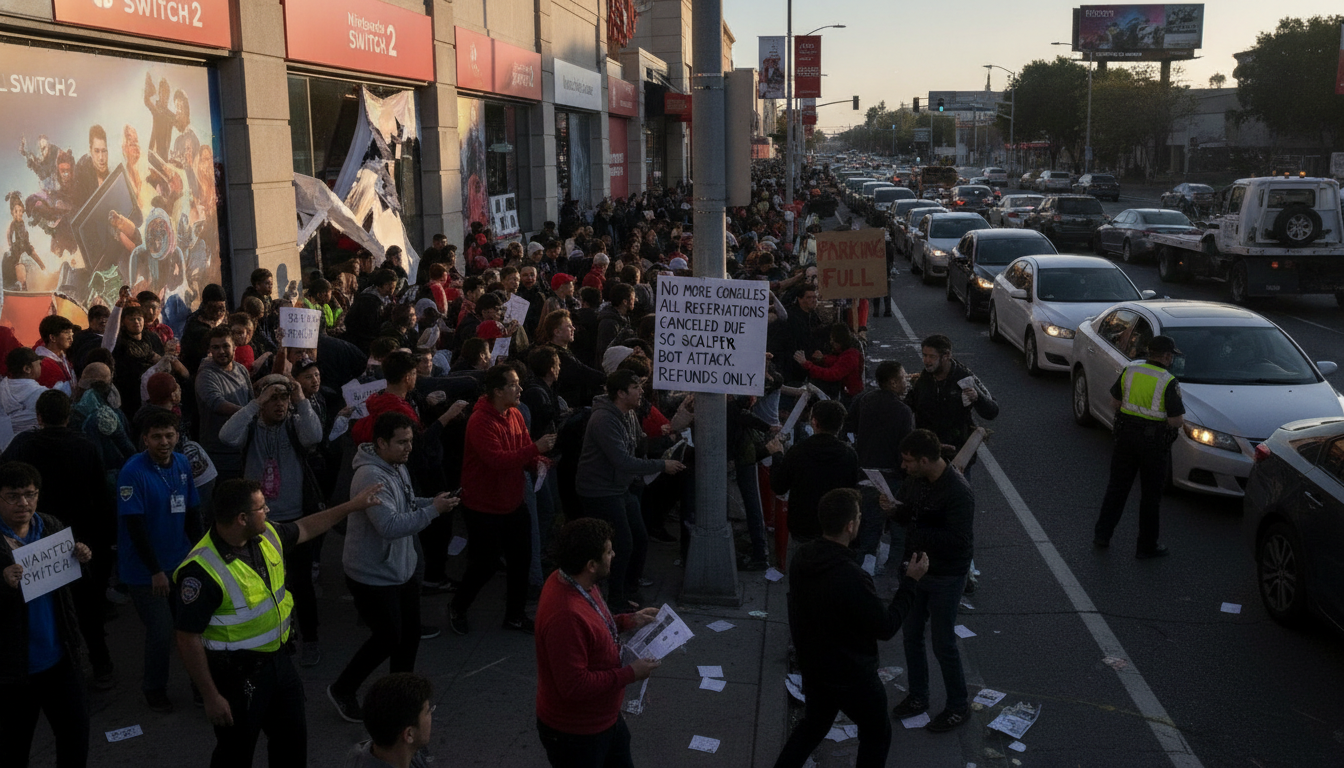
Shops selling the Nintendo Switch 2 displayed signs marking waiting positions and directed customers into numbered queues to manage crowds. Photographs from Osaka captured long lines on the morning of June 5, 2025 as shoppers gathered at storefronts and electronic retailers opened for the release.
Retail staff said they implemented on-site controls to keep order, including staggered entry and limits on the number of units sold per customer. Even with those steps, many buyers left disappointed after stock ran out within hours and secondary-market offers began appearing online.
Reservation systems jammed at Haneda and beyond
The console rush coincided with sharp spikes in demand for other services tied to timed reservations, notably airport parking connected to Haneda Airport. Observers at a multi-storey parking facility reported a near-full reserved floor on a weekday in late May, with frequent users saying slots are gone almost immediately after release.
Business travelers and local residents described a new normal of persistent “grab and hold” booking behavior, leaving many customers reliant on last-minute cancellations or waiting lists. The congestion exposed how a surge in consumer activity around one headline product can cascade, straining systems not built for sudden, concentrated demand.
Resellers and the growth of secondary markets
Resellers—often using automated purchasing tools and third-party seller accounts—quickly became a focal point in coverage of the Switch 2 launch. These actors capitalise on scarcity by snapping up initial allocations and listing them at premiums on resale platforms, inflating prices and redirecting supply away from retail buyers.
Industry analysts note that when resale margins are steep, the incentive for coordinated buying intensifies, prompting more sophisticated tactics such as multiple-location pickup networks and rapid rerouting of online orders through third-party logistics. The practice erodes the intended customer experience of launch events and undermines retailers’ stock-management strategies.
Retailer countermeasures and consumer pushback
Faced with heavy demand and secondary-market activity, many retailers tightened purchase rules, requiring identification, limiting per-person quantities, or restricting sales to in-store shoppers only. Some chains also introduced digital queuing systems and lottery-style allocations to give wider swaths of customers a fair chance.
Consumers have responded with mixed reactions: some accept the new rules as necessary to curb scalpers, while others criticize the inconvenience and continued presence of resold units online. The debate has spurred calls for clearer industry-wide practices to prevent circumvention of purchase limits.
Technology and fraud concerns linked to online orders
Beyond physical queues, the launch exposed vulnerabilities in e-commerce ecosystems. Reports of accounts being hijacked and purchases rerouted between marketplaces have added another layer of frustration for buyers trying to secure a genuine unit. Security specialists warn that high-profile launches are prime targets for fraud and account-takeover schemes.
Platforms are under pressure to bolster anti-bot protections, strengthen user authentication, and improve detection of suspicious seller behavior. Without these upgrades, consumers risk being outmaneuvered not only by willing resellers but by sophisticated cyber-enabled operations.
Policy questions and potential regulatory responses
The widespread impact of the Nintendo Switch 2 launch has renewed discussion about whether more active regulatory oversight is needed to limit scalping and protect consumers during high-demand sales. Lawmakers and consumer advocates argue for measures such as clearer resale disclosures, limits on bulk purchases by single entities, and tougher penalties for automated buying bots.
Retail associations have also started to explore voluntary standards, including coordinated release timing, retailer verification for purchases, and cross-platform cooperation to identify abusive sellers. Whether such steps will meaningfully curb resale-driven shortages remains an open question.
The Nintendo Switch 2 launch illuminated how a single product release can cascade through retail, logistics and digital platforms, forcing both businesses and consumers to adapt to intensified demand dynamics. As technology and resale markets evolve, so too will the strategies required to ensure fair access and preserve the intended spirit of consumer product launches.

