
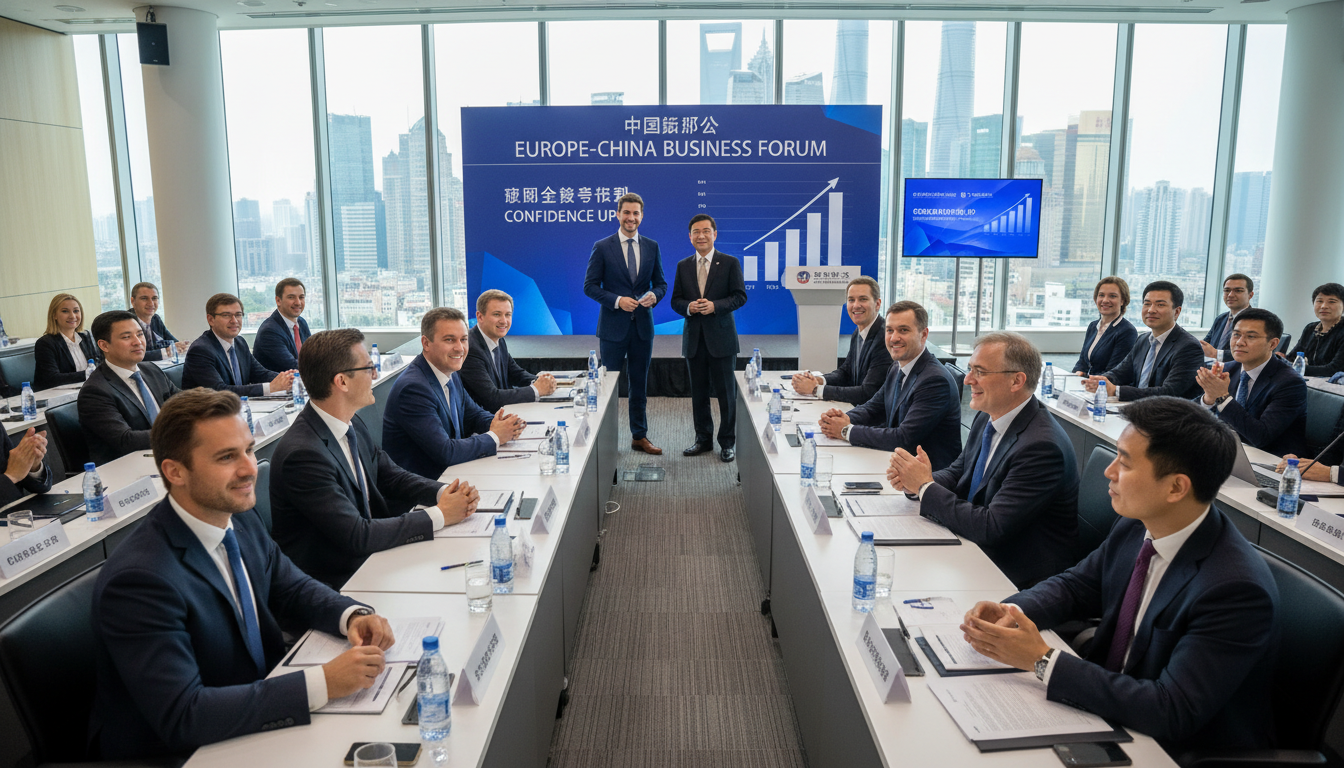
European Business Confidence in China Rebounds After Record Lows, Survey Shows
Survey: European business confidence in China recovers from record lows last year, aided by economic resilience, but geopolitical and regulatory risks persist.
SHANGHAI — European business confidence in China has begun to recover after plunging to record lows across several measures last year, a recent survey of companies operating in the country found. The survey cited the resilience of China’s economy amid global volatility as a key factor bolstering sentiment, even as respondents signalled new sources of uncertainty. Industry observers said the mixed signals reflect a pragmatic recalibration by firms weighing opportunity against risk.
Survey points to improvement after steep decline
Many European firms reported an uptick in expectations for business conditions in China compared with the trough recorded across multiple metrics last year. Respondents attributed the improvement to steadier domestic demand and a return of some external trade flows, reversing part of a pessimistic mood that dampened investment plans previously.
The survey, conducted among a range of European companies with operations in China, showed that confidence remains fragile and uneven across sectors. While export-oriented manufacturers and consumer-facing firms noted specific gains, others cited persistent challenges that temper longer-term optimism.
Economic resilience cushions global shocks
Companies credited China’s capacity to absorb external shocks — including fluctuating global demand and supply-chain disruptions — with helping restore a degree of confidence. Policy moves aimed at stabilising growth, along with pockets of stronger consumer spending, were commonly referenced as stabilising influences.
Analysts emphasised that resilience does not equate to full recovery, however, and that structural issues such as weak property-sector demand and uneven regional activity continue to constrain the pace of rebound. Firms said they are monitoring these domestic dynamics closely when planning capacity and hiring.
Manufacturing signals and regional activity
On the factory floor, some manufacturers reported steadier order books and fewer abrupt production interruptions than in the previous year. Reuters imagery of an assembly line in Guangdong underscored the ongoing role of southern manufacturing hubs in supporting trade and supply chains for both domestic and export markets.
Nonetheless, respondents noted that the recovery in manufacturing is sector-specific and that global demand shifts, particularly in electronics and automotive components, have produced winners and losers. Companies with diversified customer bases and flexible supply chains appeared better positioned to benefit from the improving backdrop.
New tensions and regulatory headwinds
Despite the brighter near-term tone, firms also flagged fresh tensions that could undermine confidence going forward. These concerns included heightened geopolitical frictions, evolving regulatory scrutiny, and an unpredictable external policy environment that can quickly alter investment calculus.
Executives told survey organisers that increased compliance requirements and occasional policy shifts at the local level add to the complexity of operating in China. Such factors have prompted some companies to slow decision-making on large capital projects while they reassess risk management and contingency planning.
Strategic adjustments by European firms
Faced with a mixed landscape, many European companies are recalibrating strategies rather than fully reversing earlier pullbacks. Common approaches include prioritising core businesses, adopting more flexible production footprints, and selectively scaling local partnerships to navigate regulatory and market complexities.
Investment intentions showed cautious improvement, with more companies signalling readiness to pursue measured expansions or renew previously paused projects. Several firms emphasised a focus on value-added activities and higher-margin segments as ways to secure returns amid ongoing uncertainty.
Implications for trade and investment flows
The partial recovery in sentiment may translate into steadier trade flows and a resumption of some investment projects, supporting bilateral commercial ties. However, the persistence of geopolitical risks and regulatory unpredictability suggests any rebound could be uneven and susceptible to rapid changes in the external environment.
Policymakers on both sides of the relationship may watch business signals closely, as improved confidence among European companies could support calls for enhanced economic dialogue and clearer regulatory frameworks. Business groups and industry associations are likely to press for transparency and predictable rules to sustain the recovery.
The survey’s results offer a tempered note of optimism: European firms see opportunity in China’s resilient economic backdrop but remain wary of a range of risks that could quickly erode gains. As companies balance reopening investment plans with new risk-mitigation measures, the coming months will be telling for whether the improved sentiment translates into sustained expansion and deeper commercial engagement.

