
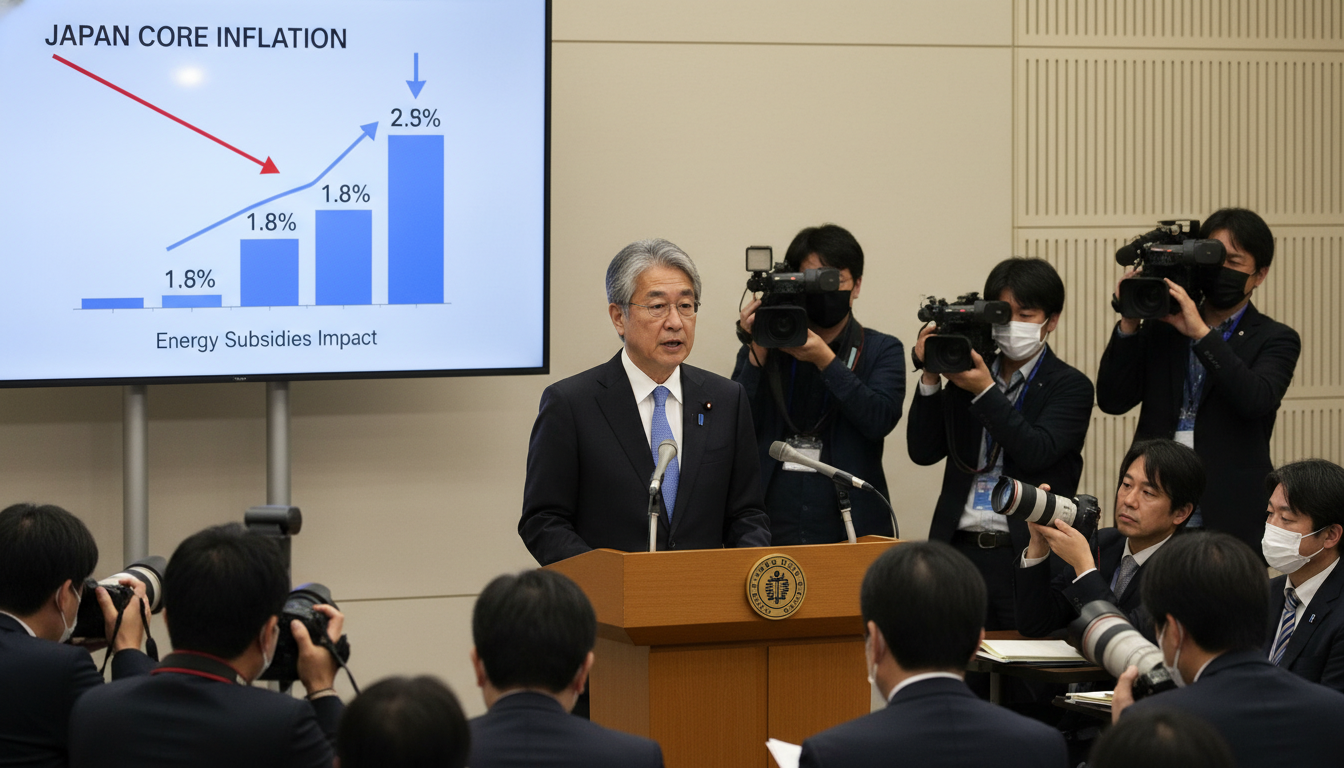
Japan core inflation stays below 2% as energy subsidies temper price gains
Tokyo reports core CPI rose 1.8% in March, underlining effects of government subsidies and global energy shifts.
March figures show 1.8% core CPI rise
Japan’s core inflation rate rose 1.8% in March, keeping it below the Bank of Japan’s 2% target for a second consecutive month, government data showed on Friday.
The headline pace reflects continued upward pressure on consumer prices but suggests the underlying momentum remains moderate compared with many other advanced economies.
The March outcome was driven by a mix of higher costs in some goods and services and targeted policy measures that have blunted energy-related increases.
Officials described the numbers as indicating that inflation is elevated but not yet firmly entrenched at the central bank’s target level.
Energy subsidies limited headline pressure
The government has expanded subsidies intended to shield households from higher fuel and utility bills, a move that analysts say materially restrained headline inflation.
Those measures reduced the pass-through of higher global energy costs to domestic consumer prices, lowering the recorded year-on-year increase in the consumer price index.
Subsidies were aimed at easing the immediate burden on households and keeping core inflation from spiking while broader price adjustments occur in the economy.
Policymakers face a trade-off between short-term relief and ensuring that temporary supports do not obscure underlying inflation trends that monetary authorities need to monitor.
Middle East conflict affected energy markets but impact was muted domestically
Rising tensions and supply concerns in the Middle East pushed international energy prices higher in recent months, creating upside risks for Japan’s import-dependent economy.
However, the direct effect on domestic inflation was cushioned by the subsidies and by retail pricing adjustments that unfolded more gradually than global spot movements.
Imported energy remains a key driver of Japan’s inflationary environment, and any sustained spike abroad could feed through to consumer prices if fiscal supports are withdrawn.
Analysts caution that while subsidies can buy time, they do not eliminate the exposure that a large importer like Japan has to volatile international commodity markets.
Household spending and business responses
Consumers have reported mixed responses to higher prices, cutting back on discretionary spending in some sectors while absorbing increased costs for essentials.
Retailers and service providers have navigated a delicate balance between passing costs on to customers and maintaining sales volumes in a cautious demand environment.
Businesses faced higher input costs for energy-intensive production, but many have delayed price increases to preserve market share.
Such delays can compress margins for companies and may lead to staggered price adjustments that complicate the inflation outlook over coming months.
Implications for Bank of Japan policy
The persistence of core inflation below 2% complicates the Bank of Japan’s policy calculus as it weighs the timing and pace of any normalization.
With inflation elevated yet not sustainably above target, the central bank is likely to emphasize careful monitoring of wage growth, price-setting behavior, and the durability of fiscal supports.
Monetary policymakers typically look for signs that inflation expectations and wages are moving in tandem with prices before altering long-standing accommodative settings.
If subsidies are rolled back or energy prices surge further, the BOJ could face pressure to reassess its stance earlier than planners currently expect.
Outlook and risks to the inflation path
Looking ahead, Japan’s inflation trajectory will hinge on several variables, including global energy markets, domestic wage gains, and fiscal policy decisions.
Temporary measures such as subsidies reduce near-term volatility but can obscure the transmission of price pressures that inform medium-term monetary strategy.
A sustained recovery in corporate investment and stronger nominal wage growth would increase the likelihood of inflation moving sustainably closer to the 2% objective.
Conversely, renewed external shocks or weakening household demand would keep the central bank and government cautious about removing support measures.
Japan’s March core inflation figure of 1.8% underscores a fragile balance: prices are higher than in recent years, but the combination of policy intervention and external dynamics means the path to a durable 2% remains uncertain.

