
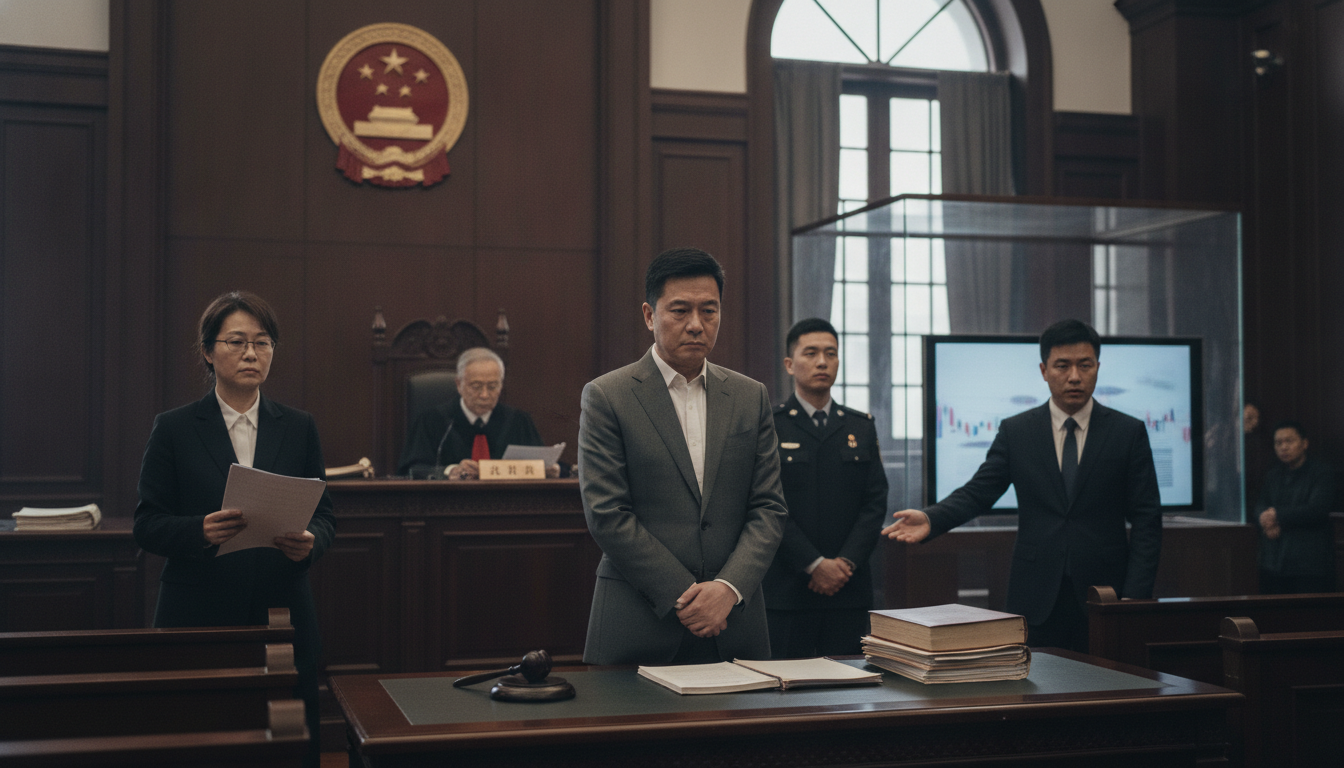
China debt crunch: Evergrande founder Hui Ka Yan jailed for life as assets are seized
China debt crunch deepens as former Evergrande chairman Hui Ka Yan is sentenced to life imprisonment and ordered to forfeit assets, marking a striking escalation in Beijing’s handling of property sector failures.
The court on August 20, 2026 sentenced Hui Ka Yan, the founder and former chairman of China Evergrande Group, to life in prison and ordered the confiscation of his assets, a ruling that underscores the severity of the China debt crunch facing the property sector. Once counted among the country’s richest individuals, Hui’s fall from prominence crystallizes years of financial distress that began with Evergrande’s collapse. The judgment signals a hardening stance by authorities toward developers whose debts have strained banks, investors and homebuyers across the country.
Court decision and penalties
A Chinese court delivered the sentence on August 20, 2026, finding Hui liable in proceedings that culminated in life imprisonment and the seizure of his personal assets. The ruling includes the transfer of specified holdings to state authorities and other measures designed to recover funds tied to the company’s collapse. Legal observers say the decision is one of the most consequential penalties in recent years for a private-sector executive in China’s property industry.
Prosecutors framed the sentence as part of efforts to hold corporate leaders accountable for systemic risks and to restore confidence among creditors and the public. For many stakeholders, the punishment serves both a punitive and deterrent purpose amid continuing fallout from one of China’s largest-ever corporate failures.
Evergrande’s collapse and its ripple effects
Evergrande’s financial distress — which became widely visible in 2021 and intensified in subsequent years — led to payment defaults, suspended projects and market panic, with repercussions for homeowners, suppliers and bondholders. The company’s problems exposed vulnerabilities in developers’ reliance on short-term funding and aggressive leverage to sustain rapid expansion. Those weaknesses have translated into stalled construction sites and mounting creditor claims that remain unresolved.
Homebuyers in dozens of cities have faced delayed deliveries, while offshore bondholders and domestic lenders have sought coordination over recoveries. The scale of Evergrande’s liabilities became a test case for how China’s financial and legal systems would manage a major corporate insolvency without triggering widespread contagion.
Market and investor implications
The life sentence and asset seizures are likely to reverberate through markets already sensitive to property-sector developments, sharpening investor focus on credit risk and corporate governance. Bond spreads for Chinese property issuers rose during past waves of distress, and the ruling may push some investors to reassess exposures to developers and related sectors. Lenders and onshore investors could press for accelerated resolutions or restructurings to limit further losses.
Analysts caution that while a high-profile conviction may satisfy public demand for accountability, it does not in itself resolve the complex operational and financial challenges facing distressed firms. Financial market participants will watch closely for any policy steps aimed at containing fallout and facilitating orderly wind-downs where necessary.
Regulatory tightening and Beijing’s strategy
Beijing’s approach since the peak of the property downturn has emphasized risk containment, deleveraging and the protection of ordinary homebuyers. The outcome in Hui’s case fits within a broader pattern of stepped-up enforcement and regulatory oversight targeting excessive borrowing and opaque financing practices in the sector. Officials have repeatedly underscored the need to separate speculative excesses from legitimate housing demand and to reinforce legal consequences for misconduct.
Policy measures implemented over recent years have included limits on developer leverage, stricter capital rules, and efforts to improve transparency in project financing. The court ruling is likely to be interpreted domestically as part of a campaign to enforce the rules more rigorously and to deter management practices that create systemic vulnerabilities.
Political and corporate governance dimensions
Beyond immediate financial consequences, Hui’s sentencing raises questions about the accountability of corporate leaders and the interplay between private enterprise and state objectives in China. Observers note that the case may reshape corporate behavior, prompting executives to prioritize compliance and risk controls to avoid similar outcomes. The decision could also influence how large, systemically important firms are supervised and how their failures are handled procedurally and publicly.
For smaller developers and the broader business community, the penalty serves as a reminder of the reputational and legal risks attendant to aggressive growth financed chiefly by debt. It may accelerate consolidation within the sector, with more solvent firms absorbing assets or completing projects under state-supervised arrangements.
Outlook for restructuring and the housing market
While the sentence marks a symbolic pivot, the material challenge remains resolving a backlog of unfinished projects, creditor claims and homeowner grievances. Authorities have several tools at their disposal, including court-led restructurings, asset transfers and targeted financial support to complete key developments. The effectiveness of these measures will determine whether the property market stabilizes and whether confidence among consumers and investors can be restored.
The China debt crunch is unlikely to disappear quickly; instead, the sector may undergo a protracted period of adjustment as regulators balance financial stability with economic growth objectives. The coming months will test the degree to which legal enforcement, market-based solutions and state intervention can combine to manage legacy risks and encourage healthier financing practices.
The sentencing of Hui Ka Yan on August 20, 2026 represents a defining moment in the history of China’s modern property boom, and it will shape policymaking and investor calculations as the country navigates the long aftermath of Evergrande’s collapse.

