
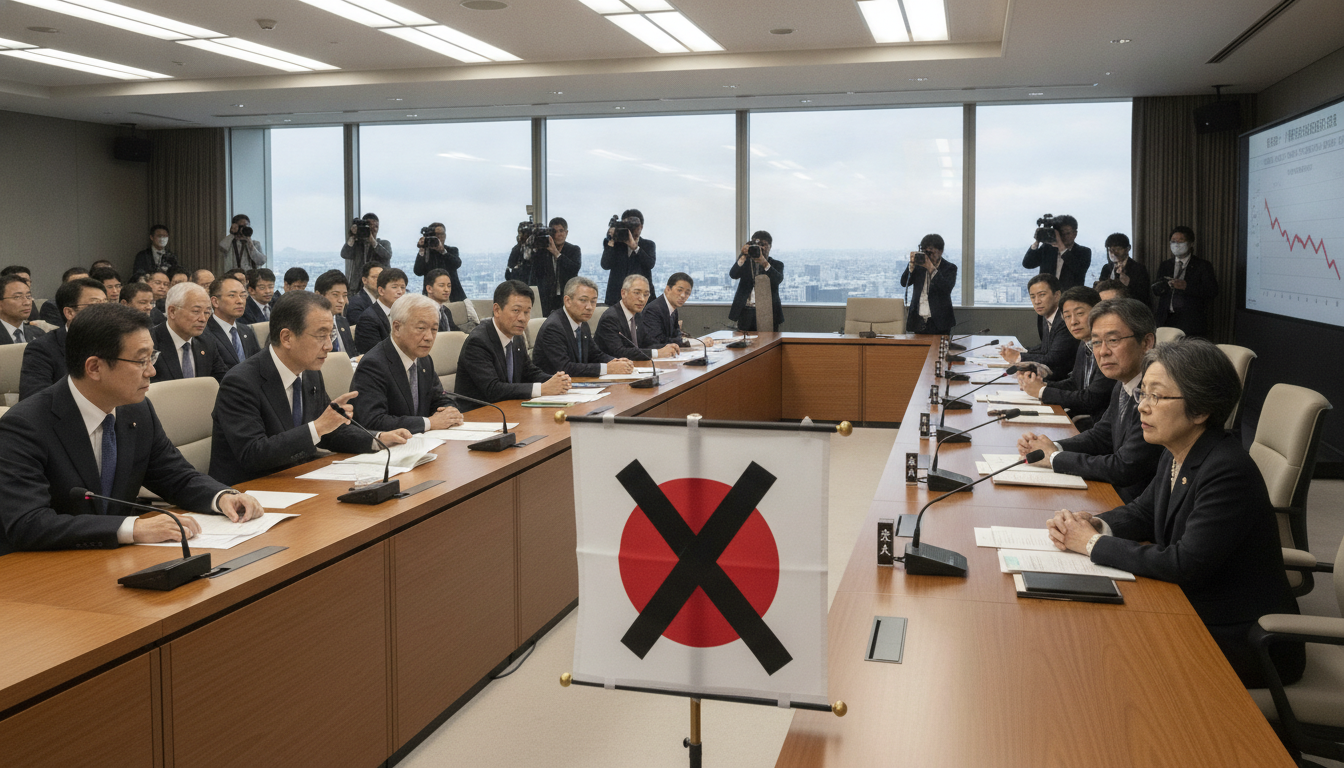
Japan Begins Diet Debate on Bill to Criminalize Flag Desecration
Lawmakers opened deliberations on June 24, 2026, over a flag desecration bill that would make damaging the Japanese national flag a punishable offense.
The Diet opened formal debate on June 24, 2026, over a proposed law to punish flag desecration, a measure the ruling Liberal Democratic Party says is intended to deter future incidents. The bill seeks to fill what backers describe as a legal gap, even though the government already prosecutes damage to foreign flags under the criminal code. Legal scholars and civil liberties advocates have raised concerns about criminalizing acts involving Japan’s own national flag.
Diet debate opens and bill aims to deter future incidents
The House of Representatives began committee-level discussion of the flag desecration bill on June 24, 2026. The measure would create a specific offense for damaging, burning or otherwise desecrating the national flag of Japan, proponents say, to prevent possible future public disorder.
Supporters within the ruling party argue that the absence of an explicit domestic statute leaves the flag without comparable legal protection and that a new law would serve as a clear deterrent. They framed the proposal as preventative legislation designed to avert acts that could inflame social tensions or provoke diplomatic incidents in the future.
Scholar: domestic-external inconsistency not a legal problem
Sonoda, an emeritus professor of Konan University who specializes in criminal law, told reporters that the cited inconsistency between treatment of foreign and domestic flags is not necessarily problematic. He explained that criminal law protects specific legal interests, and the international-protection rationale behind existing foreign-flag provisions differs from domestic symbolism.
According to Sonoda, penalties for damaging foreign flags in the criminal code are aimed at preventing escalation in international relations and safeguarding diplomatic ties. That rationale, he said, is rooted in concerns about cross-border fallout rather than a general legal obligation to compel respect for a foreign flag.
Expert warns against criminalizing symbolic offense
Sonoda cautioned that public discomfort with acts such as burning or stepping on the national flag does not automatically justify criminal punishment. He argued that criminalizing symbolic speech or protest represents a significant legal leap and risks overriding established principles of the criminal law.
He noted that the fundamentals of criminal justice emphasize culpability and proportionality, and that the creation of offenses should ordinarily respond to tangible harms or clear, demonstrable risks. Crafting a statute to preempt unspecified future acts, he said, relies on an abstract prevention rationale that may be difficult to justify under these principles.
Political rationale and civil liberties concerns
Lawmakers backing the bill frame it as a measured response to potential provocations, insisting the law would be used sparingly and mainly to deter acts that could endanger public order. They argue the statute would reaffirm the symbolic value of the national flag and align domestic protections with attitudes toward foreign flags.
Civil liberties groups and opposition parties, however, have voiced alarm over the bill’s implications for freedom of expression. Critics warn that a criminal provision aimed at flag desecration could chill legitimate protest and artistic expression, and could be applied selectively in politically sensitive circumstances. They have urged lawmakers to consider narrower measures or non-criminal responses such as administrative penalties and public education campaigns.
Differences in legal purpose between foreign and domestic protections
Legal analysts point out a key distinction: the criminal prohibition on mutilating foreign national flags is tied to the prevention of diplomatic conflict, whereas a domestic statute would primarily concern national symbolism and social norms. That divergence, experts say, raises questions about whether criminal law is the appropriate tool for enforcing respect for national symbols.
Observers also note practical enforcement questions: determining intent, proving mens rea in symbolic acts, and setting fair thresholds for what constitutes punishable damage could create legal uncertainty. Courts may be asked to balance competing rights if the bill becomes law, potentially producing precedent-setting rulings on the limits of protest.
Next steps in the Diet and likely judicial scrutiny
Deliberations in the Diet are expected to continue as committee members hear from legal experts, civil society representatives and government officials. The bill’s future will depend on the outcome of contentious committee debates, the positions of opposition parties, and possible amendments to narrow or clarify the scope of the offense.
If enacted, the statute would almost certainly prompt legal challenges that could reach higher courts, where judges would weigh statutory language against constitutional protections for expression and assembly. Such litigation could define the boundary between symbolic acts of dissent and criminal conduct in Japan.
The debate over the flag desecration bill underscores a broader national conversation about how to protect symbolic values without undermining civil liberties, and about the proper limits of criminal law as a tool of prevention.

