
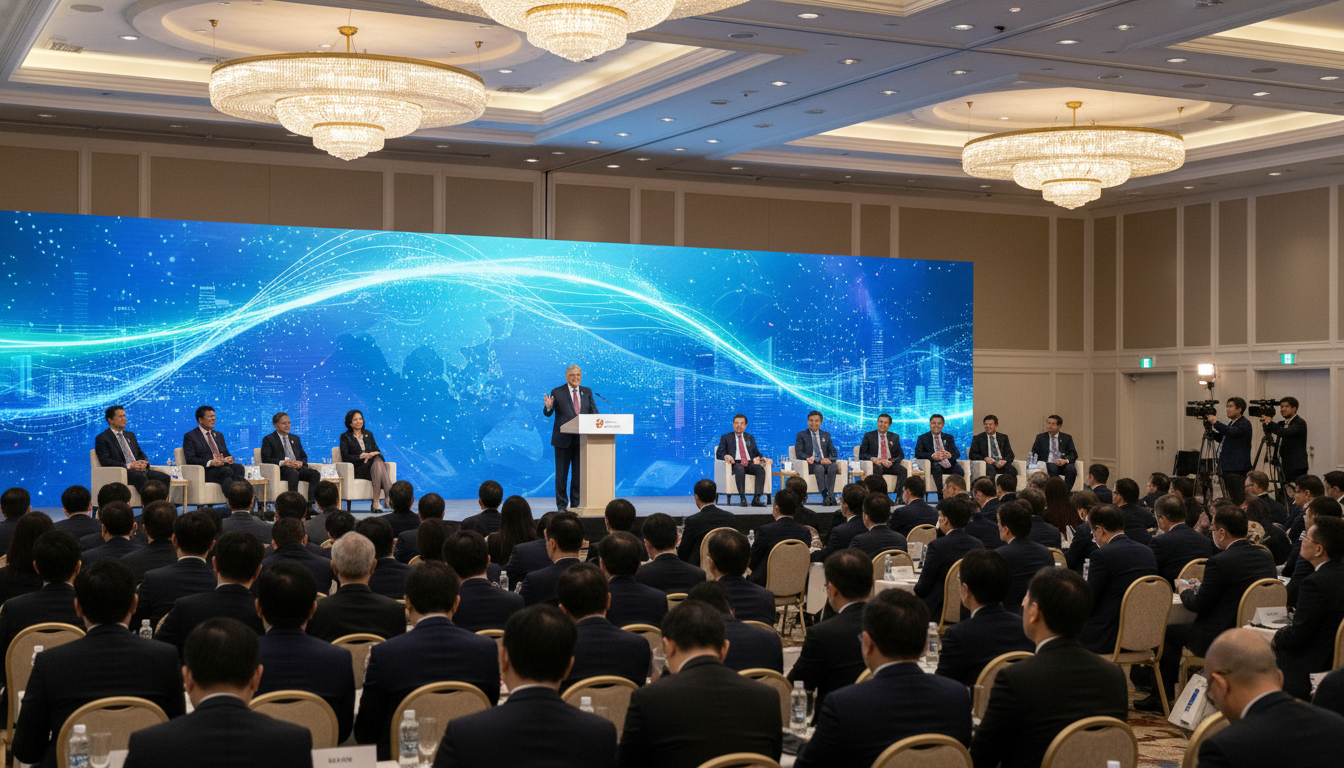
Future of Asia conference in Tokyo spotlights resilience as leaders gather June 9–10, 2026
Nikkei’s Future of Asia conference in Tokyo (June 9–10, 2026) gathers leaders including Anwar Ibrahim to discuss economic resilience and regional cooperation.
TOKYO — Leaders and senior officials from across Asia convened in Tokyo on June 9–10, 2026 for the annual Future of Asia conference, a two-day forum focused on strengthening the region’s economic and strategic resilience. Malaysian Prime Minister Anwar Ibrahim is scheduled to headline the Wednesday morning session on June 10, underscoring the event’s emphasis on high-level political engagement.
The conference brings together government ministers, business executives and policy thinkers to address a range of pressing issues from supply-chain security to digital transformation. Organisers said the gathering aims to produce practical recommendations for policymakers and the private sector amid rising geopolitical tensions.
Anwar Ibrahim to Headline June 10 Session
Anwar Ibrahim, Malaysia’s prime minister, will deliver the keynote address on the morning of June 10, according to the conference programme. His appearance is expected to draw attention to economic integration, inclusive growth and Southeast Asia’s role in managing regional instability.
Speakers and delegates will watch for policy signals from Anwar on trade, investment and cooperative frameworks that could help buffer Asia against external shocks. The prime minister’s participation reflects a wider trend of senior political figures using the Future of Asia platform to shape cross-border agendas.
Regional Ministers and Key Speakers Set to Attend
The conference roster includes senior officials such as Philippines Foreign Secretary Maria Theresa Lazaro and Thailand’s Deputy Prime Minister Sihasak Phuangketkeow among other cabinet-level participants. Their planned panels cover diplomacy, climate resilience and mechanisms for crisis response.
Organisers have invited a mix of government representatives, central bankers and corporate leaders to ensure practical dialogue between public policy and market actors. The presence of ministers from diverse economies underlines the event’s ambition to foster multilateral solutions to shared challenges.
Conference Agenda Highlights Economic and Security Resilience
Sessions across the two days focus on how economies can diversify trade links and fortify supply chains against disruption. Panelists will examine strategies for reshoring, nearshoring and collaborative stockpiling to reduce vulnerability to global shocks.
Security discussions will run in parallel, addressing the intersection of economic policy and strategic competition in the Indo-Pacific. Delegates are expected to explore ways to maintain open markets while managing risks associated with shifting great-power relations.
Business and Finance Panels Stress Supply-Chain Cooperation
Corporate and financial leaders will press for clearer pathways to secure critical inputs for technology, energy and manufacturing sectors. Many sessions are set to highlight private-sector initiatives for deeper regional integration and public-private risk-sharing mechanisms.
Investors and CEOs attending the conference will also discuss the role of digital infrastructure and green investment in strengthening long-term resilience. Panels aim to map how capital flows and regulatory harmonization can speed adoption of resilient technologies.
Tokyo’s Role as Host and Diplomatic Platform
Hosting the Future of Asia conference reinforces Tokyo’s position as a convening hub for Asian and global policy dialogue. Officials said Japan sought to use the event to advance constructive engagement and translate discussions into policy cooperation.
The choice of Tokyo as venue reflects Japan’s interest in shaping responses to supply-chain fragility and regional security dynamics. Local organisers have emphasized the conference’s role in facilitating frank, actionable exchanges among participating states.
The two-day event is slated to conclude with a set of recommendations aimed at both government and private stakeholders. Delegates are expected to outline short- and medium-term measures for strengthening resilience across trade, technology and climate adaptation.
Organisers and attendees will now turn to implementing the conference’s outcomes through bilateral talks and follow-up working groups. The Future of Asia conference in Tokyo has positioned itself as a focal point for policy ideas that governments and businesses may carry forward into formal negotiations and national strategies.

