
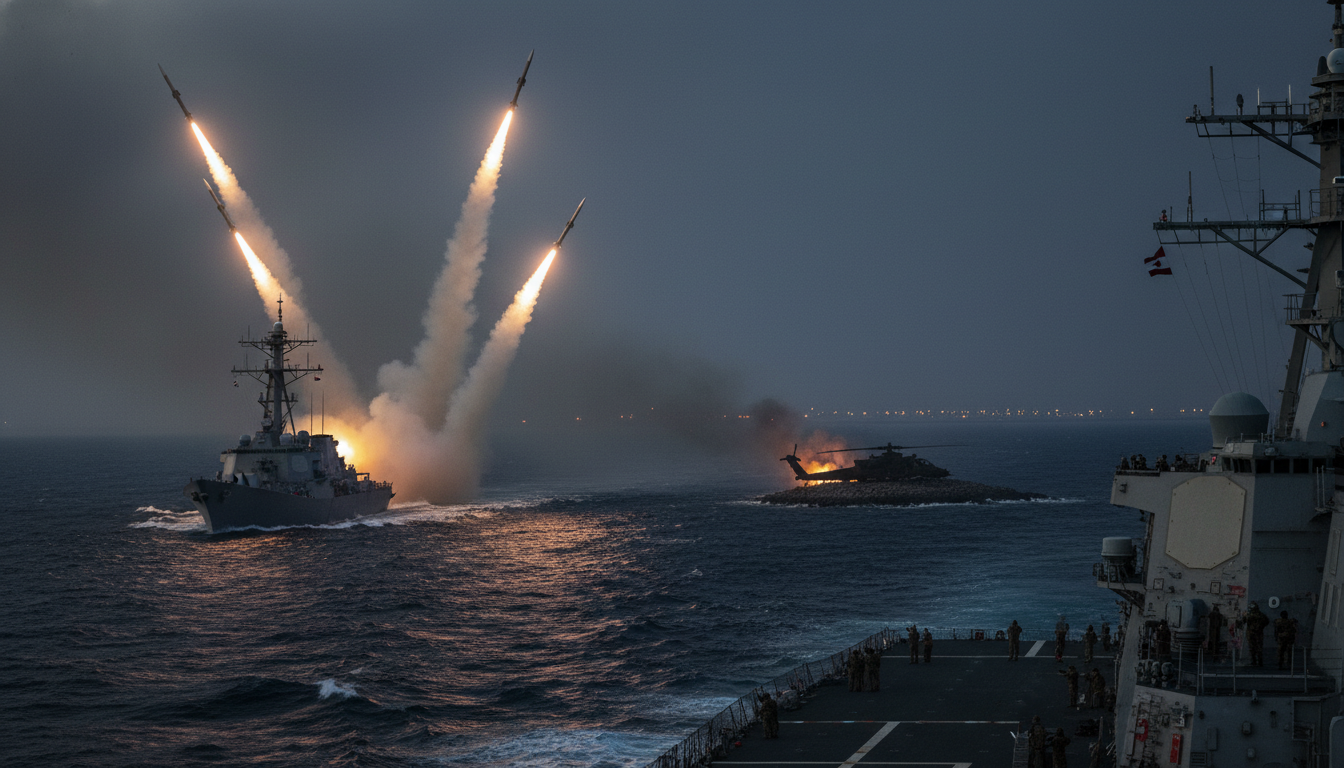
U.S. Attacks Iran after Apache Helicopter Shot Down Near Strait of Hormuz
U.S. attacks Iran in retaliation after President Trump said an Apache helicopter was shot down near the Strait of Hormuz; two crew members were rescued and are safe. (axios.com)
The United States launched strikes against Iranian targets on June 9 after President Donald Trump said Tehran shot down a U.S. Army AH-64 Apache attack helicopter the previous night while it was patrolling near the Strait of Hormuz. The president posted that the two crew members were unharmed and vowed a U.S. response, a development that quickly escalated tensions in the Gulf. (axios.com)
Trump’s statement and allegation
President Trump publicly attributed the helicopter’s loss to Iranian fire in a social media post, saying the incident occurred overnight on June 8 while the aircraft was on patrol near the strategic waterway. He said U.S. military officials had informed him of the downing and insisted that the United States “must” respond to what he described as an Iranian attack. (axios.com)
The White House and Pentagon provided limited immediate detail on the circumstances that led to the helicopter’s crash, saying the matter remained under investigation. Officials stressed the priority of the rescued crew’s safety while acknowledging the broader implications for the fragile ceasefires and diplomacy underway in the region. (washingtonpost.com)
CENTCOM confirms retaliatory strikes
U.S. Central Command (CENTCOM) announced that, beginning on June 9, U.S. forces carried out strikes against Iranian targets in what it described as self-defense and as a proportional response to the downing of the Apache. CENTCOM framed the action as a measured military reply aimed at degrading Iran’s ability to threaten international maritime traffic and U.S. personnel. (axios.com)
The strikes marked a notable escalation after weeks of maritime confrontations and exchanges of fire in and around the Strait of Hormuz, where both naval and aerial incidents have raised concern among U.S. allies and Gulf states. CENTCOM’s statement did not initially list the specific sites hit, but regional reports described explosions in Iran’s Hormozgan province and on several nearby islands. (axios.com)
Rescue operation and condition of crew
U.S. military officials said two aviators from the Apache were located and retrieved after spending time in the water, and both were reported in stable condition following the rescue. CENTCOM indicated the recovery involved unmanned systems and naval assets, underscoring growing use of remote technology in search-and-rescue operations in contested waters. (cbsnews.com)
The crew’s survival avoided immediate human casualties, but the incident nevertheless removed a degree of restraint from the situation and prompted swift political and military reactions in Washington. Officials emphasized that investigations into whether the aircraft was deliberately targeted or struck in error were ongoing. (nbcboston.com)
Iranian reports and regional reaction
Iranian state media reported that explosions were heard in parts of Hormozgan province and on Qeshm Island following the strikes, while Iranian officials accused the United States of violating Iranian sovereignty. Tehran has previously justified actions in the Gulf as defensive measures amid its wider conflict with Israel and tensions with U.S. forces. (cadenaser.com)
Regional governments and shipping interests watched the developments closely, warning that renewed kinetic exchanges risk disrupting oil shipments and could draw neighboring states into broader confrontation. International actors called for restraint even as they assessed the facts surrounding the helicopter’s downing and the proportionality of the U.S. response. (en.mercopress.com)
Context of rising maritime tensions
The incident follows a pattern of maritime escalation in early June, when U.S. forces intercepted and destroyed drones and missiles launched toward the Strait of Hormuz, and when both sides struck coastal radar and military sites. Analysts warned that repeated tit‑for‑tat actions in the narrow waterway increase the risk of miscalculation and wider conflict. (apnews.com)
Diplomatic efforts aimed at de‑escalation and a broader settlement that U.S. officials have described as within reach now face a test, as military responses can complicate negotiations and harden positions on both sides. Washington has maintained that protecting freedom of navigation and the safety of international shipping remain central objectives. (axios.com)
U.S. attacks Iran in retaliation for the Apache downing deepen uncertainty over the durability of the ceasefires and the prospects for a negotiated settlement, and they put renewed pressure on regional partners to manage the fallout while safeguarding commercial shipping and civilian safety.

