
GAC Electric Vehicles Report Deep Losses as Price War with BYD and Geely Intensifies
GAC electric vehicles have suffered significant losses amid a fierce price war with rivals BYD and Geely, with the state-owned automaker reporting steep per-unit shortfalls that have forced a re-evaluation of its EV strategy.
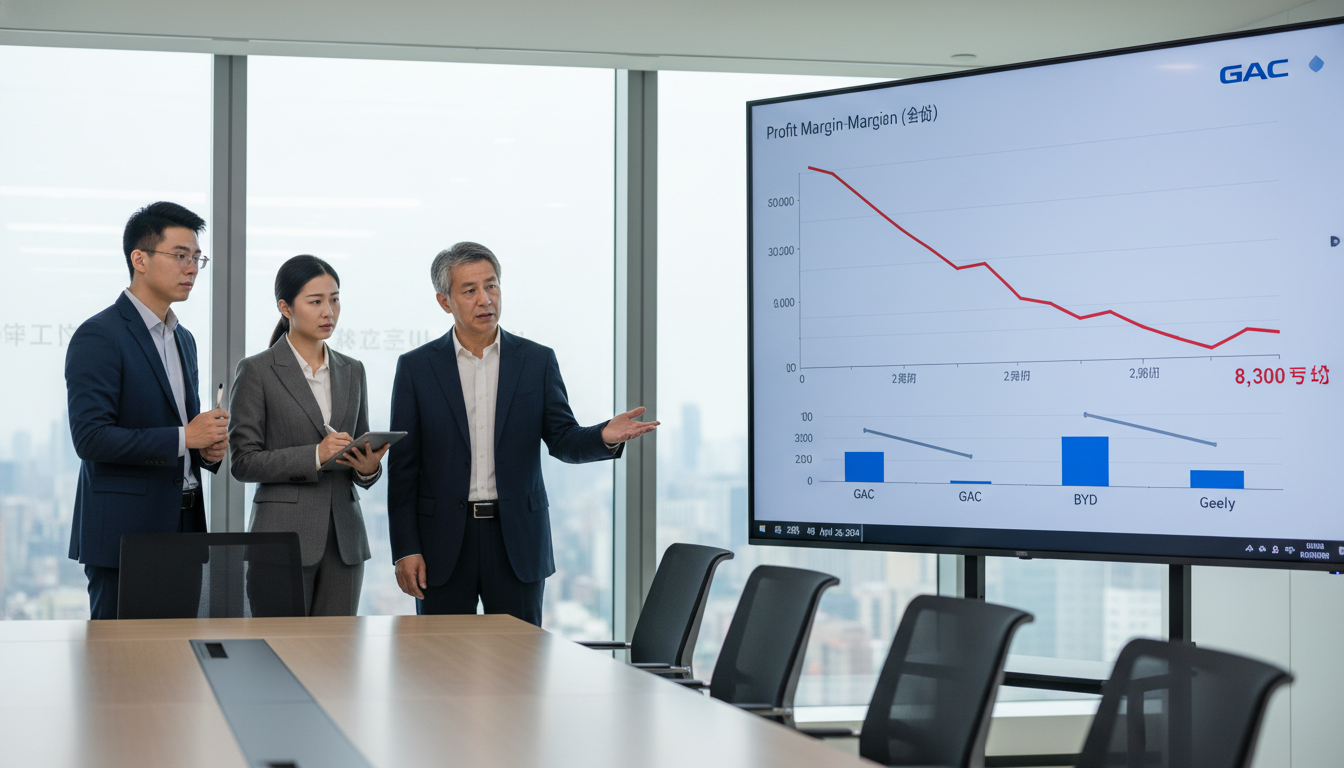
Guangzhou Automobile Group (GAC), a major Chinese state-owned automaker, has struggled in the electric vehicle market as aggressive discounting from competitors eroded margins. Company figures indicate that at one point in 2025 GAC was losing about 8,300 yuan ($1,225) on each sale of its own-brand models, a sharp contrast to earlier expectations for its Aion line. The mounting losses come as domestic rivals press forward with lower-priced models and expanded production, squeezing incumbents on price and volume.
Losses of 8,300 Yuan Per Sale
GAC disclosed that the margin pressure translated into a per-vehicle loss of approximately 8,300 yuan at a peak point during 2025, underscoring the intensity of pricing competition in China’s new energy vehicle market. That shortfall, when multiplied across unsold inventory and discounted units, created a material drag on profitability for GAC’s own-brand operations.
The figure reflects deep discounting and promotional incentives aimed at maintaining market share, rather than isolated accounting adjustments. For a state-owned enterprise with capital and legacy costs tied to larger vehicle operations, those per-unit losses have prompted internal reviews of product positioning and sales tactics.
Aion Sales Slide After Early Success
GAC’s Aion line, once touted as a promising entrant in the new energy segment, has seen sales weaken after an initial period of strong market reception. Dealers and industry observers say momentum that lifted Aion early on has slowed amid fierce competition and a crowded model mix in the mid-range EV category.
A decline in Aion deliveries amplified pressure on margins because fixed development and manufacturing costs spread over fewer units raise per-unit breakeven thresholds. The slide in sales has made it harder for GAC to defend pricing without further sacrificing profit margins or relying on state support.
Pressure from BYD and Geely’s Pricing Strategies
Market leaders such as BYD and Geely have intensified price competition with high-volume, low-priced models and frequent promotional campaigns, forcing rivals to respond. The result is a market dynamic where scale and cost discipline allow some manufacturers to sustain lower sticker prices while protecting profitability through production efficiency.
For GAC, which competes across multiple segments and joint ventures, the inability to match aggressive price points without eroding returns has been a central challenge. Industry participants note that when market leaders prioritize volume growth and scale-driven margins, smaller or legacy players face difficult trade-offs between market share and financial stability.
Dealer Strain and Inventory Pressures
Dealers for GAC’s own-brand models have reported increased pressure to move stock, leading to deeper discounts and extended financing offers to buyers. That environment elevates inventory risk and reduces average transaction prices, tightening the window for profitable sales.
Higher inventory levels also complicate forecasting and production planning, particularly for models that require specialized battery and software integration. The mismatch between production capacity and near-term demand has highlighted the vulnerability of traditional automaker supply chains when faced with rapid EV market shifts.
Strategic Choices for a State-Owned Automaker
As a state-owned enterprise, GAC faces distinct strategic options that blend commercial considerations with broader policy objectives, including employment, industrial policy and technology development. Management must weigh whether to pursue consolidation of brands, leaner product lineups, or deeper partnerships to restore margins and competitive position.
Potential responses under discussion include shifting investment toward higher-margin models, optimizing manufacturing efficiency, and enhancing after-sales services to capture recurring revenue. Any strategic pivot will need to reconcile short-term financial pressures with longer-term goals for electrification and global competitiveness.
GAC’s situation underscores a broader recalibration across China’s electric vehicle sector as incumbents and new entrants jockey for scale and profitability. The combination of aggressive pricing from market leaders, shifting consumer preferences, and rapid technological change has made clear that volume alone no longer guarantees success without careful cost management and clear brand differentiation.
Industry watchers will be watching whether GAC can stabilize the Aion brand, reduce per-unit losses, and adapt its sales and production model to a market where price competition is likely to remain intense. The coming quarters will be critical for determining whether the automaker can translate its engineering and scale advantages into a sustainable path back to profitability.

