
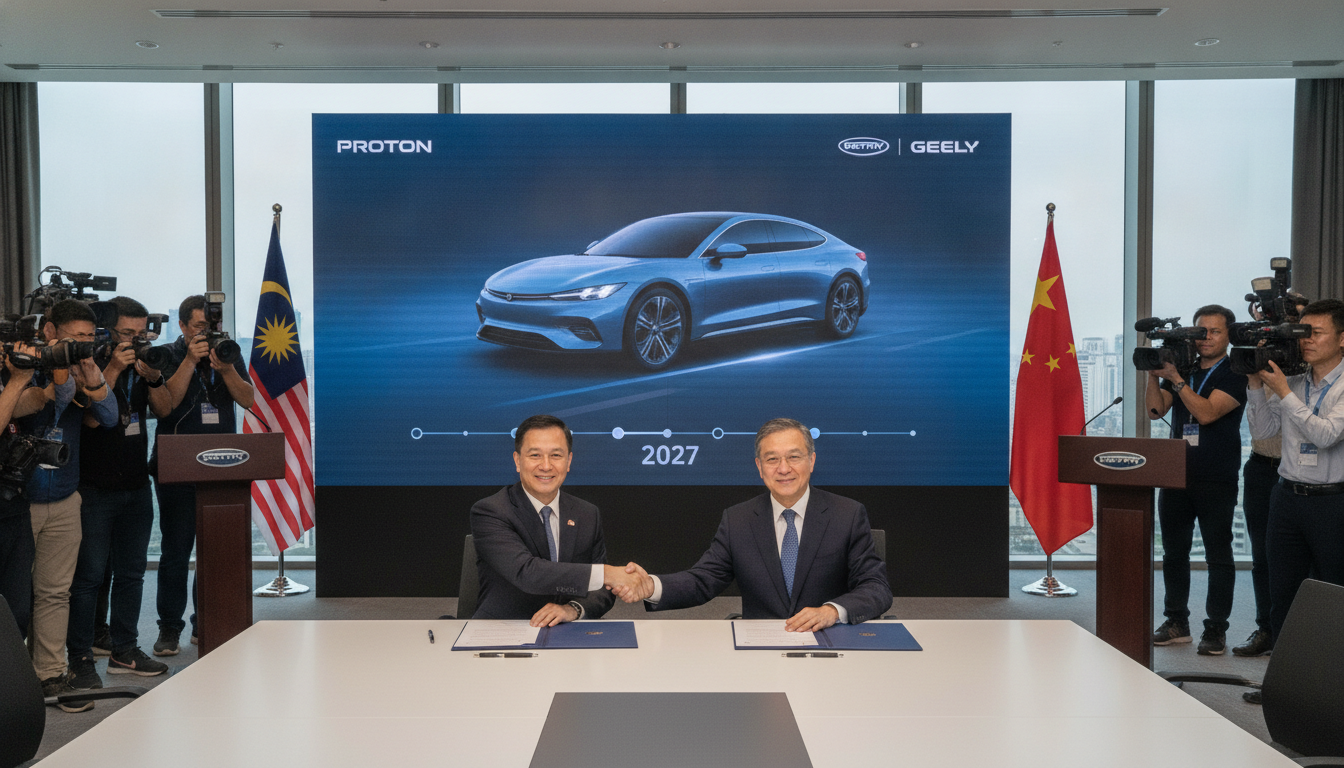
Geely to Begin Electric Vehicle Production in Malaysia, Targeting Proton Plant for Local Assembly
Geely Malaysia EV production to start as automaker eyes Proton’s Tanjung Malim facility amid rising fuel prices and shifting demand.
China’s Geely Automobile Group is preparing to manufacture electric vehicles in Malaysia, signalling plans to use partner Proton’s Tanjung Malim EV plant for local assembly as it seeks to capitalise on renewed interest in battery vehicles. The move, which follows announcements that Zeekr models will be assembled outside China for the first time, aims to shorten supply chains and improve price competitiveness in right-hand‑drive markets. (wapcar.my)
Geely’s Malaysia production plan
Geely’s strategy in Malaysia centres on leveraging Proton’s newly established EV-capable lines at the Automotive High‑Tech Valley in Tanjung Malim. Company and industry sources say the facility will be used to assemble premium Geely-backed models, allowing the group to convert imports into local units. (waxonwattoff.com)
Observers say the decision is part of a broader regional play to secure a right‑hand‑drive manufacturing base that can serve Southeast Asian and neighbouring markets. Local assembly is expected to reduce unit costs versus fully imported cars, enabling more aggressive pricing and quicker delivery times. (segmenty.com)
Timeline and models under consideration
Zeekr’s 7X SUV has been publicly identified as the leading candidate for local assembly, with the model already on sale in Malaysia and achieving notable uptake since its launch. Company presentations and dealer briefings indicate Zeekr will prioritise the 7X as the first locally assembled product, while broader model introductions are planned over the coming years. (paultan.org)
While exact start dates have varied in reports, the planned localisation is expected to roll out in stages as Proton ramps up production capacity and finalises CKD (completely knocked down) arrangements. Industry sources point to a multi‑year programme that begins with Zeekr assemblies and could expand to other Geely marques. (segmenty.com)
Strategic context: oil-driven demand boost
Automakers said the recent surge in global fuel costs has pushed consumers and fleets to reassess total cost of ownership, boosting inquiries and sales for electric vehicles in several markets. Elevated petrol prices, driven by geopolitical disruptions, have made battery vehicles relatively more attractive and supported faster uptake in price‑sensitive regions. (ieefa.org)
For Geely, the timing offers a commercial opening: local production would allow the group to respond to near‑term demand while avoiding import tariffs and shipping delays that have affected CBU (completely built-up) supply lines. Company executives have framed the Malaysia plan as part of a resilience strategy against volatile fuel and logistics conditions. (wapcar.my)
Proton’s EV hub and capacity expansion
Proton’s Tanjung Malim EV factory, inaugurated in 2025, was built specifically to host new‑energy vehicle assembly and multi‑brand CKD operations. Proton has signalled plans to increase the plant’s throughput to support both its e.MAS line and third‑party assembly orders, positioning the site as a regional production hub. (proton.com)
Proton’s public statements and local reporting indicate investments to raise annual capacity, which officials say will support domestic supply and potential exports. The co‑location of Geely and Proton activities is expected to deliver operational synergies in tooling, training and components sourcing. (proton.com)
Market and regional export aims
Analysts say Malaysia’s competitive labour costs, right‑hand‑drive expertise and government incentives for local assembly make it an attractive export base for Geely’s RHD markets, including parts of Southeast Asia and selected Commonwealth countries. Local production could help Geely and Zeekr win market share by offering models at price points closer to locally built rivals. (autobuzz.my)
Proton and Geely are also expected to explore export opportunities beyond Malaysia, using Tanjung Malim as a staging point for shipments to neighbouring nations where demand for EVs is rising. The group’s long‑term investment commitments to the region suggest a strategic intention to build a manufacturing cluster rather than a short‑term production stopgap. (segmenty.com)
Economic and supply‑chain implications
Localising production can reduce exposure to shipping disruptions and component bottlenecks that have challenged automakers globally, while creating jobs in assembly, calibration and high‑voltage service skills. Industry stakeholders say the arrangement could also boost local supplier development and lead to technology transfer in EV powertrain and battery systems. (waxonwattoff.com)
However, experts caution that successful scaling will depend on stable component flows, competitive electricity pricing for running assembly operations, and clear regulatory support for exports. The balance of incentives, labour cost dynamics and regional trade rules will shape whether Malaysia becomes a long‑term production base for Geely’s international expansion. (autobuzz.my)
Geely’s pivot toward Malaysia underscores how automakers are reshaping manufacturing footprints in response to market shocks and shifting energy economics, with Proton’s Tanjung Malim hub emerging as a focal point for right‑hand‑drive EV assembly in Southeast Asia.

