
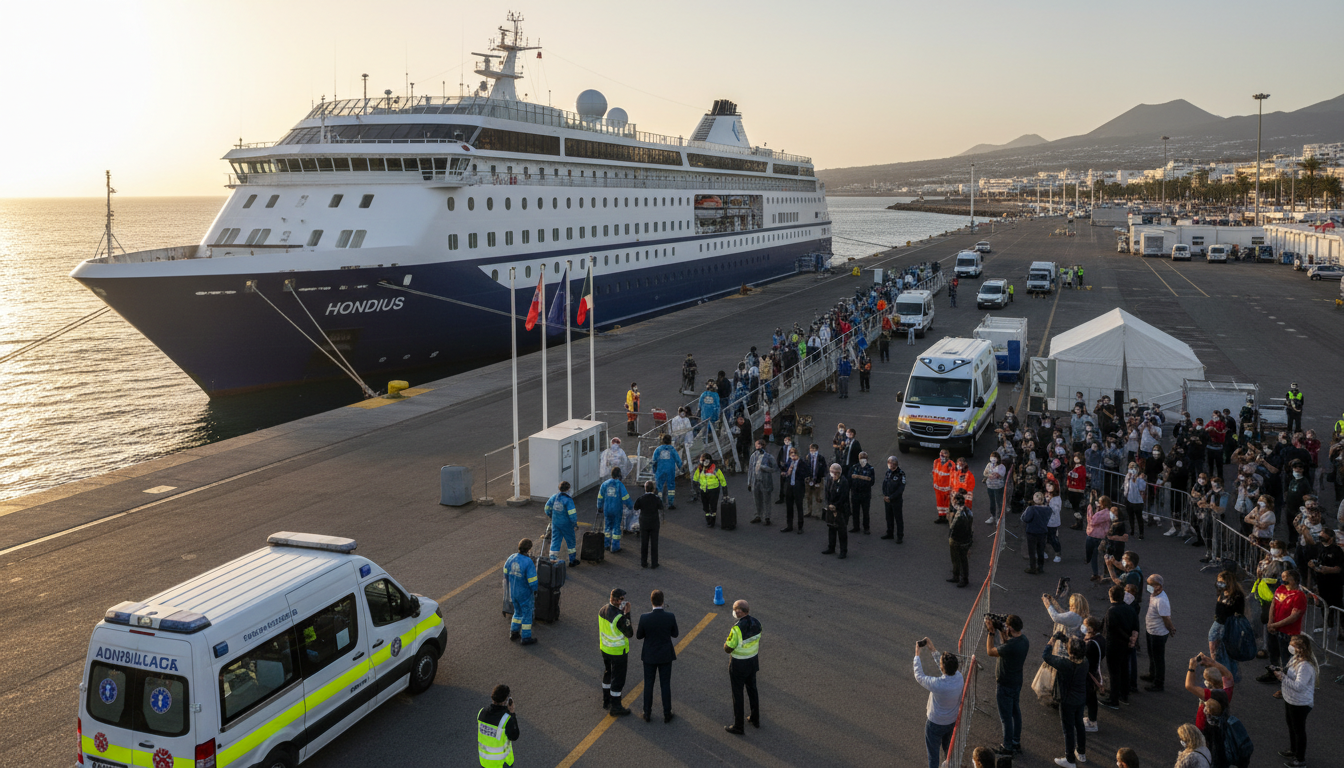
MV Hondius hantavirus outbreak: Evacuation flights repatriate passengers from Tenerife
MV Hondius hantavirus outbreak evacuees flew from Tenerife to home countries as authorities implement testing, quarantine and monitoring to limit spread.
The MV Hondius hantavirus outbreak prompted a multi-national evacuation from Tenerife on May 10–11, 2026, as military and government aircraft carried passengers home under strict health controls. Spanish authorities and international agencies coordinated disembarkation that involved protective suits, disinfectant procedures and immediate isolation measures for those showing symptoms. More than 20 countries are involved in repatriation efforts while health officials insist the risk to the general public remains low.
Evacuation Flights Depart Tenerife
Spanish nationals were the first to leave the MV Hondius, flown by military aircraft to Madrid and taken to a military hospital for observation. Flights for French, Dutch, American, Australian and other nationals followed, with several governments arranging quarantine on arrival. Officials said evacuation operations would continue through Monday as planes shuttle passengers to designated facilities in their home countries.
WHO and Spanish Authorities Stress Low Public Risk
The World Health Organization repeatedly told the public this is not akin to the COVID-19 pandemic and described the public health risk as low. WHO Director-General and on-site officials travelled to Tenerife to oversee containment and provide technical guidance. Despite reassurances, authorities maintained stringent precautions during disembarkation, with workers and passengers wearing full protective gear and being sprayed with disinfectant.
Testing, Isolation and Post-Arrival Monitoring
Health officials have instituted immediate testing and isolation for symptomatic individuals and require disembarking passengers to undergo active monitoring. The WHO recommended daily health checks either at home or in a specialized facility, with follow-up policies left to each nation’s health services. Incubation for the hantavirus strain detected can range from one to eight weeks, prompting many countries to set quarantine periods extending for several weeks.
International Responses and Quarantine Protocols
Countries are taking varied but strict approaches to returned passengers, reflecting different national policies and available facilities. France placed five returned passengers in hospital isolation after one developed symptoms mid-flight, while the Netherlands received evacuees in Eindhoven and arranged quarantine locations through local health services. The United Kingdom planned hospitalization for an initial 72-hour quarantine period followed by six weeks of self-isolation, and the United States routed evacuees to a federal quarantine facility in Nebraska for assessment.
Tristan da Cunha Emergency Response
A suspected case on Tristan da Cunha, an isolated British territory, prompted a parachuted medical response from the U.K., underscoring the outbreak’s far-reaching implications. A team of military medics and clinicians air-dropped supplies and equipment to support the island’s single suspected case and its 221 residents. The operation highlighted challenges for remote communities where conventional transport and healthcare access are severely limited.
Vessel to Undergo Disinfection in Rotterdam
Authorities confirmed that the MV Hondius will sail to Rotterdam for deep disinfection once remaining crew and certain personnel finish embarkation and necessary duties. The cruise company said the journey to the Netherlands would take about five days, during which limited crew and the body of a passenger who died on board will remain aboard. Spanish officials emphasized that those disembarking in Tenerife left most luggage behind and were allowed only small personal items to minimize contamination risks.
International agencies reported three deaths linked to the outbreak and several confirmed infections among earlier disembarked passengers, but stressed the virus’s primary transmission route is exposure to rodent-contaminated environments. The strain involved is related to the Andes virus, which can rarely transmit between people, a factor that has influenced the unusually cautious response by airlines and health authorities.
Countries coordinating repatriation have deployed specialized aircraft and medical teams to reduce transmission risk during transport. Norway sent an ambulance plane equipped for high-risk infections, Australia prepared a plane expected to depart on the final scheduled evacuation, and the Netherlands flew a plane that arrived in Eindhoven with passengers transported in protective measures. U.S. health officials said Americans would be screened for contact exposure before being given choices about quarantine locations.
The evacuation effort in Tenerife involved close supervision by Spain’s health and interior ministries and on-site WHO staff, with local authorities barring any contact between disembarking passengers and the resident population. Officials conducted screenings and maintained strict biosecurity at the port to prevent local spread while coordinating onward transport. Repatriation flights were scheduled and prioritized by nationality and clinical status to ensure swift yet safe departures.
Public messaging emphasized calm but vigilance as health agencies worked to trace contacts and implement monitoring regimes in multiple countries. While WHO leaders reiterated reassurances about low public risk, authorities stressed that the uncommon features of the Andes-related hantavirus strain required comprehensive follow-up. National health systems have mobilized quarantine facilities, contact tracing teams and testing protocols to manage the situation as passengers complete their journeys home.
The international response to the MV Hondius hantavirus outbreak continues to unfold as evacuees reach designated facilities and authorities carry out testing, isolation and contact tracing. Health officials say vigilance and coordinated monitoring will remain essential while the ship proceeds to Rotterdam for disinfection and investigators work to determine the outbreak’s source and transmission dynamics.

