
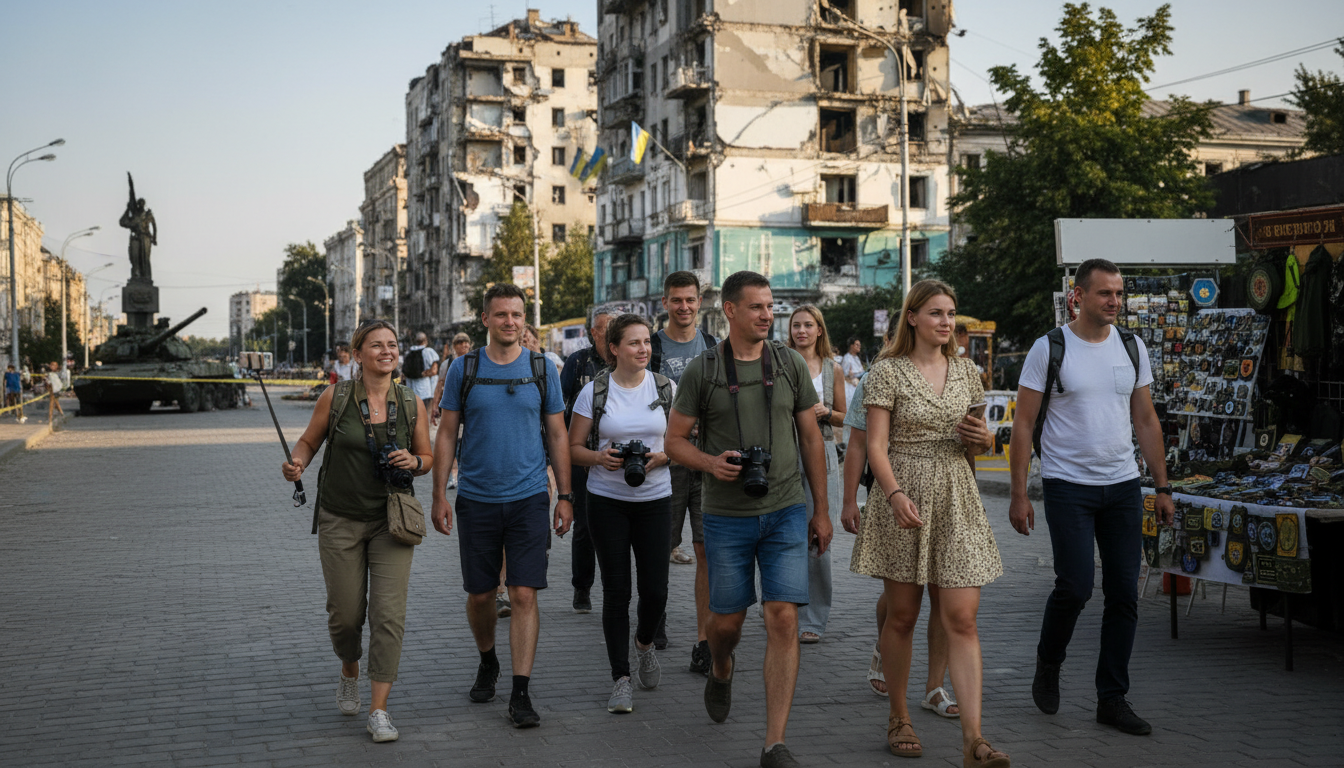
Wartime tourism in Ukraine draws growing number of foreign visitors despite travel warnings
Wartime tourism in Ukraine grows as visitors travel to Kyiv, Lviv and sites like Bucha, providing revenue while prompting debate over safety and ethics.
As spring 2026 unfolds, wartime tourism in Ukraine is drawing a steady trickle of foreigners who travel to Kyiv, Lviv and other cities to witness life under sustained attack. Visitors describe a mix of curiosity, solidarity and shock as they move through neighborhoods marked by recent violence and renewed civilian routines. Officials and guides say the visits help sustain local services and keep Ukraine’s story visible abroad, even as Western governments continue to advise against travel.
Foreign visitors continue despite official warnings
A small but growing number of travelers are entering Ukraine each year despite "Do Not Travel" advisories from many Western capitals and limited commercial flight options. Some arrive by long overland journeys through neighboring countries, accepting multi-day bus and train trips and lengthy border crossings to reach Kyiv and western hubs. Many aim to see memorials, occupied towns recently liberated, and the everyday tactics Ukrainians use to cope with air raid threats.
Authorities train guides and emphasize sheltering
The government’s tourism agency has begun formal training programs for guides to improve safety protocols and cultural sensitivity in war-affected communities. Officials urge guides to insist that clients take shelter during air raid warnings, countering a tendency among some visitors to treat alarms as photo opportunities. The trainings are framed as both a short-term safety measure and a way to preserve hospitality infrastructure for a hoped-for postwar tourism rebound.
Visitor profiles and official statistics
Before the 2022 invasion, Ukraine attracted as many as 14 million visitors in 2019, driven by historical sites, cultural heritage and the Chernobyl exclusion zone. By contrast, arrivals in 2024 numbered around 2.5 million, and only a small fraction—just over 700 recorded that year—listed tourism as their primary purpose. Government officials acknowledge those figures undercount practical tourism, noting many volunteers and family visitors also undertake sightseeing, and they are rolling out new tracking systems to better measure visitor profiles.
On-the-ground experiences vary from solemn to risky
Guided itineraries mix solemn memorial visits with demonstrations of grassroots war support such as volunteer workshops that solder electronics or weave camouflage nets. Some tourists report hearing explosions over cities like Kharkiv and witnessing drone activity near rail lines, while others describe quieter experiences in Lviv that serve as rest centers for troops. Guides report occasional unauthorized attempts to reach frontline zones, and military checkpoints and regulations are enforced to keep travelers away from active combat areas.
Ethical debates and local reactions
The rise in what officials sometimes call "solidarity tourism" has reignited debate about the ethics of visiting a country still recovering from occupation and mass violence. Critics view some visits as voyeuristic, arguing that turning trauma sites into attractions risks commodifying suffering. Proponents counter that responsible visits amplify Ukrainian voices abroad, bring badly needed revenue, and can convert eyewitnesses into advocates who relay first-hand impressions to their home communities.
Economic role and planning for postwar recovery
Tourism administrators say the modest flow of wartime visitors plays a practical role in maintaining hotels, restaurants and transit services that will be vital in any post-conflict recovery. Revenue from paid guided tours and short-term stays is reinvested locally; some guides also donate portions of fees to frontline units or community rebuilding projects. Officials are exploring promotional partnerships with European cities and hope to retain international attention so that Ukraine’s cultural and heritage sectors remain viable after the war.
Eyewitness accounts underscore the mixed motives bringing people to Ukraine. One Slovenian visitor described traveling unannounced to Kyiv to understand civilian life under attack, and a guide said part of his fee was donated to military units. An Austrian visitor recounted seeing memorial walls in Maidan Square and being shaken by the face of a foreign volunteer killed in combat. A U.S. retiree framed his trip as a moral obligation after witnessing villages once occupied and meeting families rebuilding next to makeshift memorials.
Local guides and tour operators emphasize careful planning: avoiding active frontlines, respecting communities that suffered occupation, and prioritizing sheltering when alarms sound. They argue that better-regulated visits can reduce reckless behavior and focus attention on reconstruction needs and civilian resilience. Yet government warnings and insurance limitations remain significant deterrents for many potential visitors.
As Ukraine navigates the complexities of hosting visitors amid ongoing conflict, the debate over wartime tourism will likely continue. Supporters highlight the economic lifeline and the power of direct testimony; critics warn against trivializing suffering. For now, a modest but persistent stream of travelers is choosing to witness the war firsthand, leaving Kyiv and other cities with both the burden and the benefit of carrying their impressions back to the wider world.

