
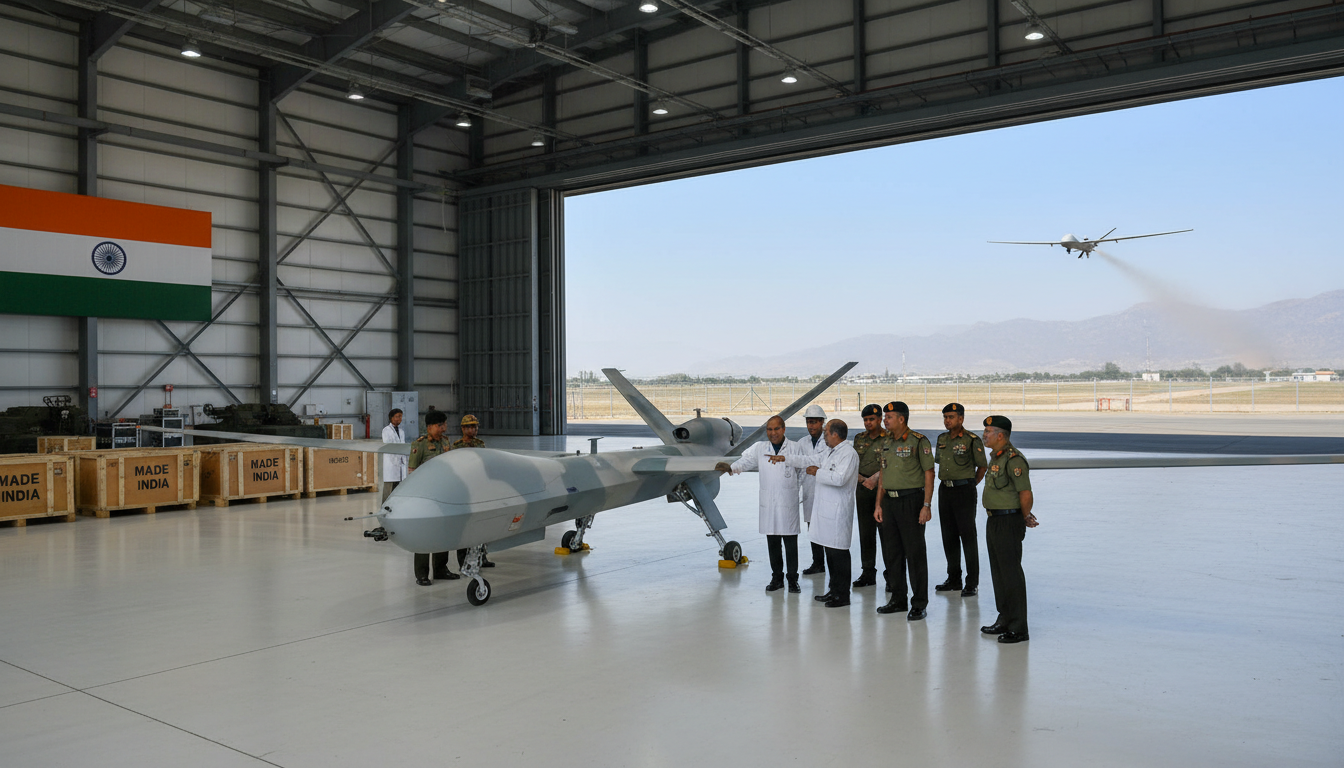
Indian Military Drone Industry Poised for Rapid Expansion After 2025 Border Conflict
India’s military drone industry is set for rapid expansion after the 2025 conflict with Pakistan, driven by rising domestic orders and growing export ambitions.
The Indian military drone industry is entering a growth phase as manufacturers report swollen order books following last year’s border clash with Pakistan. The conflict raised the profile of local drone makers and accelerated procurement plans across the armed services. Industry executives say the surge reflects demand for low-cost surveillance and strike-capable systems that can be produced and supported domestically.
Order books expand after 2025 conflict with Pakistan
Manufacturers across India have seen a marked increase in contracts since the 2025 border clashes, according to military procurement sources. The armed forces prioritized rapid deliveries of intelligence, surveillance and reconnaissance (ISR) platforms and tactical unmanned aerial vehicles in the months that followed the incidents.
Government purchase plans and emergency procurement measures helped translate needs into orders, boosting small and mid-sized firms that supply airframes, sensors and communications packages. The effects are visible in production lines and hiring, as companies scale to meet new military timetables.
Manufacturers target overseas sales amid low export share
Indian firms are now pushing to convert domestic momentum into export growth, aiming to raise shipments abroad from a small base. Exports of military drones likely accounted for less than 5% of India’s defense exports in the fiscal year to March 31, 2026, industry analysts estimate, leaving significant headroom for expansion.
Companies emphasize affordable pricing and tailored customer support as sales pitches to potential buyers in Asia, Africa and the Middle East. Several manufacturers are pursuing bilateral government-to-government channels and private partnerships to overcome early-market barriers.
Investment in sensors, avionics and production capacity
To compete internationally, producers are investing in more advanced sensors, avionics and production automation. Upgrades to electro-optical payloads, secure datalinks and mission-planning software are priorities cited by company engineers and procurement officials.
These investments are accompanied by factory expansions and workforce training programs to reduce lead times and improve quality control. Local suppliers of composite materials and electronics are likewise scaling to meet demand, strengthening domestic supply chains for unmanned systems.
Regulatory and certification hurdles for exporters
Despite commercial momentum, Indian drone exporters face regulatory and certification challenges that can delay overseas sales. Export controls, aviation certification regimes and foreign procurement rules remain hurdles for firms seeking rapid international market entry.
Companies must also build after-sales support networks and provide training and maintenance packages that reassure national militaries. Industry groups say clearer export policy guidance and streamlined certification processes would help translate interest into signed contracts.
Potential buyers and competitive landscape
Buyers in regions such as Southeast Asia, Africa and parts of the Middle East are seen as immediate targets for Indian-made tactical drones. These markets prize lower-cost systems with short delivery times and the ability to operate in austere environments, advantages Indian firms argue they can deliver.
However, competitors from established drone exporters remain formidable, offering mature platforms and long-standing political ties. To win business, Indian manufacturers are emphasizing lifecycle support, local assembly options and offset arrangements that build recipient-country capabilities.
Economic and strategic implications for India
Growth of the drone sector carries both economic and strategic value for India, supporting manufacturing jobs and enhancing defense self-reliance. Officials view an expanded drone export industry as a way to project influence and deepen defense ties with partner nations while boosting domestic industrial capacity.
Nonetheless, analysts caution that rapid scaling must be matched with sustained investment in research and development and stronger institutional support. Without improvements in certification, export policy and international marketing, the sector risks plateauing after the initial post-conflict surge.
The coming 18 to 24 months will be critical as manufacturers move from demonstration and prototype deliveries to serial production and sustained exports. How quickly India converts recent orders and investments into reliable, globally competitive supply lines will determine whether the country’s military drone industry becomes a major exporter or remains primarily a domestic supplier.

