
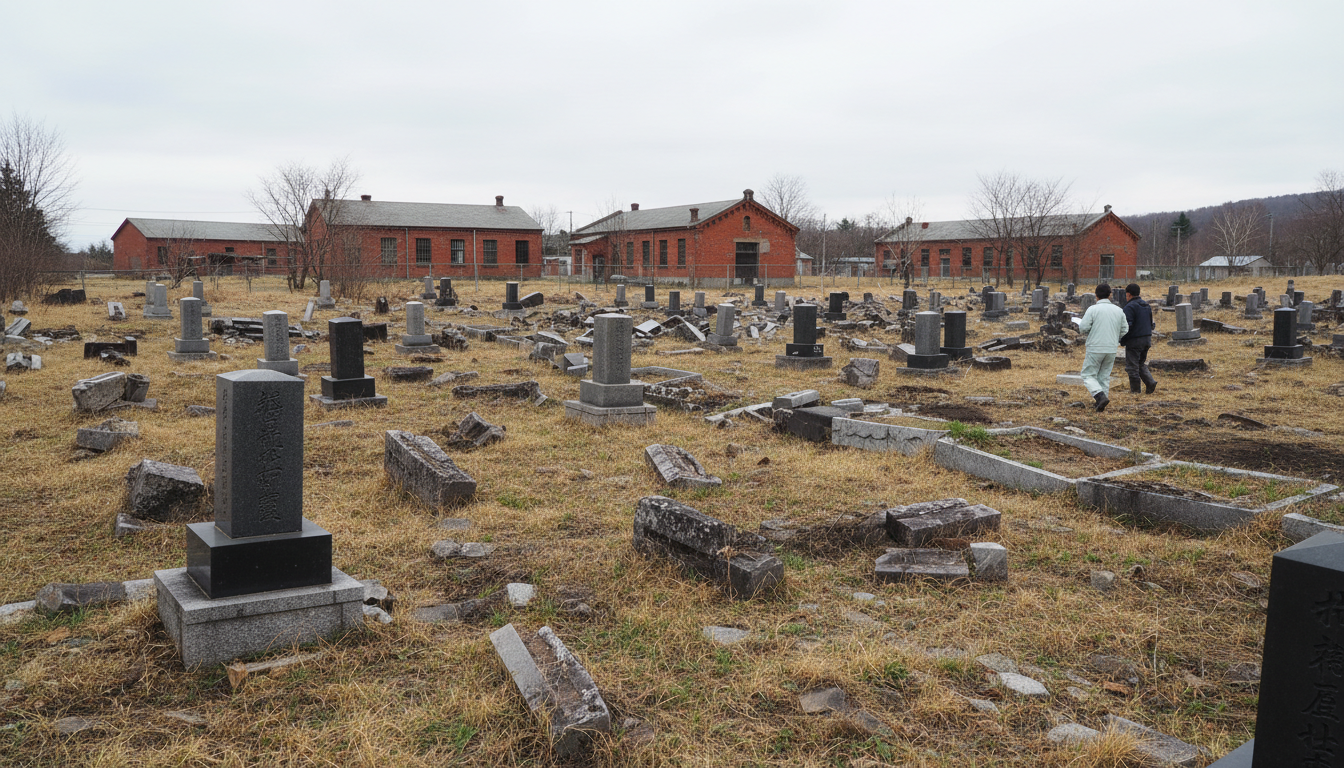
Vandalism at Kabato prison graves: 58 tombstones toppled at Shinozutsuyama Cemetery
Kabato prison graves vandalism: 58 tombstones were found toppled at Shinozutsuyama Cemetery in Tsukigata, Hokkaido; police have opened a probe as museum staff and historians urge public remembrance.
The graves of prisoners who died at the Kabato Shūjikan were found smashed and scattered in early May, in what authorities treat as a case of vandalism. The incident—described as Kabato prison graves vandalism by local officials—left 58 stone markers lying prone in a fenced section of Shinozutsuyama Cemetery, drawing condemnation from museum staff and residents.
58 Tombstones Found Toppled in Tsukigata
Investigators and local officials discovered 58 damaged gravestones on May 7 in a small, historically designated plot of the cemetery. Photographs taken at the scene show numerous upright markers overturned and some stones fractured, suggesting deliberate force rather than natural causes.
Authorities in Tsukigata town have classified the incident as suspected property damage and are gathering evidence, canvassing nearby residents and reviewing security camera footage where available. Museum staff and volunteers who maintain the site reported the damage as soon as they found the scene, prompting the police response.
Markers Linked to Kabato Shūjikan Prisoners
The toppled stones mark graves of inmates who died while detained at Kabato Shūjikan—later known as Kabato Prison—during the Meiji and Taishō periods. These men and women were among those who labored on public works projects in Hokkaido during the late 19th and early 20th centuries.
Many of the gravestones bear simple inscriptions and dates, consistent with the sparse memorials historically provided for prison dead. Officials at the Tsukigata Kabato Museum confirmed the identity of the plot and said the markers represent a visible record of prison labor’s human cost in the region.
Museum Curator and Local Reaction
Nomoto Kazuhiro, a curator at the Tsukigata Kabato Museum, said the damage felt like an affront to the memory of people who died under harsh conditions. He called for the public to understand the historical context rather than treating the episode as mere sensationalism.
Local residents expressed shock and sadness at the desecration, with some saying they had visited the plot to pay respects to ancestors and to learn about Hokkaido’s development history. Community groups have offered to help restore the markers and to increase volunteer patrols around the cemetery.
Historical Context: Prison Labor and Hokkaido Development
During the Meiji era and into the Taishō period, institutions such as Kabato Shūjikan played a significant role in supplying forced labor for infrastructure and land reclamation in northern Japan. Convicted prisoners and political detainees were often assigned to road building, logging and other physically demanding work in harsh climates.
Historians say the gravestones are part of a broader legacy that links forced labor to Hokkaido’s modernization, and that the markers offer tangible evidence of lives lost in those projects. Museum educators emphasize that preserving such sites helps the public confront difficult aspects of national development and criminal justice history.
Police Investigation and Community Response
Tsukigata police say they are treating the case as willful property destruction and are interviewing witnesses and reviewing any available video recordings. Officials have appealed to anyone with information about movements near the cemetery in early May to come forward and assist the inquiry.
Meanwhile, the museum and local volunteers have begun documenting damage for restoration planning and insurance claims. Fundraising efforts and coordinated clean-up are being discussed, and the town has announced intentions to strengthen site protection without restricting public access to the historical plot.
The toppling of 58 stones at a site tied to Kabato prison graves vandalism has reignited debate over how Japan commemorates marginalized historical figures and the responsibilities of communities to safeguard fragile memorials. Restorers and historians say careful repair is possible but will take time, funding, and sensitive handling to respect the graves and their historical significance.

