
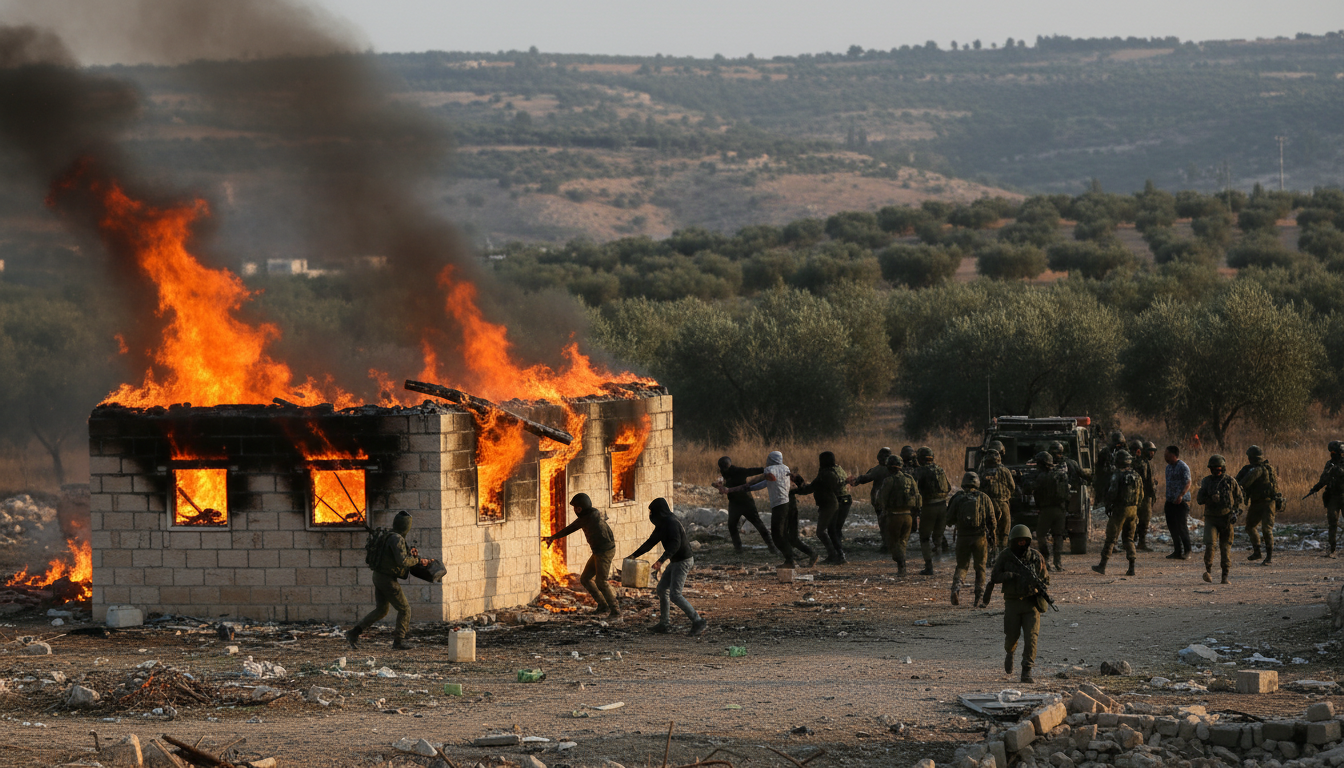
Israeli Settlers Set Palestinian Home Ablaze in Jalud Arson Attack
Israeli settlers set fire to a Palestinian home in the occupied West Bank village of Jalud, reportedly while residents were still inside, fueling concerns over escalating Jalud arson incidents and wider settler violence.
The blaze that damaged a family dwelling in Jalud was reported on April 27, 2026, with witnesses and residents saying the house was deliberately torched while people remained inside. Local accounts describe a rapid escalation from an initial confrontation to an arson attack, leaving neighbors shaken and prompting urgent calls for investigation. The incident comes amid a broader uptick in settler assaults and a parallel security operation that has seen a wave of detentions across occupied areas.
House in Jalud Torched, Residents Reportedly Inside
Local witnesses said the fire began after a group of settlers arrived in the village and clashed with residents near the targeted home. Some family members were still in the building when smoke and flames began to spread, according to those accounts, forcing frantic efforts to extinguish the blaze. Emergency services reportedly responded, but details on injuries and the full extent of the damage remain limited as residents and volunteers worked through the night.
Eyewitnesses told reporters that stones and other objects were thrown during the incident, and that the arson was part of an orchestrated attack rather than an isolated act of vandalism. Villagers described a pattern of intimidation that has intensified in recent weeks, with this latest Jalud arson event deepening fears of further attacks. The community has appealed for protection from authorities and for rapid assistance to rebuild and secure affected homes.
Witnesses and Residents Give Consistent Accounts
Multiple residents gave consistent descriptions of the sequence of events, saying settlers entered the outskirts of Jalud before moving toward residential clusters. They reported that the attackers ignited flammable material against the exterior of the house, creating conditions that allowed the fire to spread quickly. Several neighbors risked their safety to pull people from the building and to carry water and blankets until emergency personnel arrived.
Local leaders emphasized that the assault was not aimed only at property but at the security and dignity of families in Jalud. They described an atmosphere of fear in the village, where regular life has been disrupted by incidents of harassment and property damage. Community representatives called on human rights organizations and international observers to document the attack and assist in protecting civilians.
Pattern of Settler Violence Across the West Bank
The Jalud arson attack fits into what residents and rights monitors describe as a broader pattern of settler violence across the occupied West Bank. Reports from other villages in the region have detailed assaults on Palestinians, damage to homes and agricultural property, and intimidation of civilians. Observers say such incidents often occur in tandem with increased friction over land, movement restrictions, and access to resources.
Humanitarian agencies have repeatedly warned that rising settler attacks contribute to an environment of impunity and heightened tension. The Jalud incident has renewed demands for clearer protective measures and for authorities to prevent further escalation. Analysts note that when violence surges in one locality, neighboring communities frequently face spillover effects that compound displacement and economic hardship.
Security Operations and Mass Detentions Reported
In parallel with settler attacks, there have been reports of expanded security operations by Israeli forces in parts of the occupied territories. Local sources and community leaders say these operations have led to mass detentions in several towns and villages, further straining relations and fuelling grievances. Critics argue that extensive arrests and raids, when combined with settler violence, create a volatile mix that threatens civilian safety and undermines prospects for de-escalation.
Security officials have said operations target militant activity and perpetrators of attacks, but villagers and rights groups contend that civilians are frequently caught up in sweeping tactics. The dual dynamics of settler attacks and security crackdowns have prompted renewed appeals for measured responses that distinguish between criminal actors and non-combatant residents.
Community Impact and Humanitarian Needs
The immediate consequences of the Jalud arson include loss of shelter, damaged household goods, and psychological trauma for those who witnessed the attack. Neighbors have organized relief efforts to provide temporary shelter, clothing, and basic supplies for affected families, but longer-term needs remain pressing. Local aid coordinators describe a need for repairs, legal assistance, and mental health support to help residents recover.
Village leaders urged donors and humanitarian organizations to prioritize reconstruction and protection measures, arguing that material aid alone will not restore a sense of security. They also called for clear accountability in investigating the attack and preventing repeat incidents, emphasizing that sustainable safety requires both justice and practical safeguards.
Human rights groups and community advocates have issued statements condemning the attack and calling for independent investigation, though official responses and investigations have often been slow to produce public findings. Observers warn that without transparent inquiries and consequences for perpetrators, cycles of violence and retaliation are likely to persist.
This latest Jalud arson incident underscores the fragility of daily life for many Palestinians living in the occupied West Bank, where property destruction and personal insecurity have become recurring threats. Residents and local leaders continue to press for protection, accountability, and humanitarian assistance as they confront the immediate fallout of the attack and the wider dynamics that enable such violence.

