
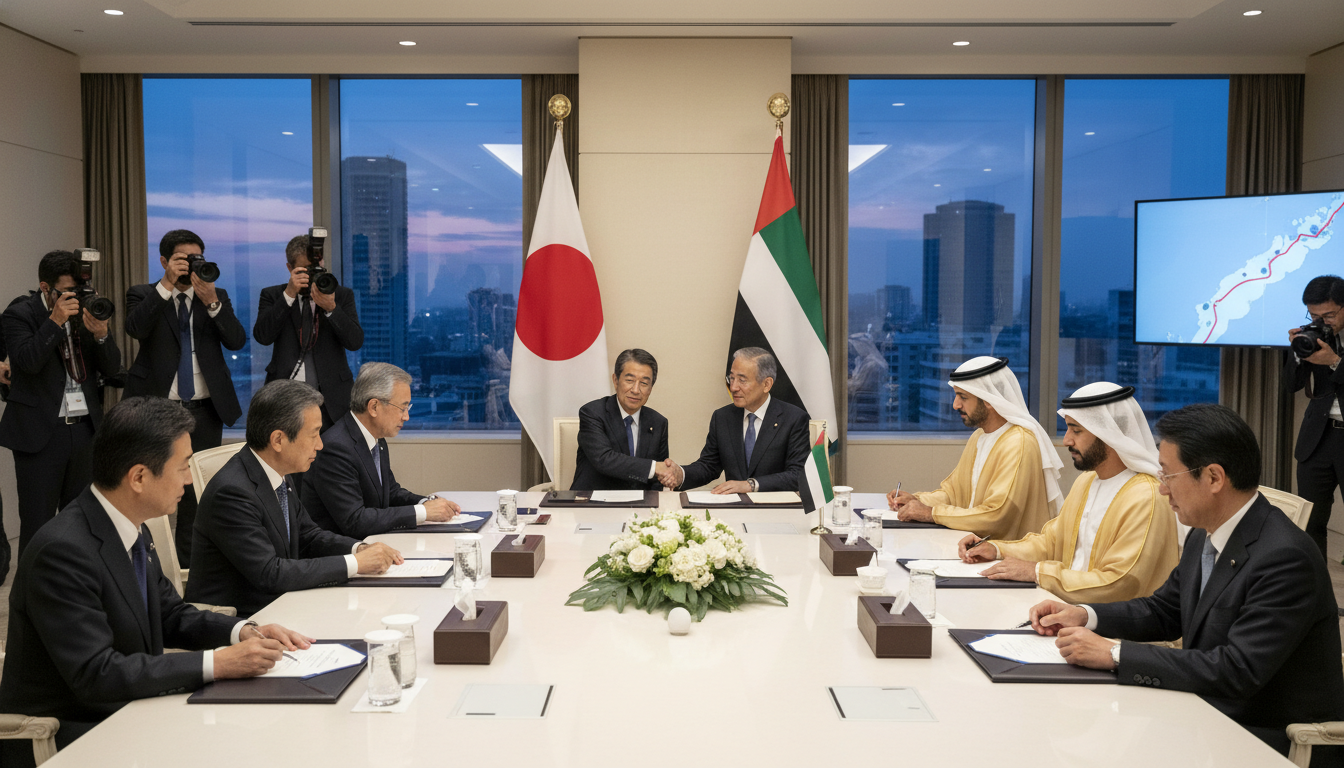
Japan-UAE oil deal: Tokyo agrees to buy 20 million barrels from the UAE
Japan secures a 20-million-barrel crude purchase from the UAE to shore up supplies as the Strait of Hormuz remains effectively closed, prompting broader stockpile cooperation.
Tokyo confirms emergency purchase
Japan has agreed to buy an additional 20 million barrels of crude oil from the United Arab Emirates as part of a short-term effort to secure supplies for domestic refineries and industry. The Japan-UAE oil deal was disclosed amid high-level talks in Abu Dhabi, where Japanese officials sought immediate deliveries and longer-term cooperation on strategic reserves. (nippon.com)
Strait of Hormuz disruption spurs urgency
The decision follows months of severe disruption to tanker traffic after attacks and military operations around the Strait of Hormuz, a chokepoint that typically carries about one-fifth of global seaborne oil trade. With the corridor effectively closed at times this year, Asian buyers have scrambled for alternative supplies and faster routes to avert shortages. (kpbs.org)
UAE’s role in Japan’s supply mix
The UAE already accounts for roughly 40 percent of Japan’s crude imports, making Abu Dhabi a pivotal partner in Tokyo’s emergency procurement and stockpile plans. Japanese Economy, Trade and Industry Minister Ryosei Akazawa secured commitments in Abu Dhabi to expand joint crude oil stockpiles held in Japan by UAE firms and to replenish volumes released earlier this year. (nippon.com)
Rerouting and capacity limits complicate logistics
Alternative export routes such as pipelines to Fujairah and the Red Sea ports have provided some relief, but they are unable to fully replace the throughput that normally transits Hormuz. Analysts warn that available bypass capacity is a fraction of the disrupted flows, leaving importers like Japan dependent on rapid shipments from producers willing and able to divert cargoes to Gulf of Oman terminals. (straitstimes.com)
Regional buying and coordinated releases
Tokyo’s purchase follows similar emergency moves across Asia, where buyers including South Korea have sought urgent cargoes from Gulf suppliers to rebuild inventories. At the same time, international efforts such as coordinated releases from strategic reserves have been used to tamp down market volatility, though officials say releases can only buy time while physical rerouting and production adjustments take effect. (thenationalnews.com)
Market reaction and domestic preparedness
The announcement of the Japan-UAE oil deal was met with muted commodity-market reactions compared with the earlier shock months, reflecting a mix of government interventions, spare capacity pledges from some producers and buyers’ emergency purchases. Japanese refiners and trading houses are reported to be accelerating shipments and adjusting term contract schedules to ensure feedstock for refining and petrochemical operations. (uk.investing.com)
Domestic policy and stockpile strategy
Tokyo said the deal with Abu Dhabi will be accompanied by steps to expand joint stockpiles and cooperation on replenishing crude previously released under emergency measures. Officials framed the agreement as both a stopgap to meet near-term demand and part of a broader strategy to diversify procurement routes, strengthen regional storage capacities and reduce logistical exposure to a single chokepoint. (nippon.com)
The Japan-UAE oil deal underscores how tightly linked Asian energy security is to developments in the Gulf and how swiftly sourcing strategies must adjust when a vital transit lane is endangered. With the Strait of Hormuz still subject to episodic threats, Tokyo has moved to lock in volumes and deepen ties with a key supplier while continuing diplomatic and multilateral efforts to restore stable navigation and long-term market confidence.

