
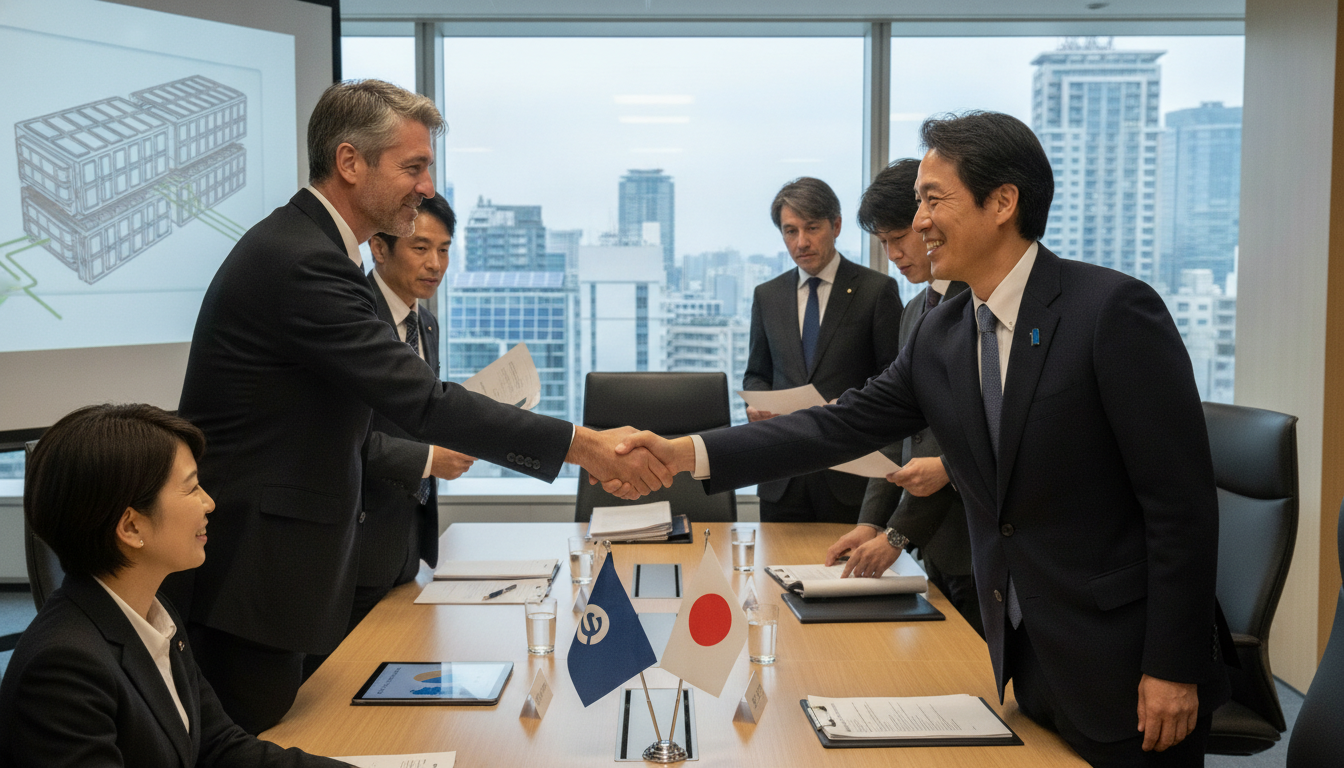
Japan Sees Surge of Foreign Investment in Battery Energy Storage Systems
Foreign firms are moving into Japan’s battery energy storage systems market, lured by subsidies and low-cost financing as the country scales renewable capacity.
Japan’s underdeveloped market for battery energy storage systems is drawing a wave of global companies seeking to establish footholds ahead of anticipated growth in renewables. Investors cite recent policy incentives and attractive financing terms as reasons to deploy large-scale storage projects that can balance variable solar and wind output. Taiwanese operator HD Renewable Energy has already begun running an energy storage facility in Sapporo, highlighting the practical steps foreign firms are taking on Japanese soil.
Foreign investors accelerate project pipelines
Foreign developers and institutional investors have begun accelerating project pipelines for battery energy storage systems across Japan. The move reflects a strategic bid to capture market share in an early-stage market where capacity is expected to expand rapidly. Companies are negotiating land, grid connections and local partnerships to shorten development timelines and begin commercial operations.
Subsidies and financing tilt economics
Government subsidies and comparatively low-cost financing are making battery projects commercially viable in Japan where returns have been uncertain. Subsidies can reduce upfront capital requirements while concessional loan terms lower the weighted cost of capital for long-duration storage assets. These policy incentives are central to investors’ decisions to commit capital now rather than wait for fuller market maturation.
Grid access and permitting remain constraints
Despite increased interest, developers face practical challenges securing grid access and fast-track permits. Interconnection queues in regions with high renewable penetration are lengthening, and local utilities often require detailed studies to manage stability concerns. Permitting timelines and community consultations add further complexity to project schedules and cost forecasts.
HD Renewable Energy’s facility in Sapporo as a model
Taiwanese firm HD Renewable Energy operates an energy storage facility in northern Japan’s Sapporo, demonstrating how foreign firms are approaching deployment. The Sapporo installation serves grid balancing functions and provides ancillary services while working under local regulatory regimes. Operators emphasize close coordination with municipal authorities and utilities to ensure both technical compliance and community acceptance.
Japanese utilities and new commercial roles
Traditional Japanese utilities are adapting by partnering with independent storage developers and offering new commercial arrangements. Some utilities see battery systems as a tool to defer transmission upgrades, manage peak demand and integrate more distributed generation. The evolving commercial roles create potential for joint ventures, asset-sharing agreements and utility-backed offtake contracts.
Market outlook driven by renewables and system services
Analysts expect demand for battery energy storage systems to be driven by continued renewable deployment, peak shifting needs and the growing market for frequency and voltage support services. As renewable capacity expands, storage will play an increasingly central role in maintaining grid reliability and enabling higher renewable penetration. Longer-duration and hybrid solutions may follow as developers target broader system needs.
Japan’s storage market offers a blend of opportunity and risk for foreign entrants — attractive incentives and low financing contrast with grid bottlenecks and regulatory complexity. Developers that secure strong local partnerships and navigate permitting and interconnection prudently are likely to lead the next wave of deployments.

