
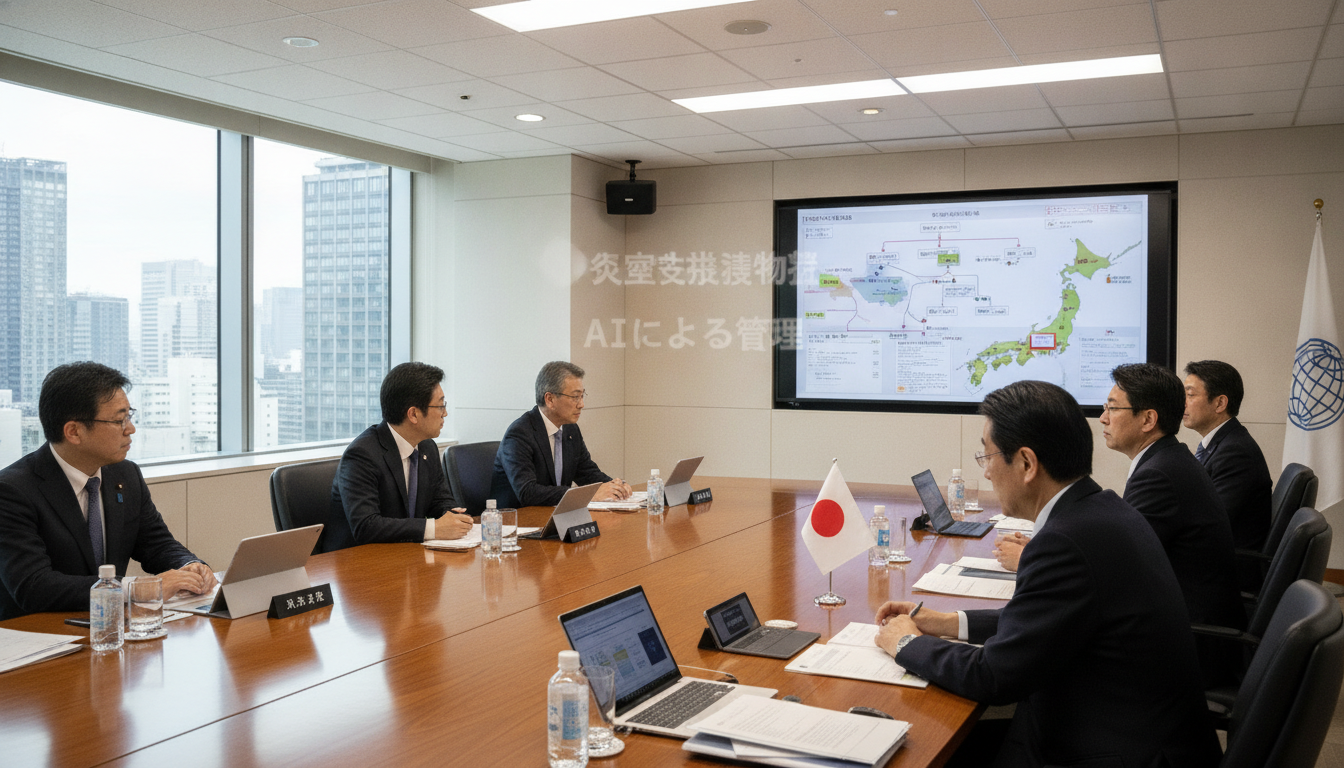
Japan moves to build AI disaster relief system to speed distribution of aid
Japan plans an AI disaster relief system to coordinate aid using government and private data, aiming for faster distribution after earthquakes and storms.
Japan is moving forward with plans to develop an AI disaster relief system intended to manage the distribution of emergency supplies after major calamities. The proposal would link information from government agencies, local authorities and private companies to accelerate and even out delivery of food, water and medical equipment to affected areas. Self-Defense Forces personnel were seen delivering relief supplies after an earthquake struck the Noto peninsula in Ishikawa prefecture, the Ministry of Defense confirmed, underscoring the urgency behind the proposed technology. Officials say the system is designed to reduce delays and gaps that commonly occur when multiple bodies respond simultaneously to complex disasters.
Government considers AI disaster relief system
The central government has begun internal discussions on the scope and functions of an AI disaster relief system, officials told reporters. The system would aggregate logistics data, inventory levels and real-time damage reports to prioritize shipments and suggest distribution routes. Lawmakers and ministry officials say the platform could sit alongside human decision-making rather than replace it, providing operational recommendations to prefectural authorities and relief coordinators. The initiative reflects a long-standing policy aim to better harness digital tools for resilience in a country frequently hit by earthquakes, typhoons and floods.
How the AI disaster relief system would operate
Planners envision the AI disaster relief system drawing on satellite imagery, municipal reports, carrier-tracking data and supplier inventories to build a live picture of needs and resources. Machine learning models would analyze that combined data to identify underserved neighborhoods, optimal delivery windows and the most efficient use of Self-Defense Forces and civilian vehicles. The system could generate prioritized distribution lists and route maps, reducing redundant deliveries and freeing personnel for tasks that require human judgment. Officials emphasize that human operators would retain final authority over allocations and that AI output would be treated as advisory.
Coordination with private sector and local governments
A core feature of the plan is data sharing between public bodies and private logistics, retail and telecom firms to close visibility gaps in the supply chain. Companies that hold large inventories or manage transport fleets would be asked to feed anonymized operational data into the platform during emergencies. Local governments, which carry responsibility for immediate relief, would receive AI-generated recommendations tailored to municipal circumstances and road conditions. Stakeholders say early engagement with business partners and municipal leaders will be critical to ensure interoperability and trust.
Operational and technical challenges
Designing an AI disaster relief system faces significant technical hurdles, including the need for real-time, high-quality data and robust connectivity in damaged areas. Machine learning requires consistent, labelled inputs to produce reliable outputs, and disaster environments often produce fragmented or contradictory information. Planners must also ensure redundancy; the system will need offline modes and local caching so it remains useful if central servers or networks fail. Training and drills will be essential to integrate the AI into existing emergency workflows without slowing response times.
Legal and privacy considerations
Data protection and cybersecurity issues are central to the debate over the proposed system, with privacy advocates urging strict limits on personal data use. Officials have signalled that any sharing of commercially sensitive or personally identifiable information would be governed by emergency rules and privacy safeguards. Legislators are likely to examine whether adjustments to existing laws are needed to permit rapid cross-sector data sharing in declared disasters. Cybersecurity experts also warn that an AI platform aggregating critical logistics information must be secured against manipulation or ransomware that could disrupt relief.
International context and precedent
Policymakers point to a growing international interest in AI-assisted disaster response when considering the proposal, though officials say the specific Japanese system would be tailored to domestic legal and operational realities. Multilateral agencies and partners have experimented with predictive mapping and logistics optimization in recent years, offering technical lessons that Japanese developers can adapt. Officials plan to study those efforts while stressing that local municipal structures and Japan’s Self-Defense Forces will shape how the system is deployed domestically.
The government expects the planning phase to include technical studies, stakeholder consultations and pilot exercises with selected prefectures and private partners. Officials describe the approach as phased: design and legal review, limited field trials, and broader deployment contingent on trial results and legislative clearance. If approved, the AI disaster relief system would join existing investments in early warning, infrastructure hardening and community preparedness as part of a wider resilience strategy.
Public response to the announcement has been mixed, with emergency managers welcoming tools that could sharpen logistics while civil liberties groups call for transparent governance. Municipal leaders say they want guarantees that the system will respect local autonomy and that AI suggestions will not override on-the-ground judgment. Industry groups express conditional support, filtering their participation through clear rules on liability and data protection.
As Japan deliberates on the proposal, officials emphasize that the AI disaster relief system is intended to strengthen, not supplant, the human networks that carry out relief work in the immediate aftermath of disasters. The coming months will determine whether technical designs, legal frameworks and cross-sector partnerships can be aligned to deliver faster, more equitable aid when the next earthquake or storm strikes.

