
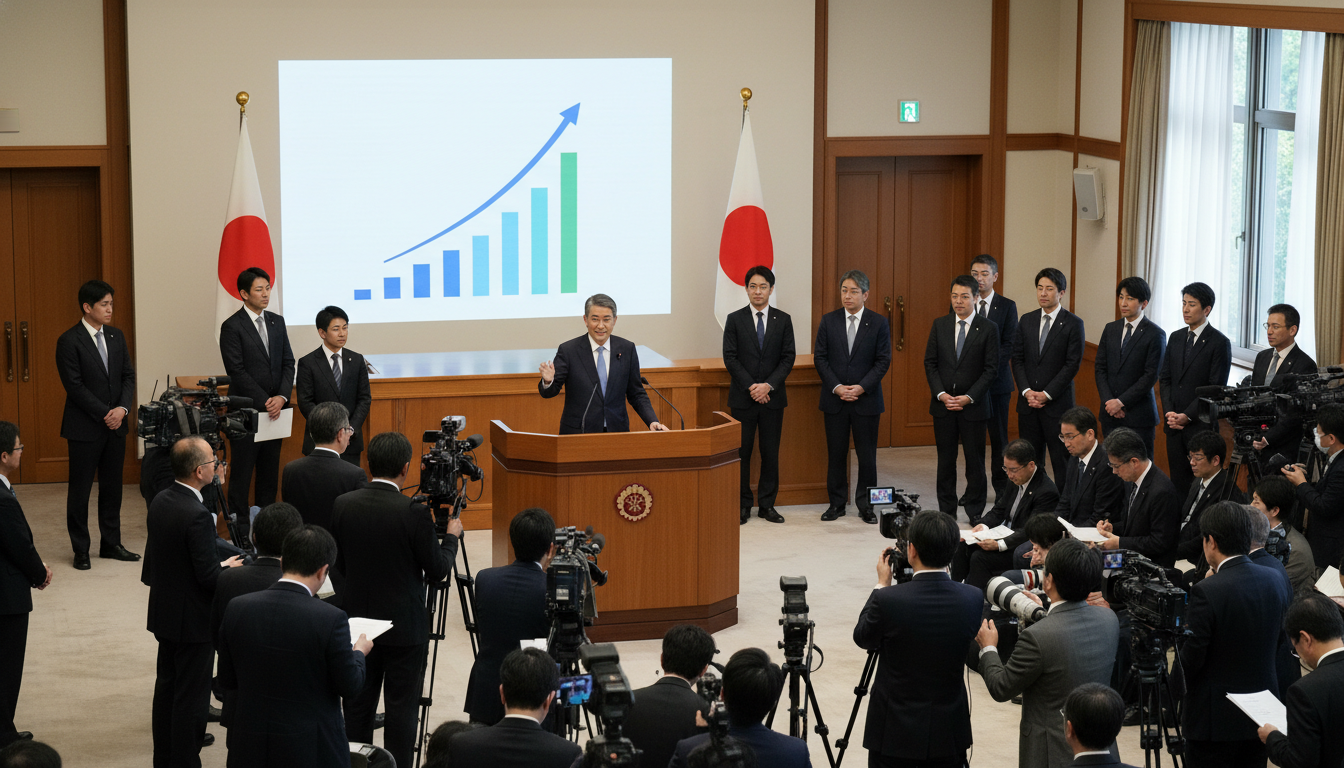
Japan GDP Rises 0.5% in Q1 2026, Annualized Pace Hits 2.1%, Cabinet Office Says
Japan GDP rose 0.5% quarter-on-quarter in January–March 2026 (annualized 2.1%), exceeding market expectations, Cabinet Office data showed on May 19, 2026; prospects hinge on consumption and exports.
Japan’s gross domestic product expanded 0.5% in the first quarter from the prior three months, data released by the Cabinet Office on May 19, 2026 showed, an annualized increase of 2.1%. The outcome topped consensus estimates and follows a 0.8% rise in the previous quarter, underscoring a continuation of moderate recovery. The reading will shape debate over the strength of domestic demand and the timing of policy adjustments by authorities.
GDP Growth Beats Expectations in Q1
The Cabinet Office reported that Japan GDP rose 0.5% in January–March, an outcome that surprised some forecasters who had projected weaker momentum. Measured on an annualized basis, the expansion equates to 2.1% growth, reflecting an improvement from recent quarters. Officials emphasized the headline figures while noting that headline growth can mask divergent performances across sectors and regions.
The report also highlighted that the prior quarter saw a 0.8% expansion, indicating that growth has been relatively steady through the last half-year. Economists caution that quarterly swings can reflect temporary factors such as inventory adjustments, seasonal patterns, or one-off export orders. Still, the sequential rise adds to evidence that the economy has been gradually recovering from past shocks.
Household Spending and Business Activity
Household consumption remains a central variable for Japan GDP, as consumer spending accounts for a large share of domestic demand. While the Cabinet Office release did not provide a full sector-by-sector narrative in the headline, analysts and market observers will closely examine the detailed breakdown once available to see whether private consumption, investment, or inventories were the principal drivers.
Business activity, including corporate investment and production, also plays a critical role in sustaining growth. Firms’ capital expenditure decisions and employment trends set the medium-term trajectory for output, and any sustained pickup in corporate spending would be a positive signal for the broader economy. Labor market conditions and wage dynamics will be watched for signs of whether households can maintain higher spending.
External Trade and Export Momentum
External demand has been an important contributor to Japan’s growth prospects amid a mixed global environment. Exports and shipments to key trading partners can amplify or offset domestic swings, and policymakers frequently link export momentum to overall GDP performance. The Cabinet Office figure arrives as global demand patterns remain uneven, making trade a focus for interpreting the latest reading.
Movements in external markets, supply-chain adjustments and shifts in regional demand patterns can all influence Japan GDP through trade channels. A sustained recovery in outbound shipments would support manufacturing output and related services, while any weakening abroad would present downside risk to growth momentum at home.
Policy Implications for Monetary and Fiscal Authorities
The stronger-than-expected first-quarter reading will feed into discussions among policymakers about the stance of monetary policy and the need for fiscal support. For the Bank of Japan, the balance between supporting the recovery and responding to inflationary pressures remains delicate, and headline GDP gains can alter the public and market narrative on timing and calibration of policy measures.
Government ministers and economic planners will also weigh the data when shaping fiscal measures aimed at bolstering investment, labor markets and consumption. How authorities interpret the sustainability of the quarter’s rise will matter for future stimulus or retrenchment decisions, particularly as they aim to secure medium-term growth and price stability.
Market Response and Near-Term Outlook
Financial markets are likely to react to the Cabinet Office data with scrutiny of interest-rate expectations, currency moves and equity valuations. Investors typically reprice risk and policy trajectory when growth surprises occur, and subsequent trading will reflect reassessments of growth and inflation prospects. Market participants will be looking for further data on wages, corporate investment plans and trade to confirm the trend.
Looking ahead, the sustainability of the recovery will depend on whether households continue to increase spending, businesses expand investment, and overseas demand remains supportive. Policymakers and markets will pay particular attention to upcoming releases on consumption, employment, and exports to determine if the early-2026 expansion represents a durable upturn.
The Cabinet Office’s May 19, 2026 release signals a modest acceleration in economic activity, but the path ahead remains subject to both domestic adjustments and global developments. Continued monitoring of detailed sectoral data will be essential to assess whether the 0.5% quarter-on-quarter rise marks the start of stronger momentum or reflects transient factors that could reverse in coming months.

