
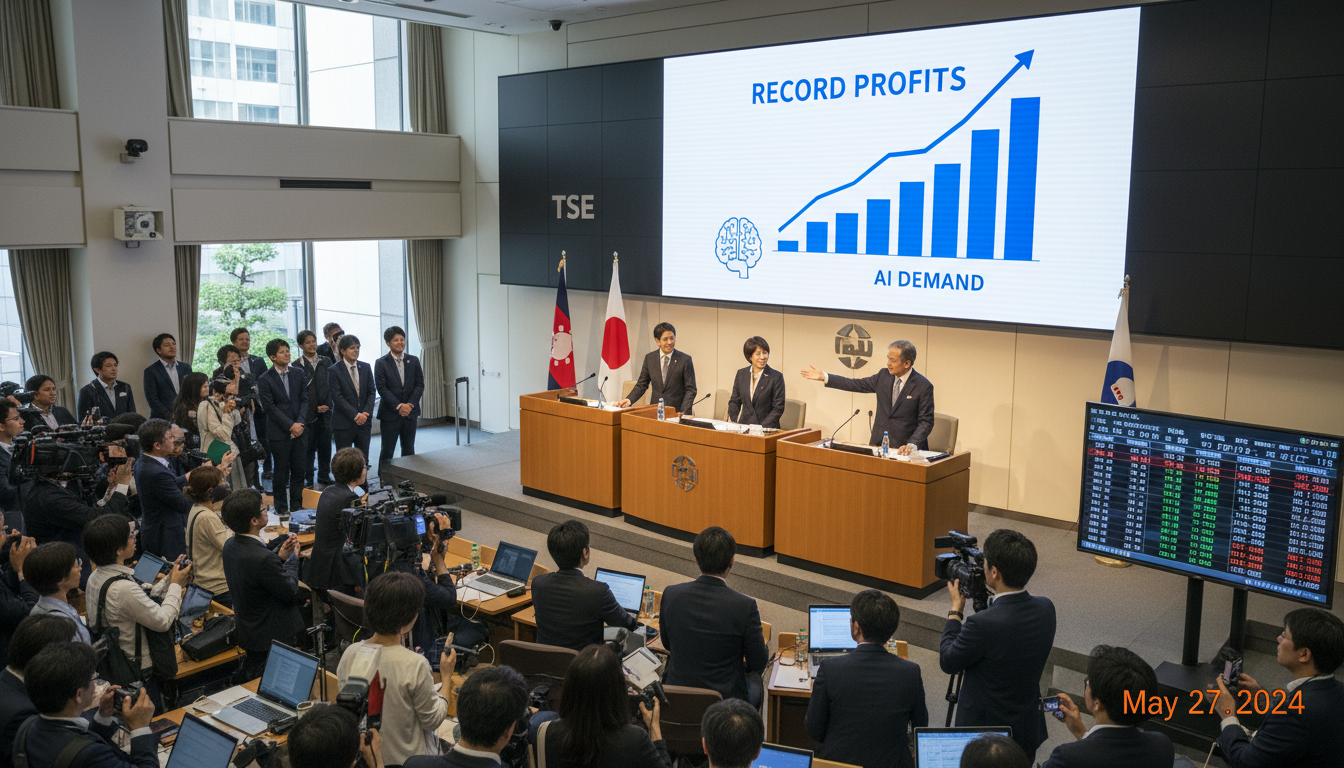
Listed companies in Japan forecast sixth straight year of record profits as AI chip demand and higher rates boost earnings
Listed companies in Japan expect a sixth consecutive year of record profits, driven by surging demand for AI-related semiconductors, higher interest-rate margins at banks and robust office leasing in central Tokyo. The outlook reflects stronger results across technology, financials and real estate firms and signals broad-based corporate resilience. Investors and analysts say the mix of cyclical recovery and sector-specific strength underpins the upbeat forecasts.
Corporate Profits Set for Sixth Consecutive Record
Listed companies in Japan are projecting a continuation of profit growth after five years of rising earnings, with expectations now pointing to a sixth straight record. Management guidance and market estimates indicate gains are concentrated in capital-intensive industries and sectors exposed to global technology cycles. Companies have cited solid order books and improved pricing power as reasons for the optimistic outlook.
Semiconductor Makers Ride AI-Driven Chip Surge
Semiconductor manufacturers are at the forefront of the earnings momentum, benefitting from heightened global demand for processors and memory tailored to artificial intelligence applications. Companies across the supply chain report stronger equipment orders, tighter inventories and renewed capex plans from major cloud and tech customers. Analysts say the AI-driven cycle has improved visibility for the coming quarters and helped lift industrywide margins.
Many chip firms are reinvesting higher profits into capacity expansion and R&D to capture long-term opportunities in AI systems and advanced packaging. That spending has also supported suppliers of production equipment and materials, creating ripple effects across related industrial segments. Market watchers caution that progress depends on sustaining order growth and the timing of new capacity coming online.
Banks Gain from Higher Interest Rates and Wider Margins
Japan’s banking sector is also contributing to the profit upswing as higher global and domestic interest rates boost net interest income. Lenders report improvement in lending spreads and renewed demand for corporate loans, which have helped restore profitability after years of margin compression. Several regional and major banks have signalled better full-year profit trajectories thanks to interest-sensitive revenues.
At the same time, banks face cost and credit considerations as they balance deposit repricing and potential credit-cycle changes. Institutions are emphasizing fee-income diversification and efficiency measures to lock in gains while preparing for possible volatility in global markets. Analysts highlight the sector’s improved fundamentals but note sensitivity to rate dynamics and economic growth.
Real Estate Firms Benefit from Strong Tokyo Office Leasing
Demand for office space in central Tokyo has remained resilient, lifting earnings for real estate companies and property managers. Urban leasing markets are showing firmer absorption of high-quality space as corporations consolidate operations and expand headcount tied to digital and AI investments. Developers and listed REITs point to improving rent renewals and lower vacancy in prime districts.
The recovery in office fundamentals has supported asset valuations and fee-based earnings, providing a counterbalance to weaker segments of the property market. Yet firms also caution that construction costs and interest expenses can weigh on returns, particularly for projects with long lead times. Market participants say selective asset management and lease upgrades are key to maintaining momentum.
Corporate Outlook Tempered by External and Policy Risks
Despite the optimistic profit projections, companies and analysts warn that global demand shifts, supply-chain disruptions and currency swings could damp results. Export-oriented manufacturers remain exposed to fluctuations in overseas markets and semiconductor cycle volatility. Policymakers’ decisions on interest rates and trade policy are also cited as potential headwinds that could alter the trajectory of corporate earnings.
Companies are increasingly flagging operational measures to manage risk, including hedging strategies, diversified supplier relationships and more conservative capital spending plans. Investors will be watching quarterly updates and corporate guidance for signs of sustained improvement or early signs of slowdown. The balance between cyclical tailwinds and policy uncertainty will shape earnings through the next fiscal year.
Business leaders say the current environment offers an opportunity to strengthen balance sheets and invest in growth areas while remaining cautious about external shocks. If demand for AI technologies and financial sector improvements persist, the consensus is that listed companies in Japan could deliver another year of record profits, albeit with uneven performance across sectors.
Earnings revisions and market reactions in coming months will determine whether the projected sixth consecutive record year becomes reality, and whether gains are broad enough to offset rising costs and macroeconomic risks. The interplay between technology demand, financial conditions and urban real estate trends will be central to corporate performance going forward.

