
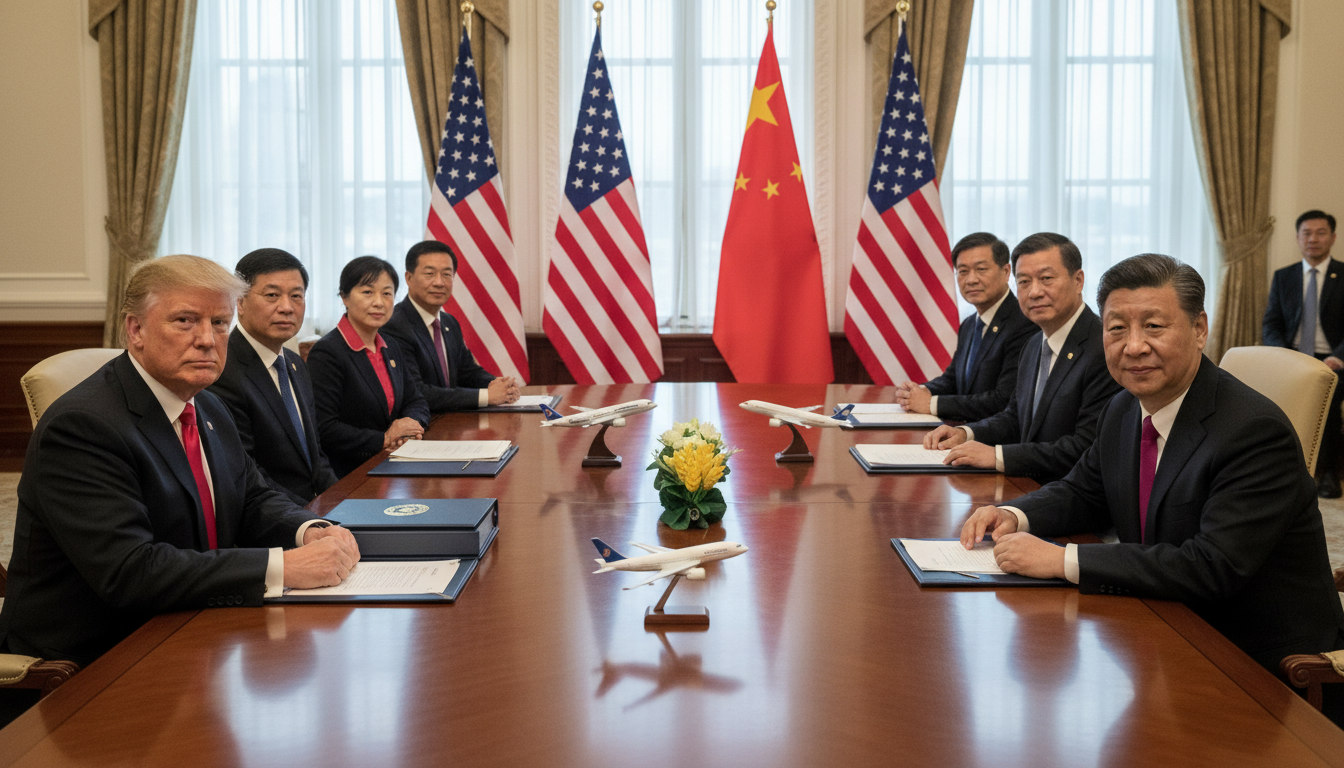
Trump-Xi Summit Yields Broad Trade Pledges but Few Concrete Details
China says the Trump-Xi Summit agreed to expand agricultural trade, set up trade and investment boards, and buy U.S. airplanes, but offered scant specifics.
Strong opening: Leaders agree on trade framework in Beijing
The two-day Trump-Xi Summit in Beijing concluded with Beijing announcing agreements to expand agricultural trade, establish joint trade and investment boards, and purchase American aircraft. Chinese officials described a cooperative tone but did not publish figures, timetables or binding texts for the announced measures. The lack of clear deliverables left market observers and trade analysts seeking more concrete commitments.
China signals agricultural trade expansion
Beijing emphasized that agricultural trade would be a central component of the summit outcome, framing it as a confidence-building step between the two economies. Chinese statements indicated a willingness to broaden imports of U.S. farm goods, though no volumes, product lists or implementation schedules were disclosed. Observers noted that increased agricultural purchases could ease some bilateral tensions, but stressed that verification and purchase timelines are essential to judge the measure’s impact.
Commitments on U.S. aircraft purchases
Chinese officials said the two sides agreed that Chinese carriers would buy American airplanes, a move that could boost U.S. manufacturers and suppliers. No details were provided about which carriers, how many aircraft, or delivery schedules, leaving industry analysts cautious about immediate supply-chain effects. Aircraft orders typically require months of negotiation and regulatory approval, meaning any major purchases announced at the summit would take time to materialize.
New trade and investment boards to be created
The summit reportedly included a plan to set up boards focused on trade and investment to improve communication and resolve disputes between the two governments and businesses. These joint bodies are intended to provide structured channels for follow-up, though the composition, mandate and authority of the boards were not revealed. Analysts said such mechanisms could help manage disputes if they are given clear reporting requirements and timelines.
Beijing releases limited information
Chinese statements offered few specifics about the agreements, a pattern that has sometimes followed high-level talks in the past. Officials framed the announcements as progress while deflecting calls for immediate, verifiable results. The vagueness prompted questions from foreign analysts about whether the declarations reflect preliminary understandings or firm commitments.
U.S. response and market reaction expected
Washington’s formal response and any supporting documentation will be closely watched to determine whether the summit produced mutual, enforceable commitments. Financial markets and agricultural exporters reacted with guarded optimism, awaiting more detailed trade data and procurement schedules. Business groups said clarity on contract terms, certification processes and customs procedures will be necessary before exporters can plan shipments.
Implications for supply chains and diplomacy
If implemented, expanded agricultural purchases and aircraft sales could ease aspects of bilateral friction and create immediate commercial opportunities for exporters and manufacturers. However, experts cautioned that headline announcements must be followed by technical negotiations, regulatory clearances and financing arrangements to have substantive economic effects. The establishment of trade and investment boards could institutionalize dialogue, but their effectiveness will depend on transparency and the willingness of both sides to resolve sticking points.
Leaders and officials signaled that follow-up meetings and technical working groups will be convened to translate summit pledges into actionable plans, but no firm dates or milestones were disclosed. The coming weeks are likely to show whether the Trump-Xi Summit produced durable policy shifts or primarily served as a diplomatic reset.
The summit’s announcements represent a potentially important step toward rebuilding commercial ties, but concrete timelines, procurement contracts and verification mechanisms remain necessary for businesses and markets to respond with confidence.

