
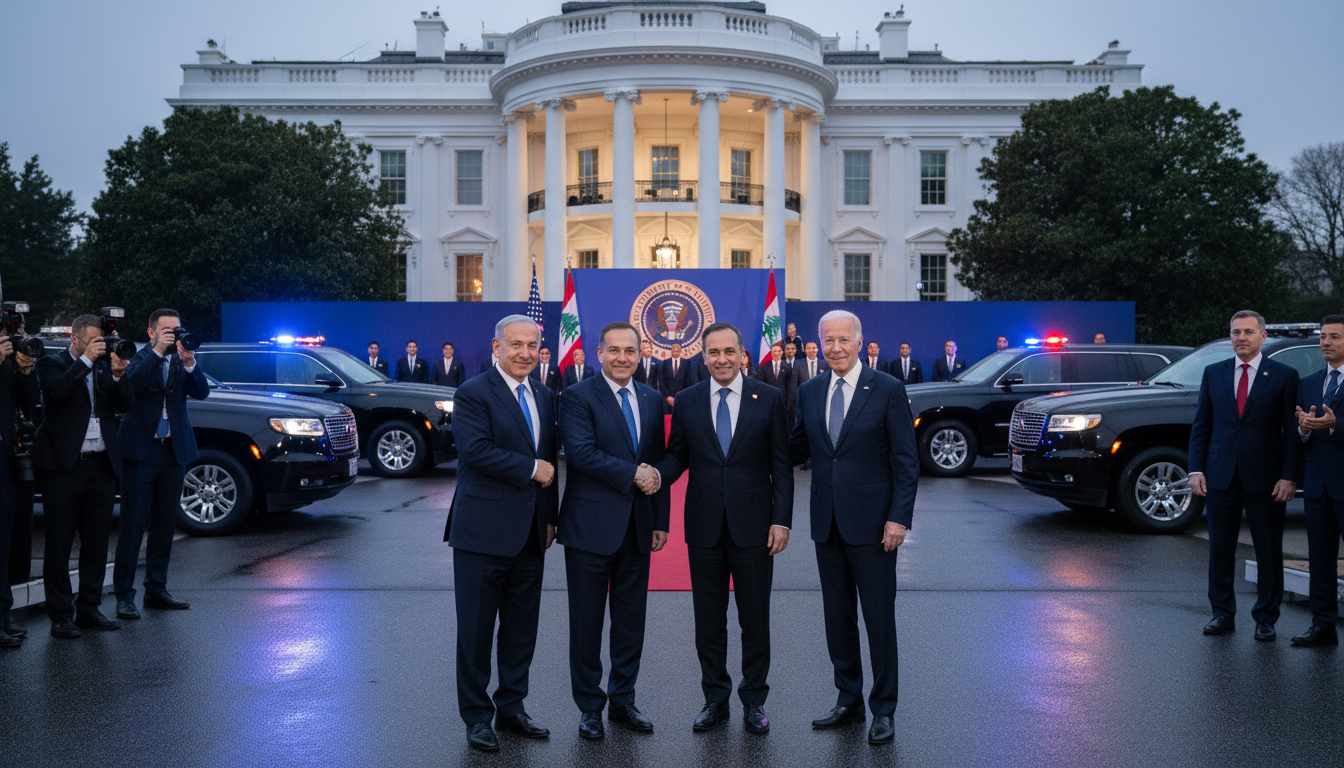
Israel-Lebanon ceasefire extended three weeks after White House talks
U.S.-brokered Israel-Lebanon ceasefire extended by three weeks after Oval Office meeting on April 23, 2026, amid ongoing violations and humanitarian concerns.
Direct diplomacy held at the White House
President Donald Trump hosted a meeting in the Oval Office on April 23, 2026, where Israeli and Lebanese ambassadors agreed to extend an Israel-Lebanon ceasefire by three weeks. Trump, flanked by Vice President JD Vance and Secretary of State Marco Rubio, said the talks “went very well” while acknowledging the complicating presence of Hezbollah. The extension follows an initial 10-day ceasefire that began on April 17, 2026 and was due to expire on April 27, 2026.
Agreement details and U.S. assurances
Officials said the pause in active hostilities will be prolonged to allow time for wider negotiations and stabilization along the border. The United States signaled it will assist Lebanon in protecting itself from attacks by Hezbollah, an Iranian-backed group that has opposed the direct talks. Israeli and Lebanese envoys described the extension as a step toward broader discussions although implementation details and enforcement mechanisms were not disclosed.
Hezbollah remains outside formal talks
Hezbollah has not participated in the diplomatic exchanges and senior figures in the group have rejected any arrangements made without their consent. Wafiq Safa, a political council member of Hezbollah, told media the group would not abide by agreements reached in direct talks. Israeli officials, including Foreign Minister Gideon Saar, reiterated that disarming Hezbollah is central to any long-term normalization between the two countries.
Lebanese government presses wider agenda
Lebanese leaders have pushed for a more comprehensive negotiation agenda that goes beyond a temporary ceasefire. President Joseph Aoun and his office have said Lebanon will seek a halt to home demolitions, the withdrawal of Israeli forces from occupied areas, the release of Lebanese detainees held in Israel, deployment of Lebanese armed forces along the border, and a framework for reconstruction. Deputy Prime Minister Tarek Mitri announced on April 23 that Lebanon is preparing a report documenting alleged war crimes and that ministers discussed possible steps toward joining the International Criminal Court.
Violations and civilian toll during the truce
Despite the ceasefire, both sides have reported multiple violations since April 17, and tensions have simmered along the frontier. Humanitarian agencies estimate the recent fighting has killed roughly 2,300 people in Lebanon and displaced more than 1 million, with a large share of casualties among women and children. The death of Lebanese journalist Amal Khalil during an Israeli strike on April 22 sparked intense public anger after reports said rescuers were hindered from reaching an ambulance; the Israeli military denied intentionally targeting journalists or obstructing aid workers.
Historical significance and international role
The White House-hosted talks marked the first direct diplomatic engagement between Israel and Lebanon since 1993, breaking decades of near-exclusive indirect communication mediated by the United States or the United Nations Interim Force in Lebanon (UNIFIL). U.S. officials framed the meetings as a potential pathway to formalizing peace, while regional actors, particularly Iran, remain influential by virtue of their support for Hezbollah. Analysts caution that any durable settlement will require addressing armed nonstate actors, disputed border areas, prisoner issues, and the reconstruction of towns affected by months of conflict.
Next steps and diplomatic calendar
President Trump indicated he expects follow-up meetings in Washington in the coming weeks with Israeli Prime Minister Benjamin Netanyahu and Lebanese President Joseph Aoun to press for a more permanent resolution. Lebanese and Israeli envoys said preparatory work is under way for broader negotiations, but emphasized that progress will hinge on security arrangements and the willingness of local and regional stakeholders to accept any terms. U.N. peacekeepers and humanitarian organizations are expected to play an expanded monitoring and aid role during the extended ceasefire period.
The extension of the Israel-Lebanon ceasefire offers a fragile window for diplomacy to reduce immediate violence and begin negotiations on longer-term issues, but the exclusion of Hezbollah and the scale of destruction in southern Lebanon mean risks of renewed hostilities remain high.

