
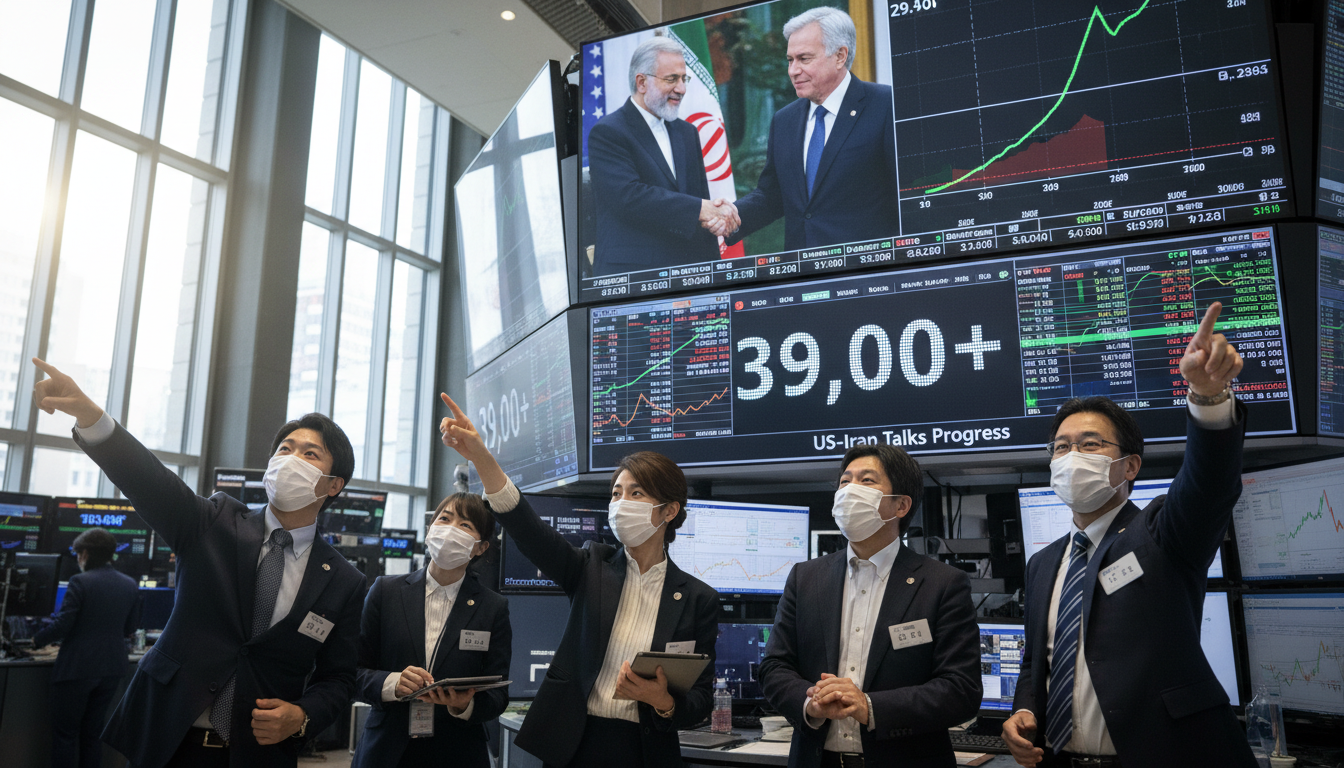
Japanese stocks jump as Nikkei trades above record high on US‑Iran talks optimism
Japanese stocks rose April 16, 2026 as the Nikkei traded above its record closing high amid growing optimism over renewed U.S.‑Iran talks and a Wall Street rally that lifted investor sentiment across Asia.
Nikkei edges above record closing high in Tokyo trading
Japanese stocks surged in morning trade on April 16, 2026, with the Nikkei moving above its previous record closing high during intraday trading. Market participants said the advance followed a strong session on Wall Street that boosted risk appetite among institutional and retail investors. The Tokyo market’s gain marked a notable shift after several muted sessions earlier in the week.
Investors cited an improving tone in global risk markets as the immediate catalyst for the rise in Japanese stocks. The move occurred amid cautious optimism that further diplomatic engagement between the United States and Iran could ease geopolitical tensions that have weighed on energy and risk assets.
Wall Street rally tied to optimism over U.S.-Iran talks
A rally on Wall Street overnight helped set the stage for Tokyo’s advance, as equities in New York climbed on hopes of additional diplomatic contact between Washington and Tehran. Traders said the prospect of more talks, including the possibility of ceasefire discussions, reduced a near-term tail risk for markets and encouraged repositioning into equities. The improved mood on global bourses filtered through to Asian trading floors early on Thursday.
Analysts noted that markets are sensitive to shifts in geopolitical narratives, and even tentative signs of dialogue between key actors can prompt investors to reallocate from defensive holdings into cyclicals and growth names. While the developments are viewed as positive by many, participants emphasized that outcomes remain uncertain and subject to rapid change.
Exporters and technology names helped lift the market
Within Tokyo trading, exporters and technology-related firms were among the groups that outperformed as Japanese stocks climbed. Market strategists said companies with significant overseas revenue often benefit when global demand prospects brighten, prompting increased buying interest in shares tied to electronics, autos and precision machinery. Domestic-focused sectors displayed more mixed results, reflecting a selective market rotation.
Traders also pointed to technical factors that amplified gains, including short-covering ahead of key resistance levels on major indices. Liquidity conditions in the morning session supported a broad-based uptick, although commentators cautioned that intraday strength does not guarantee sustained momentum.
South Korea and other regional markets mirrored the rally
The positive tone in Tokyo extended across the region, with South Korea’s market rising by about 2% on the same session, reflecting similar optimism among investors. Other Asian markets recorded modest gains as the improvement in risk sentiment and the Wall Street rally combined to ease some of the pressure that had kept equities subdued. Foreign investor flows into the region were cited by several dealers as an important element of the move.
Currency moves were relatively contained during the session, according to traders, but any further strengthening of global risk appetite could prompt additional capital flows into regional equities. Market watchers remain attentive to how developments in global policy and geopolitics will influence cross‑border investment patterns.
Analysts warn caution amid lingering uncertainties
Despite the jump in Japanese stocks, analysts and fund managers urged caution, noting that diplomatic overtures can be fragile and market outcomes hinge on concrete progress. Macroeconomic concerns such as inflation trends, central bank policy decisions and corporate earnings remain key variables that could reverse gains. Several portfolio managers said they were trimming exposure after the intraday rise while looking for confirmation in coming sessions.
Risk management remained a focal point for institutional investors, who balanced optimism with hedging against downside scenarios. The consensus among market professionals was that while the immediate reaction to improved U.S.‑Iran dialogue prospects has been positive, the sustainability of the rally will depend on clearer signals from both diplomatic and economic fronts.
Tokyo’s trading session on April 16 showed how quickly market sentiment can shift when geopolitical tensions appear to ease, but participants stressed the importance of monitoring developments closely before extrapolating short‑term gains into a durable trend.

