
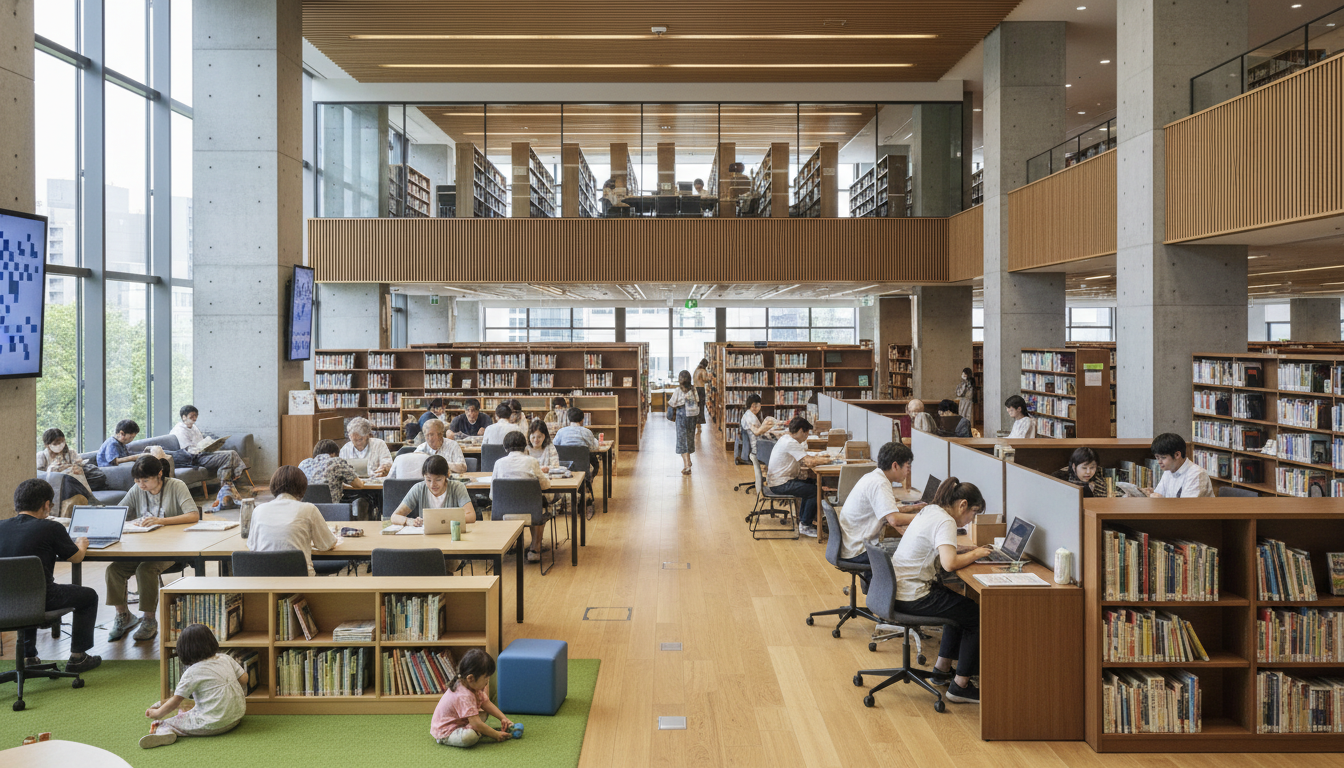
Public libraries in Japan rise 30% in two decades as they evolve into community hubs
Public libraries in Japan have grown 30% over 20 years, becoming community hubs—Tenmonkan Library draws some 700,000 yearly visitors, reshaping local services.
Japan’s public libraries are expanding rapidly even as per-capita reading declines, with the number of facilities up roughly 30% over the past two decades and newer branches positioning themselves as community anchors. Policymakers, municipal officials and librarians say these institutions are adapting to changing needs by offering services that extend well beyond book lending. The trend is visible in cities and regional centers, where renovated and newly built libraries are attracting more diverse users and hosting a broad array of programs.
Public library growth accelerates across municipalities
Local government records and sector reports indicate a sustained increase in library facilities, with growth driven by municipal investment and community demand for public spaces. Expansion has been notable in shopping districts and downtown redevelopments where libraries are integrated into mixed-use projects. Municipal leaders cite libraries’ role in promoting social cohesion and economic activity as reasons for continued support.
Tenmonkan Library’s footfall highlights shifting patterns
Tenmonkan Library in Kagoshima, opened in 2022, has become a case study for the new model of public libraries in Japan, drawing about 700,000 visitors annually. Located in a busy business and shopping district, the facility combines traditional collections with event spaces, study areas and cultural programming tailored to local needs. Local officials say the high footfall reflects the library’s accessibility and programming strategy rather than a simple rebound in book borrowing.
Libraries expanding services beyond lending
Modern public libraries in Japan are increasingly focused on experiential and digital services, offering exhibitions, workshops, co-working spaces and digital literacy classes. Many branches host lectures, language exchange meetups and family activities that aim to attract non-traditional library users. These expanded offerings are designed to respond to demographic shifts, including aging populations and the needs of working families, while keeping collections relevant through multimedia and e-resources.
Funding decisions and local government backing
Municipal budgets and renovation grants have played a central role in the proliferation of new library facilities and services, with local governments reallocating funds toward cultural infrastructure. Some cities have partnered with private developers to place libraries in commercial complexes, sharing maintenance costs and increasing visitor traffic. Library administrators emphasize that sustained funding is crucial to maintain staff levels, programs and technology upgrades that underpin the modern library model.
Reading habits, digital access and visitor profiles
Surveys and usage patterns show that fewer Japanese residents read printed books as frequently as in past decades, but library visits are not solely linked to borrowing statistics. Visitors often come for study space, internet access, community events and quiet areas, reflecting a diversification of library functions. Digital lending and online archives have also become standard offerings, helping libraries remain relevant to younger and remote users while supporting lifelong learning.
Challenges: staffing, space and regional disparities
Despite growth in facility numbers, library systems face practical challenges including recruiting trained staff, securing operating budgets and addressing disparities between urban and rural access. Smaller municipalities sometimes struggle to maintain extended hours or to offer specialist services, while larger cities grapple with overcrowding and maintenance costs for high-traffic branches. Librarians and local advocates are calling for coordinated policy measures to ensure equitable service levels nationwide.
Plans for future adaptation and community engagement
Looking ahead, many library authorities are planning further integration of cultural programming, digital services and public-private partnerships to sustain momentum. Proposed measures include mobile library services for remote areas, expanded digital archives, and targeted outreach to seniors and young families. Officials emphasize the importance of continued evaluation to balance traditional collections with evolving community needs and technological change.
As the landscape of public libraries in Japan shifts, these institutions are finding new relevance as gathering places, service centers and cultural venues that support broader social objectives. Continued investment and innovative programming will determine whether libraries can sustain rising visitor numbers while meeting the changing information and social needs of communities across the country.

