
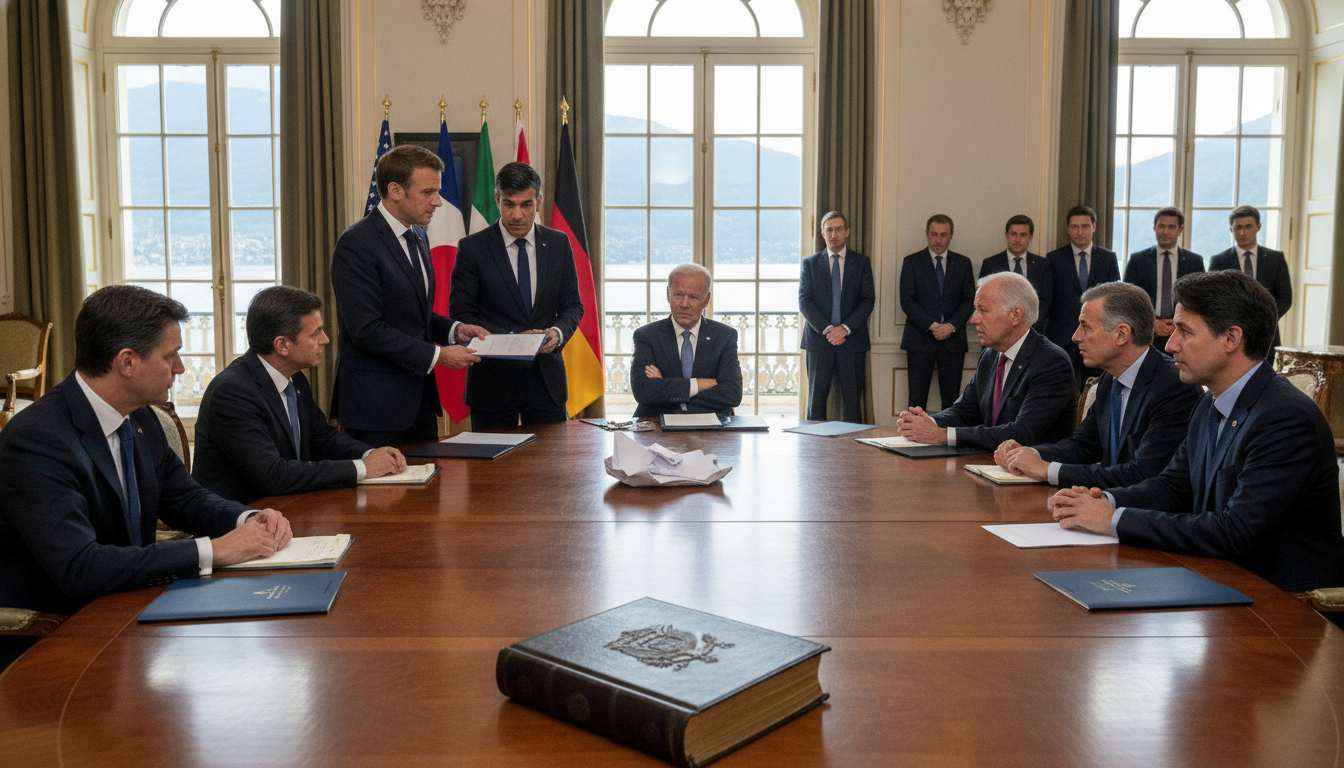
G7 communique to be dropped at Evian summit amid widening U.S.-allies rift
G7 communique will be dropped at the Evian summit as leaders seek to avoid airing deepening divisions between the U.S. and other members, with France chairing the meeting in June.
French-hosted G7 leaders have agreed not to issue a joint G7 communique at next month’s summit in Evian, a move intended to prevent public exposure of growing rifts between the United States and several allied governments. The decision, confirmed by officials close to summit planning, marks a departure from decades of tradition in which leaders issued unified statements at the close of meetings. France, which holds the G7 presidency this year, will host ministers and heads of government against a backdrop of contentious global crises and divergent national priorities.
Leaders Agree to Omit Joint Communique
The choice to forgo a joint communiqué reflects an effort by hosts to preserve private diplomatic channels while avoiding a public document that could highlight disagreements. Officials said the format change is meant to allow leaders to flag common ground where it exists without formalizing language that could expose fault lines.
Analysts noted that skipping a unified statement is an increasingly common response when consensus is elusive, enabling governments to issue separate statements or targeted readouts instead. The move also reduces the risk that one delegation’s objections will overshadow attempts to present a coordinated international response.
U.S.-Allies Divisions Cited as Reason
Diplomatic sources described the underlying dynamic as a divergence between U.S. positions on certain high-stakes issues and those of other G7 members. Rather than negotiating protracted text to reach a watered-down compromise, hosts opted to abandon the collective communiqué to avoid magnifying disputes in public.
Observers said the shift illustrates how differences among the G7 on policy priorities and messaging have widened in recent months. While officials emphasized that consultations and bilateral meetings will continue, the absence of a communique signals a pragmatic retreat from the ritual of formal consensus.
French Presidency Seeks to Manage Optics
France, as this year’s G7 chair, faces the delicate task of steering the summit through sensitive terrain without allowing public confrontation to dominate coverage. French officials have emphasized the desire to maintain productive discussions while protecting the summit’s ability to produce concrete bilateral and multilateral outcomes.
President Emmanuel Macron, appearing at a conference on the sidelines of recent G7 finance meetings, stressed the importance of careful diplomacy and of focusing on areas where cooperation remains strong. The presidency’s approach appears calibrated to preserve relationships among allies while enabling frank exchanges away from the headlines.
Key Agenda Items and Potential Flashpoints
Leaders are expected to discuss a broad agenda, including global economic stability, supply chain resilience, energy security, climate action and geopolitical crises. Several of these topics have proven difficult to reconcile in public statements because member states hold differing strategic and domestic priorities.
Potential flashpoints could include responses to regional conflicts, trade measures, and approaches to engagement with major powers outside the G7 framework. With no single communiqué to encapsulate outcomes, leaders may rely on joint ministerial communiqués, parallel statements, or individual press briefings to convey positions.
Diplomatic Consequences and Next Steps
Skipping a communal statement is likely to prompt a mix of diplomatic reactions: some governments may welcome the candid, flexible format, while others may lament the loss of a symbolic expression of unity. The decision could also shape how other multilateral gatherings approach joint messaging in the months ahead.
Organizers have signaled that the summit will still aim to produce tangible initiatives and coordinated actions where possible. After Evian, participants may issue sector-specific declarations or coordinate through working groups to pursue shared priorities without the constraints of a single overarching communiqué.
The absence of a joint G7 communique at Evian underscores the challenge Western democracies face in projecting a unified front amid varied domestic pressures and divergent strategic calculations. While leaders will continue to meet and negotiate in Evian, the decision not to issue a formal communiqué reflects a new emphasis on discreet diplomacy and targeted cooperation rather than public consensus building.

