
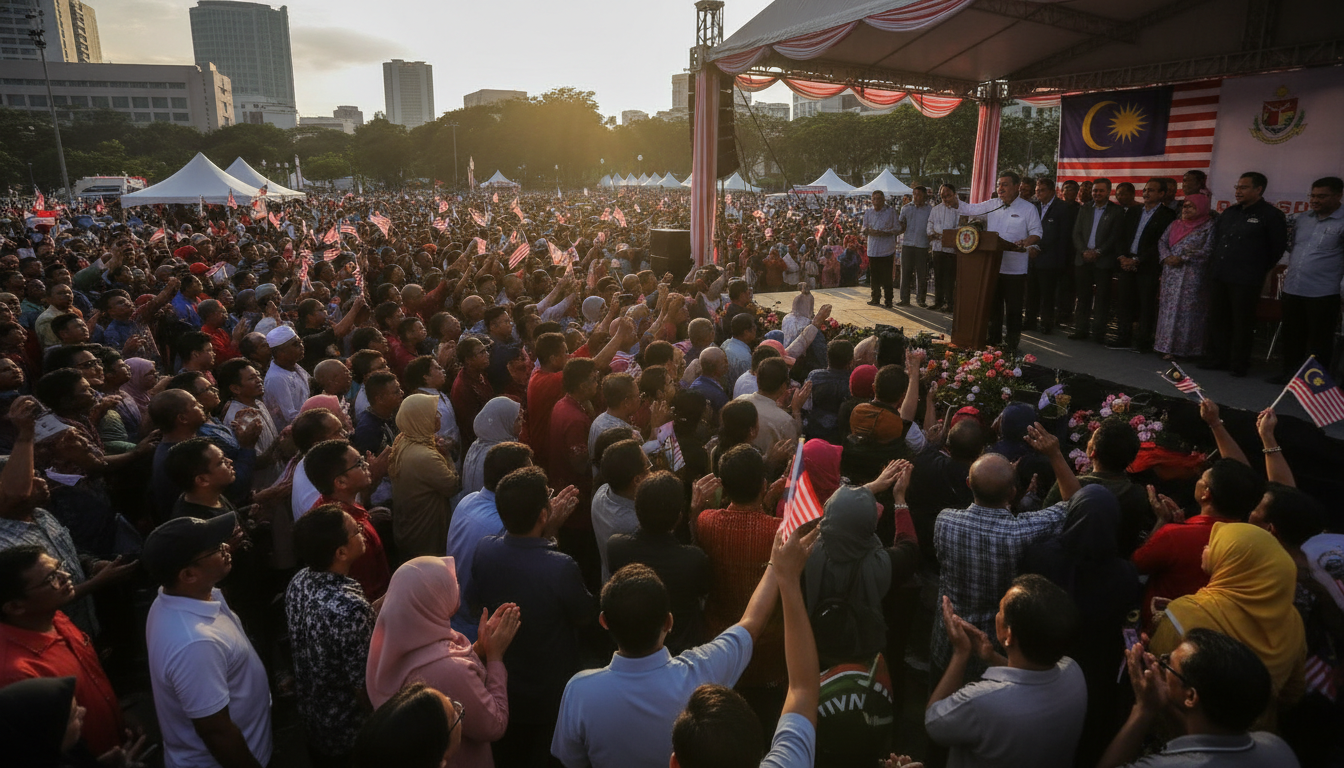
Johor state election tests Anwar coalition amid investment boom and voter expectations
Malaysia’s Johor state election on July 9, 2026, put the Johor state election at the center of national politics as voters weighed tangible economic gains against political promises.
Lead snapshot of the vote
A state election in Johor on July 9 served as an early gauge of national political momentum for Prime Minister Anwar Ibrahim’s ruling coalition, analysts said. The Johor state election tested the government’s ability to translate recent investment projects into visible benefits for ordinary voters. Turnout and margins in suburban and industrial districts were watched for signals about broader public sentiment ahead of the next general election. Observers focused on whether the investment boom in the state has produced enough local gains to shore up incumbent support.
Investment boom raises local stakes
Johor has seen a surge in foreign and domestic investment in sectors such as manufacturing, logistics and services in recent years. That influx has raised expectations among residents for jobs, infrastructure upgrades and higher household incomes. Campaigns in the Johor state election highlighted contrasting claims about who could best convert projects into everyday improvements. For many voters, the immediacy of new factories and development sites mattered more than long-term national narratives.
Candidates framed economic deliverables
Candidates framed their platforms around tangible deliverables: road upgrades, school improvements and short-term employment opportunities tied to new investments. Local officials on the campaign trail emphasized implementation timelines and accountability for promised projects. Opposition contenders sought to link unmet local needs to broader criticisms of governance and delivery. The Johor state election thus became a contest over both political credibility and administrative competence.
Coalition dynamics and political calculations
Analysts said the results would reflect not only local sentiment but also the strength of Anwar Ibrahim’s coalition and its partners. The performance of allied parties and newly resurgent opposition groups shaped calculations about coalition strategy ahead of the national contest. Political operatives watched whether alliances held steady or voters punished perceived infighting. The outcome in Johor could prompt tactical shifts in candidate selection and messaging at the federal level.
Voter concerns went beyond headline investments
While large investments drew headlines, many voters raised concerns over cost of living, housing affordability and small-business support. Local markets and commuter towns voiced frustration with congestion and uneven benefit sharing from development. Community leaders pressed candidates on measures to protect livelihoods affected by land-use change and industrial expansion. Those local, everyday issues helped determine voting patterns across diverse constituencies in the state.
What the result means for national politics
A clear win for incumbents would strengthen the ruling coalition’s claim to economic stewardship and could bolster its negotiating position with partners. A setback for the government would embolden opponents and may accelerate recalibration within the coalition ahead of the general election. Political strategists said the Johor state election outcome would be factored into national campaigning, fundraising and alliance talks. Regardless of the precise margin, the vote provided a real-world test of whether recent investments have translated into political support.
Counting, timelines and immediate responses
Votes were counted shortly after polls closed, with official tallies and seat-by-seat results released through state electoral channels. Party offices and observer groups monitored for reported irregularities while both sides prepared statements on the result. Early post-election commentary focused on turnout patterns, urban-rural splits and the performance of key districts that serve as bellwethers. Media and analysts flagged which marginal seats swung and how that reflected local responses to economic and service delivery promises.
The Johor state election underscored the interplay between economic development and political accountability as voters judged whether visible investments had produced meaningful improvements in daily life. The results will be parsed by parties and policymakers for lessons on messaging, coalition management and the delivery of projects that voters can tangibly measure.

