
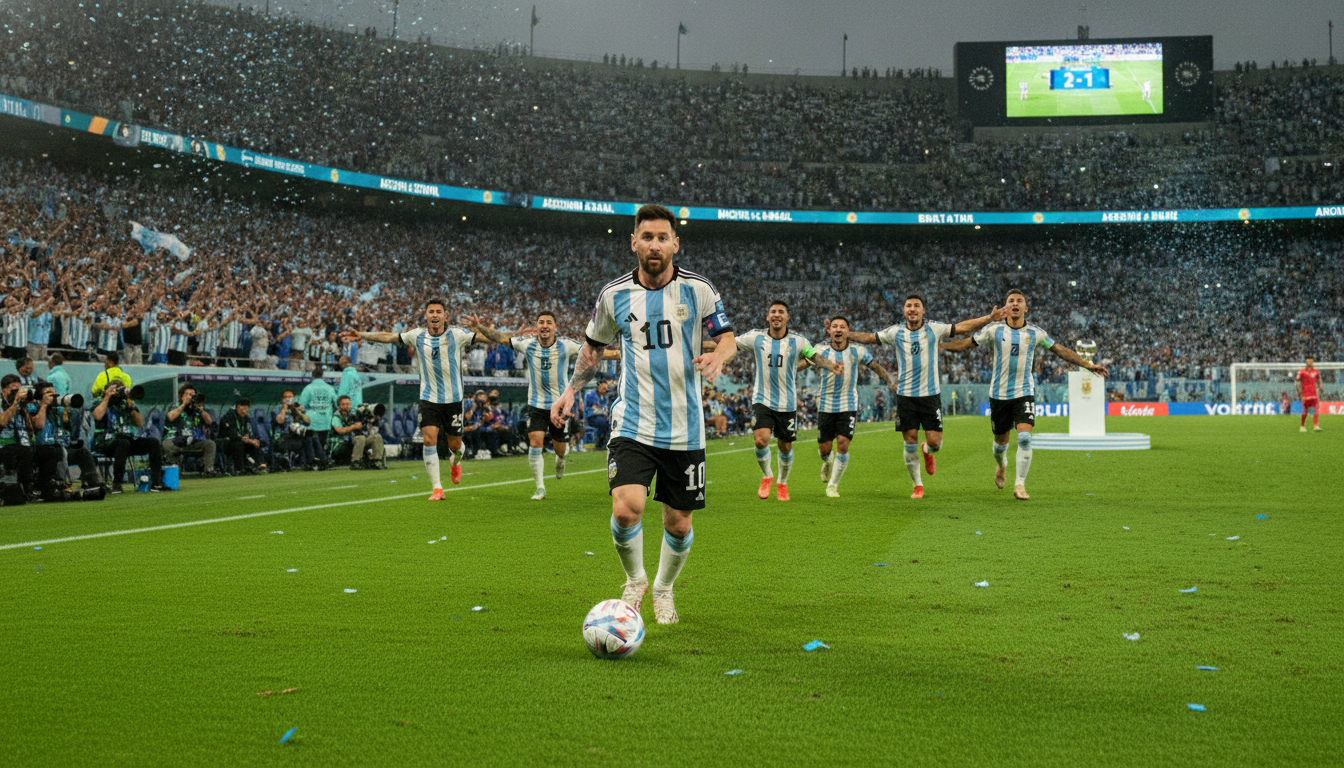
Messi Leads Argentina Toward Rare World Cup Repeat
Lionel Messi and Argentina are poised to attempt a historic World Cup repeat, chasing a consecutive title that has been achieved only twice in tournament history.
Argentina’s pursuit of back-to-back World Cup championships centers on Lionel Messi, whose presence and form remain decisive for the national side. The team that lifted the trophy four years ago now faces the pressure of defending the crown in a tournament where repeats are exceptionally rare. As Argentina advances through the knockout stages, the spotlight has shifted equally to Messi’s enduring influence and the squad’s depth.
Messi and Argentina on the cusp of back-to-back titles
Argentina enters the closing rounds with Messi at the heart of its campaign, blending veteran leadership with younger support players. At 39, Messi is the squad’s focal point on and off the pitch, directing play in critical moments while carrying national expectations. Team officials and teammates have repeatedly underscored his role in galvanizing belief across Argentina’s dressing room.
The pathway to a repeat has tested Argentina tactically and mentally, forcing adaptations to varied opponents and game states. Coaches have balanced Messi’s minutes with preservation strategies, while optimizing formations that allow the captain to influence decisive phases of matches. Those adjustments underline the dual challenge of relying on a generational talent while preparing for the cumulative physical demands of a prolonged tournament.
Historical rarity: only Italy and Brazil have defended the World Cup
A consecutive World Cup victory would place Argentina among an exclusive group, joining Italy (1934 and 1938) and Brazil (1958 and 1962). Across nearly a century of World Cup history, the task of defending the title has proven elusive, emphasizing how difficult repeat success is on the global stage. Factors such as opponent preparation, tournament draws, and the physical toll on players help explain why back-to-back wins are exceptional.
Past title defenses have been shaped by continuity in squad quality and stable tactical frameworks, conditions that few champions sustain over four years. Modern football adds variables—heightened scouting, tactical evolution, and club-level load management—that complicate a repeat further. Argentina’s attempt therefore carries not just national pride but also a test of whether contemporary teams can replicate the sustained excellence of those early champions.
Maradona’s echo: legacy and expectations in Argentina
The memory of Diego Maradona, Argentina’s other iconic World Cup figure, remains a potent element in the narrative surrounding this campaign. Maradona’s 1986 triumph established a benchmark for national heroics, and his passing in 2020 left an enduring emotional legacy for Argentine supporters. Comparisons between epochs are inevitable in Argentina, where footballing milestones are woven into cultural identity.
For many fans, Messi’s run at another World Cup title invites reflection on continuity and change within Argentine football. While Maradona’s style and era differed from the present, both figures represent the heights of national aspiration and the personal burdens that come with heroic status. The current squad carries that historical weight while seeking to define its own chapter in Argentina’s storied international record.
Team dynamics and tactical shifts under pressure
Argentina’s tactical approach has evolved through the tournament to address varied threats from opponents. Coaches have alternated between possession-focused plans that exploit Messi’s playmaking and more pragmatic setups aimed at mitigating counterattacks. This flexibility has allowed Argentina to adjust to game contexts without abandoning core attacking instincts.
Squad rotation and the emergence of supporting players have been critical in sustaining intensity across successive matches. Younger talents have stepped into key roles, offering fresh legs and tactical versatility when veteran starters require respite. The combination of Messi’s creativity and a deeper bench gives Argentina a practical advantage in navigating the condensed schedule of knockout football.
Global significance and what a repeat would mean for Argentina
A successful title defense would reverberate beyond Argentina, reshaping discussions about modern dynasties in international football. It would place Messi’s legacy alongside the rarest achievements in World Cup history and prompt fresh evaluations of team-building approaches at the national level. For Argentina, the immediate effect would be a surge of national pride and validation of a footballing philosophy that blends talent cultivation with high-pressure performance.
The broader football community would likely view a repeat as evidence that sustained excellence can still be achieved amid the sport’s evolving tactical and physical demands. Clubs and national teams would study Argentina’s roster management, tactical variations, and the psychological coaching applied to maintain performance across tournaments. In short, the outcome would have implications for coaching strategies and player development worldwide.
Argentina’s campaign remains a live story as matches continue to unfold, with each game adding context to Messi’s quest and the team’s resolve. The coming fixtures will test fitness, discipline and the capacity to perform under global scrutiny.
If Argentina completes the rare feat of defending the World Cup, it will mark one of the sport’s most remarkable contemporary achievements and secure Messi’s place among football’s all-time greats.

