
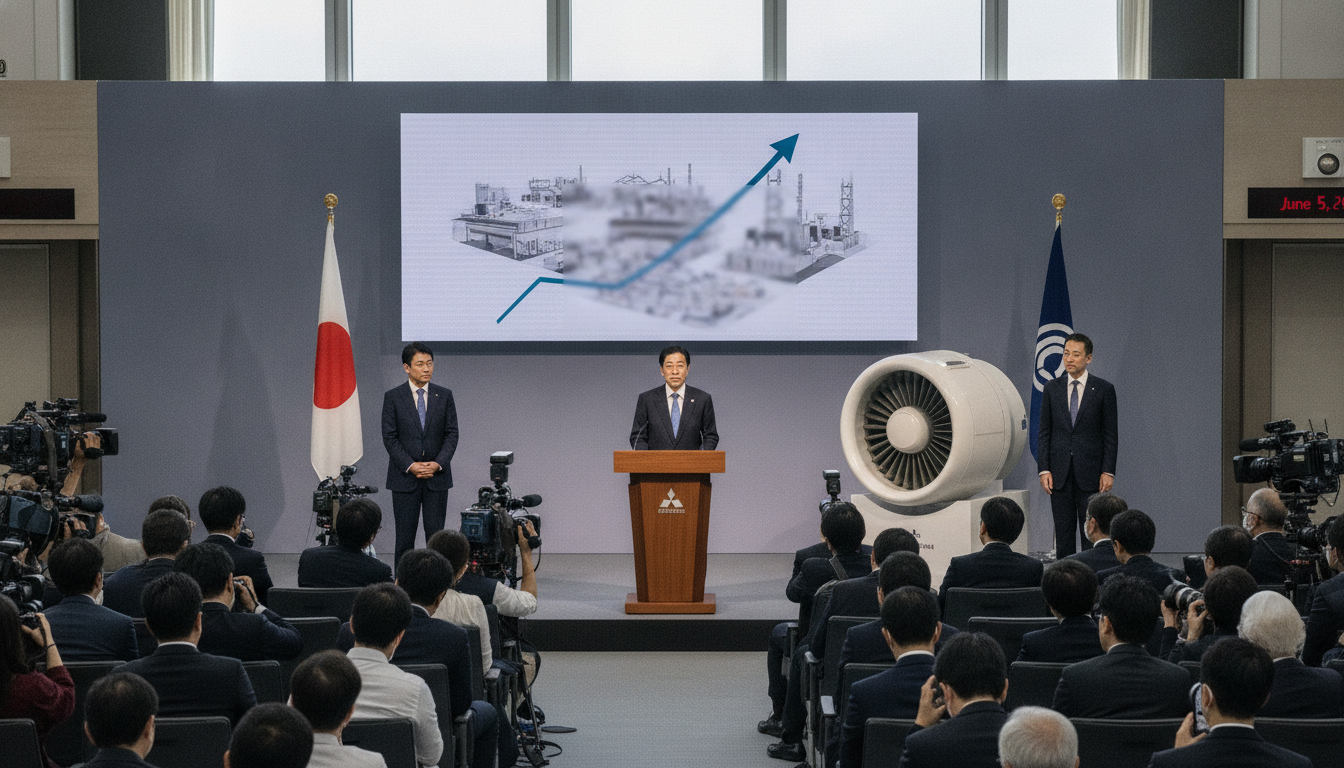
Mitsubishi Heavy Industries to Double Gas Turbine Production by Fiscal 2030 as Data Center Power Demand Surges
Mitsubishi Heavy Industries will double large gas turbine production capacity by fiscal 2030 to meet rising data center power demand, especially from U.S. projects.
Mitsubishi Heavy Industries announced plans to double production capacity for large gas turbines by fiscal 2030 compared with 2024 levels, citing a surge in demand tied to expanding data center construction. The company said the move responds to heightened needs for reliable, dispatchable power as cloud and artificial intelligence workloads drive new thermal power projects, particularly in the United States.
Mitsubishi Heavy Industries Sets 2030 Capacity Goal
Mitsubishi Heavy Industries has set a target to expand its large gas turbine output to twice the 2024 baseline by fiscal 2030. Company officials framed the goal as a direct response to increased orders from utilities and independent power producers serving major data center clusters.
The timeline signals an aggressive manufacturing ramp-up across a multi-year horizon, with the firm indicating capacity expansions will be phased to align with customer delivery schedules. Management emphasized that the plan aims to reduce lead times while preserving engineering standards for high-efficiency turbines.
U.S. Data Center Buildouts Drive Demand
Rapid growth in hyperscale data centers, driven by artificial intelligence applications and large-scale cloud services, is a primary factor behind the surge in gas turbine orders. Developers seeking firm, on-site generation and grid reliability have favored gas-fired plants because they can be deployed quickly and provide steady baseload or peaking capacity.
Energy-intensive AI training facilities require uninterrupted power and often pair with on-site gas turbines to guarantee service continuity and to supplement intermittent renewable sources. Industry analysts note that regions in the U.S. with accessible fuel infrastructure and favorable permitting regimes are attracting the bulk of these projects.
Planned Manufacturing and Supply Adjustments
Mitsubishi Heavy Industries plans to expand production lines, add shifts, and increase procurement to meet the targeted capacity growth. The company will likely prioritize upgrades at key manufacturing sites and invest in tooling, quality control, and workforce training to sustain higher volumes without compromising performance metrics.
Supply chain scaling will be essential, as large gas turbines rely on high-grade alloys, precision components and long-lead items. Executives acknowledged potential bottlenecks and said the company is engaging suppliers to secure material flows and to stagger deliveries in line with customer timetables.
Impact on Power Markets and Emissions Debate
The anticipated influx of gas-fired capacity linked to data centers has sparked renewed discussion about the role of thermal generation in decarbonizing power systems. Utilities contend that modern combined-cycle gas turbines deliver high efficiency and flexible operation, complementing renewable generation by providing quick ramping and stability services.
Environmental advocates and some policymakers remain cautious, pointing to the long-term need to phase down fossil fuel usage. Mitsubishi Heavy Industries has flagged research into hydrogen co-firing and other low-carbon technologies as part of its longer-term strategy, but widespread adoption of such fuels will depend on supply, cost and regulatory incentives.
Competitive Landscape and Global Suppliers
Global demand for large gas turbines has put manufacturers in direct competition to secure contracts tied to data center and industrial customers. Major turbine suppliers are racing to offer models that combine higher output with improved thermal efficiency and lower lifecycle emissions.
Mitsubishi Heavy Industries is positioning itself to capture a larger share of the market by leveraging its engineering pedigree and existing project pipeline. Market observers say competition will hinge not only on unit performance but also on delivery speed, after-sales service and financing arrangements that help developers meet tight project timelines.
Economic Risks and Policy Headwinds
Scaling up capacity during a period of shifting energy policy presents economic and regulatory risks. Changes in permitting regimes, tariff policies, or fuel price volatility could affect project economics and order flows, complicating long-range planning for manufacturers and their customers alike.
The company will also need to manage workforce recruitment and retention as production ramps, while ensuring compliance with export controls and international trade requirements. Mitsubishi Heavy Industries has indicated that careful coordination with governments and suppliers will be central to mitigating these risks.
Mitsubishi Heavy Industries’ decision to double large gas turbine output by fiscal 2030 underscores how the rapid expansion of data centers and AI infrastructure is reshaping global energy equipment markets. The plan reflects an industry pivot toward meeting immediate reliability needs while balancing long-term decarbonization pressures, and it sets the stage for further debate over how best to power the next generation of digital services.

