
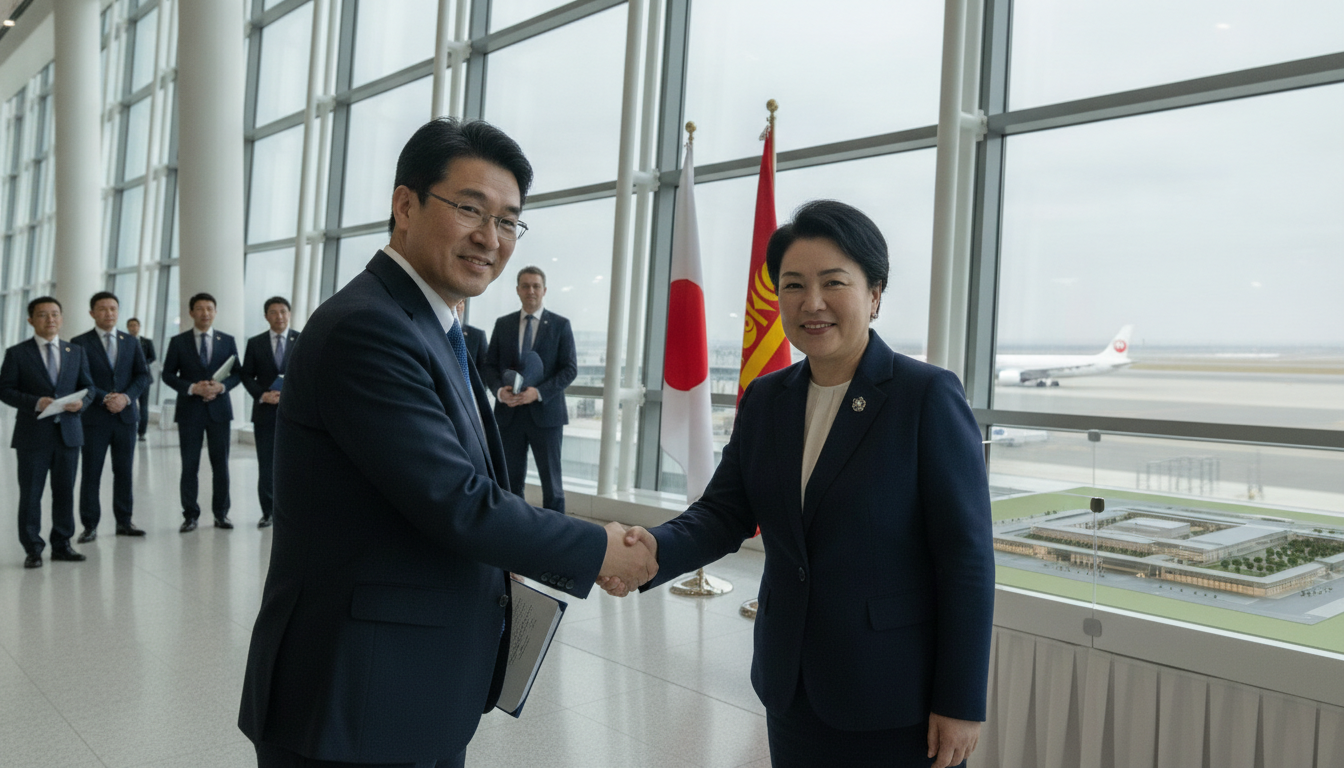
Mongolia-Japan cooperation to deepen as foreign minister highlights airport expansion
Mongolia-Japan cooperation to deepen as Foreign Minister Batmunkh Battsetseg outlines aviation and infrastructure priorities during a Tokyo interview on June 10, 2026.
Mongolia’s foreign minister, Batmunkh Battsetseg, said the country aims to deepen Mongolia-Japan cooperation across aviation, infrastructure and strategic ties during a Tokyo interview on June 10, 2026. The minister described Japan as an important “third neighbor” alongside China and Russia, and identified an airport expansion project as a key driver of closer bilateral engagement. Officials in Tokyo and Ulaanbaatar say the initiative could accelerate connectivity and open new avenues for private-sector investment.
Foreign Minister’s Tokyo visit and message
Batmunkh Battsetseg met with Japanese officials and spoke to reporters in Tokyo, emphasizing a broadened agenda for bilateral relations. She framed Japan as a partner in economic diversification and infrastructure development, noting mutual interest in strengthening people-to-people and commercial links. The visit reflects Mongolia’s effort to balance relations with its immediate neighbors by deepening ties with likeminded partners.
The minister’s comments underscore a policy trend in Ulaanbaatar to seek wider international engagement beyond the region. Japanese diplomats described the talks as constructive, with both sides stressing pragmatic cooperation in transport, trade and technical assistance. Observers said the tone of the conversations suggests a step-change in bilateral planning rather than a series of ad-hoc projects.
Airport expansion and aviation cooperation
Battsetseg identified an ongoing airport expansion project as a catalyst for enhanced Mongolia-Japan cooperation in the aviation sector. She said improved airport capacity and services would not only increase passenger links but also facilitate cargo flows, which are vital for Mongolia’s export-dependent economy. The minister suggested that modernized facilities would attract airlines, boost tourism and reduce logistical bottlenecks.
Japanese companies and development partners have expertise in airport construction, operations and safety standards, making the aviation sector a natural area for collaboration. Technical exchanges, capacity building and private-sector investment were highlighted as likely components of any cooperation package. Officials noted that aviation links often have multiplier effects on broader economic ties, including hospitality, retail and logistics.
Economic and infrastructure collaboration prospects
Beyond aviation, the minister outlined broader infrastructure and economic cooperation opportunities that could accompany the airport project. She pointed to potential Japanese participation in transport corridors, urban utilities and skills training programs aimed at strengthening Mongolia’s long-term growth prospects. Japanese technical assistance and investment could complement multilateral financing and private capital entering Mongolia.
Trade and investment diversification remain priorities for Ulaanbaatar as it seeks higher-value exports and resilient supply chains. Mongolia’s government has been encouraging projects that link resource development with domestic processing and logistics, creating openings for foreign partners with engineering and manufacturing capacity. Both capitals acknowledged that transparent procurement and clear regulatory frameworks will be important for attracting sustained Japanese involvement.
Third neighbor policy and strategic balance
In Tokyo, Battsetseg reiterated Mongolia’s “third neighbor” policy, positioning Japan as a partner that can help balance Mongolia’s strategic relationships with China and Russia. She framed the approach as pragmatic and non-confrontational, aimed at expanding diplomatic and economic options. Japanese officials welcomed the articulation while stressing that cooperation should be mutually beneficial and focused on concrete outcomes.
Analysts say the “third neighbor” concept has long guided Mongolia’s external policy, encouraging ties with a range of countries to reduce overreliance on immediate neighbors. For Japan, closer engagement with Mongolia offers regional connectivity advantages and access to strategic minerals and markets. Diplomatic goodwill and cooperative projects such as the airport expansion can reinforce practical aspects of the relationship without altering broader regional alignments.
Implementation steps and timelines discussed
During the interview, the minister outlined a desire to move from dialogue to implementation, with joint working groups and technical assessments cited as near-term priorities. She indicated that feasibility studies and regulatory reviews linked to the airport project would be expedited to attract partner commitments. Both sides signaled interest in setting specific milestones for project planning and investment promotion in the coming months.
Officials in Tokyo said follow-up meetings would be scheduled between ministries and business delegations to refine project scopes and financing models. The Mongolian side emphasized the need for clarity on procurement, environmental safeguards and capacity-building components. Observers added that early, visible wins — such as agreements on technical assistance or pilot programs — would help sustain momentum and build investor confidence.
The minister’s Tokyo discussions also touched on educational and cultural exchanges as complementary elements that can underpin long-term cooperation. Battsetseg highlighted opportunities for scholarships, vocational training and joint research as ways to deepen ties beyond immediate infrastructure projects.
Mongolia’s outreach to Japan in Tokyo on June 10, 2026, signals a pragmatic push to broaden bilateral cooperation across aviation, infrastructure and strategic affairs, using the airport expansion project as a focal point for wider economic and diplomatic engagement.

