
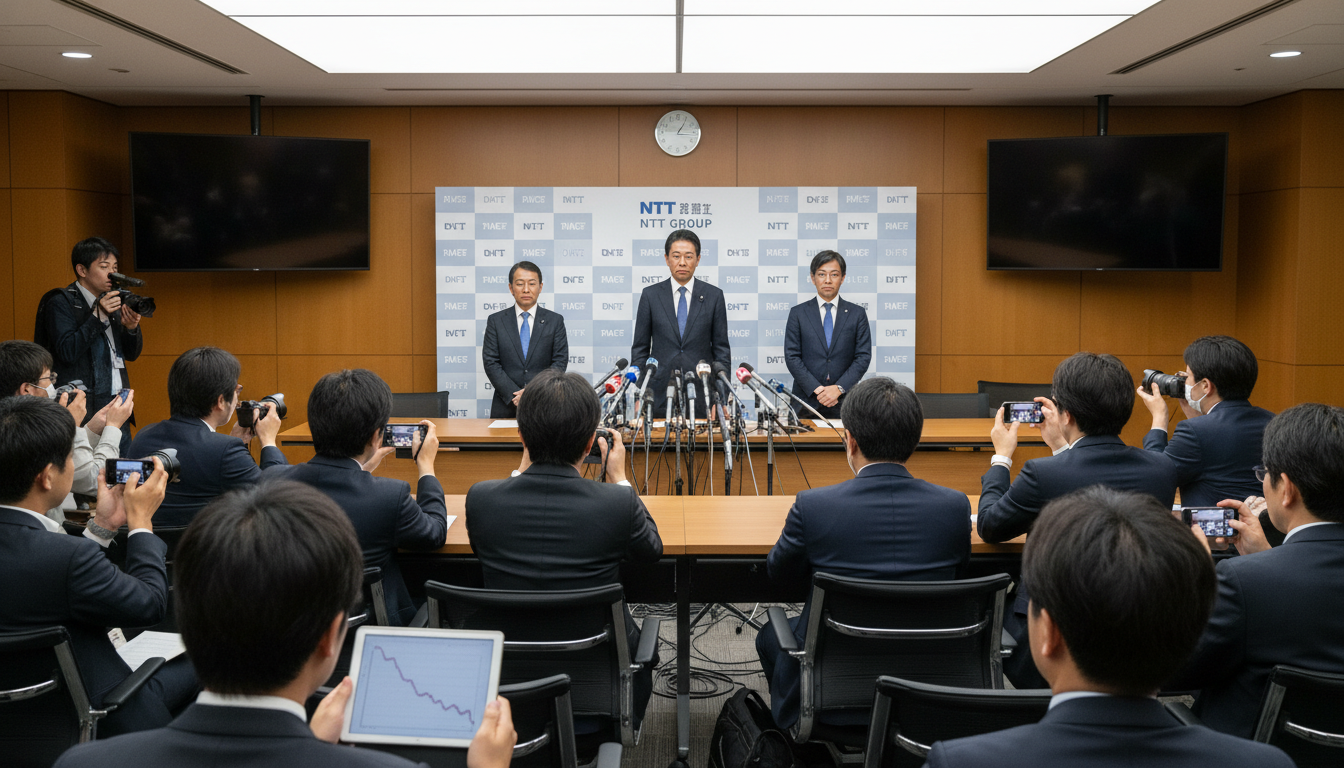
NTT Pushes Back Profit Target by Three Years as Docomo Slump Undercuts Growth Plans
NTT delays profit target by three years as NTT Docomo’s weak mobile earnings and urban connectivity issues force a pause on growth investments and strategy.
Japanese telecommunications giant NTT said Friday it will postpone a major corporate profit target by three years, citing weaker-than-expected results at its mobile arm, NTT Docomo. The announcement signals a significant recalibration of the group’s growth timetable as the cash-generating mobile unit struggles to sustain revenue and customer levels. Management warned that the setback at Docomo could limit the pace of new investments across the broader NTT group.
Delay in Corporate Profit Target
NTT said the new timetable shifts its original profit milestone further into the future, reflecting current earnings pressures at its core mobile business. Company executives linked the revision to a combination of slower subscriber growth and margin pressure at NTT Docomo, which historically has been a primary earnings driver for the conglomerate.
The revised target creates a longer window for management to stabilize finances before allocating larger sums to expansion and strategic projects. Investors will be watching how the group balances short-term recovery measures with long-term innovation plans.
Docomo Earnings Weaken Amid Customer Attrition
NTT Docomo, once the backbone of the group’s profits, has reported a downturn in mobile earnings that officials say is eroding the unit’s previously steady contributions. The slowdown has been attributed to intensified competition, price pressures, and an uptick in customer churn that has outpaced recent acquisition efforts.
Analysts note that if Docomo’s earnings do not recover, the unit’s reduced cash flow will directly constrict NTT’s ability to fund group-wide investments. That dynamic has forced the parent company to reassess capital allocation priorities and the timing of major expenditures.
Urban Connectivity Problems Linked to Subscriber Losses
Company statements and market commentaries point to service-quality issues in densely populated urban areas as a key factor behind recent customer attrition. Urban users have reported inconsistent connectivity and capacity bottlenecks, especially during peak hours, contributing to dissatisfaction and switching to rival carriers.
Network experts say urban coverage and congestion are increasingly important determinants of retention in Japan’s mature mobile market. Fixing these technical weaknesses will require targeted investment in capacity upgrades and optimization, which could further strain short-term budgets.
Impact on Group Investment and Growth Strategy
The postponement of the profit target is likely to slow NTT’s planned expansion into new business segments and overseas markets. Management has indicated that discretionary spending on non-core initiatives may be deferred until the mobile unit’s performance stabilizes and profitability targets are back on track.
Industry observers expect a reordering of priorities, with more capital directed to core network improvements and customer retention programs rather than experimental ventures. The shift could alter the timeline for planned strategic moves such as cloud, fiber expansion, and international partnerships.
Market Reaction and Analyst Assessments
Shares of NTT and related units reacted to the news as market participants digested the implications for near-term cash flow and dividends. Some analysts revised their earnings forecasts downward and cautioned that the delay undermines the narrative of steady, predictable growth the company had presented to investors.
At the same time, certain market commentators urged patience, noting that a temporary pullback in investment to shore up the mobile business could be prudent. They argued that addressing structural issues at Docomo now might enable a more sustainable expansion once service quality and margins recover.
Management Measures and Operational Remedies
NTT has outlined a series of immediate measures aimed at stemming customer losses and improving service quality, including accelerated network upgrades and targeted promotions to retain high-value subscribers. The operator also signaled plans to intensify technical audits of urban cell sites and reallocate engineering resources where congestion is worst.
Executives emphasized a dual approach: short-term actions to stabilize revenue and longer-term steps to modernize infrastructure. They also committed to clearer communication with stakeholders about progress toward restoring Docomo’s contribution to group profitability.
The company’s decision to push back its profit timetable underscores how dependent NTT’s broader strategy is on Docomo’s performance. Restoring subscriber confidence through improved urban connectivity and stabilizing mobile earnings will be essential before the group can confidently resume larger growth investments.

