
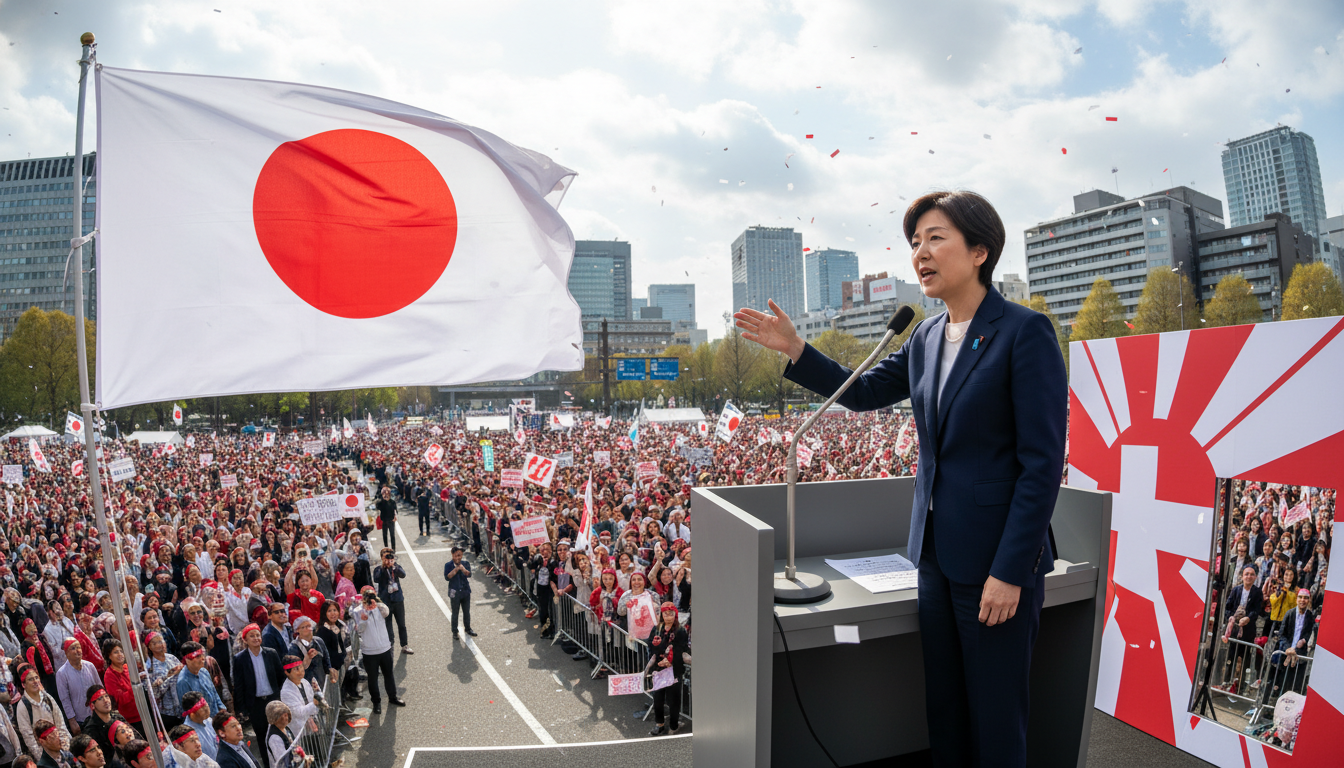
Takaichi Vows to Foster Wage Increases at Rengo May Day, Calls for Hikes That Beat Inflation
PM Sanae Takaichi pledges government action to foster wage increases at Rengo’s May Day in Tokyo, urging cooperation for sustained hikes that outpace inflation.
Prime Minister Sanae Takaichi on Wednesday pledged to make every effort to create an environment conducive to wage increases, speaking at the central May Day convention in Tokyo. The announcement marked her first May Day appearance since taking office last autumn and placed wage policy at the forefront of the government’s public messaging. Her remarks stressed collaboration between government, business and labor to secure sustained wage hikes that exceed inflation.
Takaichi’s May Day Pledge
Prime Minister Takaichi addressed attendees at the Japanese Trade Union Confederation’s central convention, saying the government would work to enable higher pay. She framed the goal as a national priority, calling for cooperation across sectors to achieve wage increases that keep pace with the cost of living. The pledge underscored the administration’s intention to make wage growth a visible part of its economic agenda.
Call for Sustained Wage Hikes Outpacing Inflation
At the Yoyogi Park gathering, Takaichi urged sustained wage hikes that outpace inflation, linking pay rises to household purchasing power and broader economic stability. She emphasized that one-off increases would not be sufficient and that continuous improvement in pay levels is necessary to protect real incomes. The prime minister’s message tied wage policy directly to inflation dynamics and living-cost concerns.
Rengo Central Convention Draws Labor Leaders in Tokyo
The May Day central convention was convened by the Japanese Trade Union Confederation, known as Rengo, and drew union representatives and labor activists to Yoyogi Park. Rengo traditionally uses the May Day platform to press for higher wages and improvements in working conditions, giving the event political and economic significance. The gathering provided a public forum for unions to press the government and employers for concrete steps to raise pay.
Labor Movement Demands and Negotiation Context
Union delegates at the convention reiterated calls for stronger wage settlements in the upcoming round of labor negotiations, framing higher pay as essential for sustained domestic demand. Labor leaders have long sought comprehensive pay increases across industries rather than isolated gains in selected sectors. The May Day event served as a signal that unions intend to press their case early and publicly this year.
Government Appeals to Business and Policy Signals
Takaichi’s appeal to corporate leaders was explicit: she called for cooperation to deliver wage increases that protect households from rising costs. While she did not lay out specific new measures at the rally, the prime minister indicated the government would work to create favorable conditions for pay growth. That approach leaves scope for a mix of policymaking, dialogue with business associations, and support measures aimed at encouraging higher settlements in enterprise-level bargaining.
Political Stakes Ahead of Negotiations and Budget Planning
The prime minister’s first May Day speech since assuming office carries political weight, as pay outcomes will influence public perceptions of economic management. Wage negotiations that follow in the coming months will test whether government appeals translate into concrete deals between employers and unions. Outcomes will also factor into budget planning and broader debates about growth, inflation and social welfare.
The announcement at Yoyogi Park reinforces wage increases as a central economic objective for the administration and sets expectations for active engagement by government, labor and business. Observers will monitor the upcoming wage rounds and policy signals to judge whether the pledge produces sustained improvements in pay and real incomes.

