
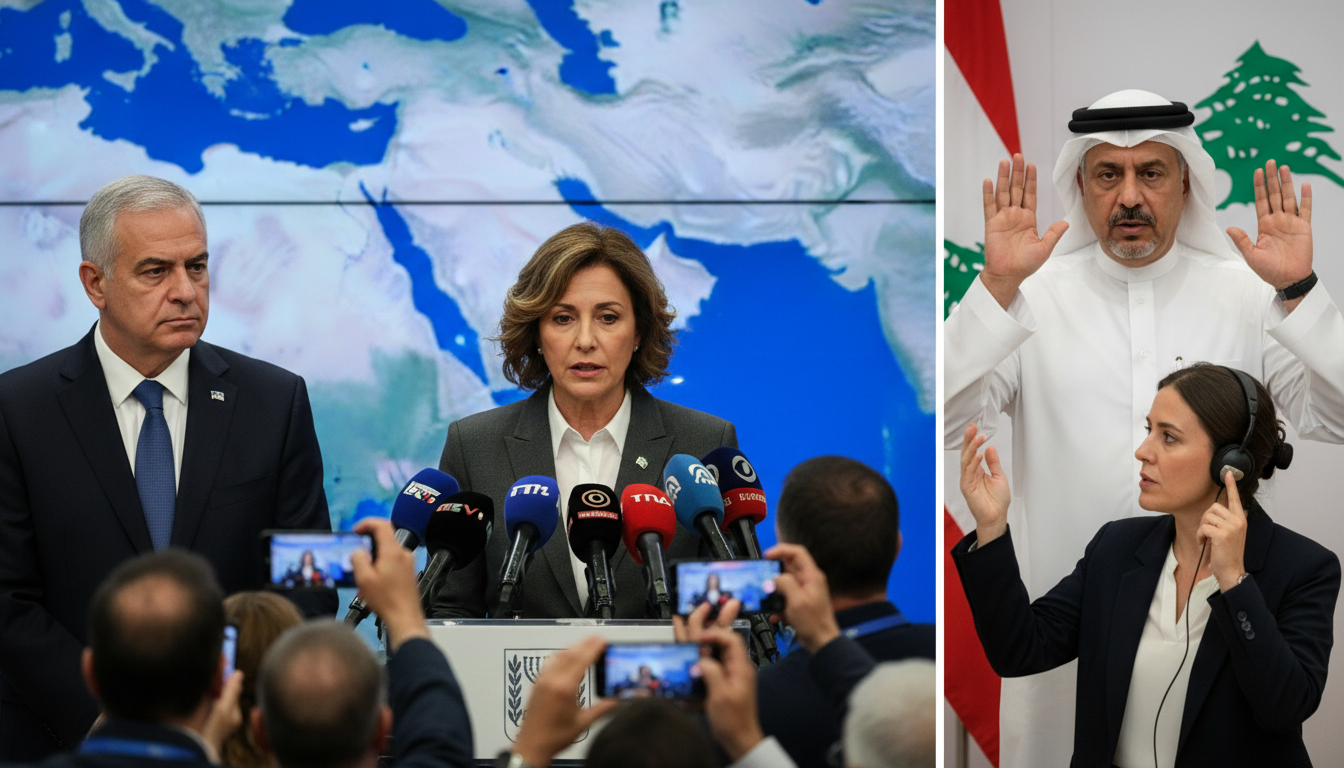
Netanyahu Lebanon talks: Israeli minister says prime minister will speak with Lebanese president
Israeli science minister Gila Gamliel said Benjamin Netanyahu will speak with the Lebanese president, claiming U.S. involvement could help disarm Hezbollah amid years of diplomatic disconnect.
Opening summary
Gila Gamliel, Israel’s science and technology minister, told Army Radio that Prime Minister Benjamin Netanyahu will speak with Lebanese President Joseph Aoun, signaling potential direct contacts between the two governments. The announcement, framed as a step toward addressing security and humanitarian needs, described possible U.S. involvement and aimed at disarming Hezbollah.
Details of the Israeli minister’s statement
Gamliel, a member of Netanyahu’s Likud party, said the contacts would occur "after so many years of disconnect between the countries," and argued that Lebanon currently lacks capabilities that require external assistance. She framed the potential talks as part of a broader effort to stabilize Lebanon and reduce the influence of armed non-state actors along the Israel-Lebanon frontier.
Her comments on Army Radio linked diplomatic engagement to practical outcomes, including humanitarian and security assistance, and highlighted the role she envisions for international partners. The minister’s remarks were presented as forward-looking but did not specify dates, formats, or the officials who would directly participate in any talks.
Lebanese government response
A Lebanese government official responded that Beirut had no information about any upcoming talks between the Lebanese president and the Israeli prime minister. The official’s statement underscores an absence of formal confirmation from Beirut and contrasts with the Israeli minister’s characterization of imminent contacts.
Lebanese political and institutional dynamics are complex, and any move toward formal communication with Israel would require careful internal consultation and likely face domestic scrutiny. The official’s denial leaves open questions about whether Gamliel’s comments reflected a coordinated policy or a unilateral projection of intent from an Israeli cabinet member.
Hezbollah disarmament and U.S. involvement
Gamliel asserted that with the involvement of the United States and Israel, it would be possible to meet Lebanon’s needs and ultimately disarm Hezbollah. This links diplomatic engagement to one of the most sensitive security issues in the region: the future status of Hezbollah’s arms.
Calls for Hezbollah disarmament have long been a contentious point in Lebanese politics and a central demand in some Israeli policy circles. Any plan to alter Hezbollah’s military posture would require major political agreements within Lebanon and sustained international guarantees, making immediate disarmament unlikely without a broad framework of incentives and enforcement mechanisms.
Regional security context
The prospect of direct or mediated talks between Israeli and Lebanese leaders exists against a backdrop of intermittent exchanges across the Israel-Lebanon border and periodic escalations involving Hezbollah. Cross-border security incidents and the presence of a heavily armed non-state actor add volatility to any diplomatic opening.
International actors, particularly the United States and United Nations peacekeeping forces stationed along the border, have historically played roles in de-escalation and humanitarian assistance. Any shift toward formal dialogue would likely engage these actors to manage risk and provide assurances to both capitals and regional partners.
Diplomatic implications and next steps
If contacts are to proceed, they would need to be carefully choreographed, with clarity on objectives, participants, timelines, and guarantees for follow-through. Negotiations that touch on security arrangements, border management, and the status of armed groups would require multilateral oversight and buy-in from domestic constituencies.
Observers say that confidence-building measures, incremental humanitarian cooperation, and third-party mediation are common precursors to more substantive dialogue in such fraught relationships. Absent confirmation from Beirut or a public schedule from Jerusalem, international monitors and diplomatic channels will likely be the first place to watch for verification.
Recent weeks have shown episodic diplomatic activity across the region, and statements by senior ministers can serve both as signaling to other governments and as attempts to shape domestic debates. Whether those signals translate into formal negotiations depends on political will, practical arrangements, and the readiness of external partners to commit resources and oversight.
The coming days will likely reveal whether Gamliel’s statements reflect a developed plan, exploratory diplomacy coordinated with international partners, or a public positioning by a coalition government minister.

