
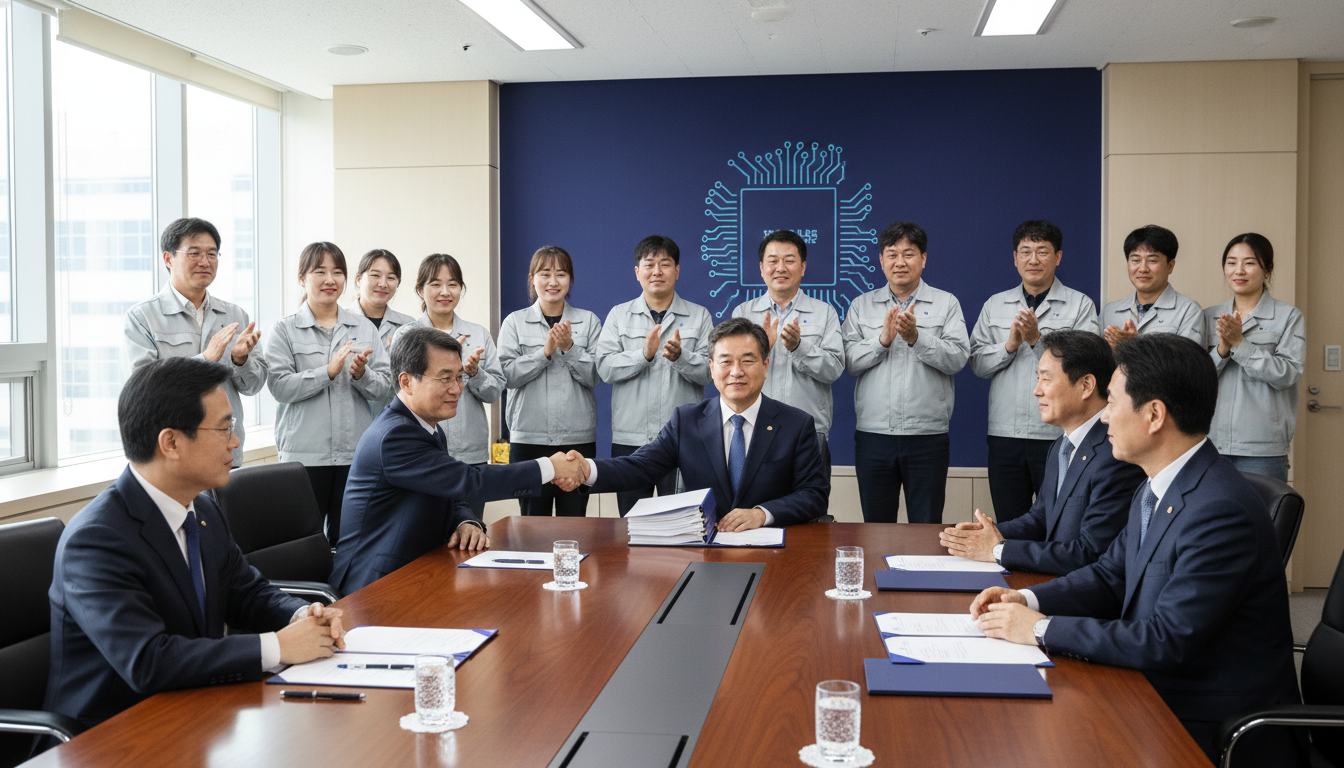
Samsung semiconductor bonuses of 600 million won agreed after union-management deal
Samsung semiconductor bonuses of 600 million won ($400,000) were agreed in a union deal that averted a strike and reverberated across Korea’s chip sector.
Samsung Electronics and its unions reached a deal that will deliver Samsung semiconductor bonuses averaging 600 million won to tens of thousands of chip-unit employees, ending a monthslong labour standoff.
The agreement, which both sides said was designed to head off a full-scale strike, follows sustained union rallies and months of tense negotiations over pay and working conditions.
Deal Ends Monthslong Standoff
The pact between management and labour came after protracted bargaining that had raised the prospect of an all-out strike at facilities critical to global chip supply chains.
Union leaders and company representatives signed terms that include one-off special payments, marking a rare resolution of a dispute in South Korea’s fast-moving semiconductor sector.
Awards and Payment Structure
Under the agreement, the semiconductor unit’s eligible employees will receive an average payout of about 600 million won each, a sum the company framed as exceptional and targeted.
Company and union statements indicate the payments are one-time bonuses tied to recent performance gains rather than permanent base-pay increases, a structure intended to limit long-term operating cost effects.
Union Rallies and Strike Threats
Union members staged public rallies, including a notable demonstration in Pyeongtaek on April 23, as they pushed for stronger compensation amid booming chip demand.
Leaders said the payment package and accompanying commitments to improve conditions persuaded them to call off planned industrial action and return to work without triggering production disruptions.
Impact on South Korea’s Chip Industry
The agreement underscores the bargaining leverage within Samsung’s semiconductor operations, which have been lifted by surging demand for AI-related chips and memory products.
Analysts say the exceptional payouts reflect the unit’s profitability and strategic importance, with the company moving to preserve output as global customers ramp up orders for next-generation processors.
Likely Limits on Special Payments
Despite the high-profile nature of the settlement, industry observers expect such special payments to remain largely confined to the AI boom-fed chip segment.
Firms outside the tight, high-margin semiconductor units are less likely to match one-off awards without risking wage inflation across broader workforces and eroding long-term competitiveness.
Company Statement and Next Steps
Samsung has framed the deal as a pragmatic compromise, aiming to stabilise operations while keeping open channels for future collective bargaining on benefits and conditions.
The company also pledged to continue talks with unions on non-monetary issues that contributed to the dispute, including workplace policies and staffing plans tied to production schedules.
The deal will be watched closely by competitors, customers and policymakers, who view uninterrupted chip output as critical to global technology supply chains and national economic objectives.
For now, Samsung semiconductor bonuses have secured short-term industrial peace, but the agreement also raises fresh questions about how pay will be managed across an industry transformed by AI-driven demand and escalating competition.
Longer-term outcomes will depend on how Samsung balances exceptional payouts with sustainable labour relations and how other major employers respond in an increasingly tight labour market.

