
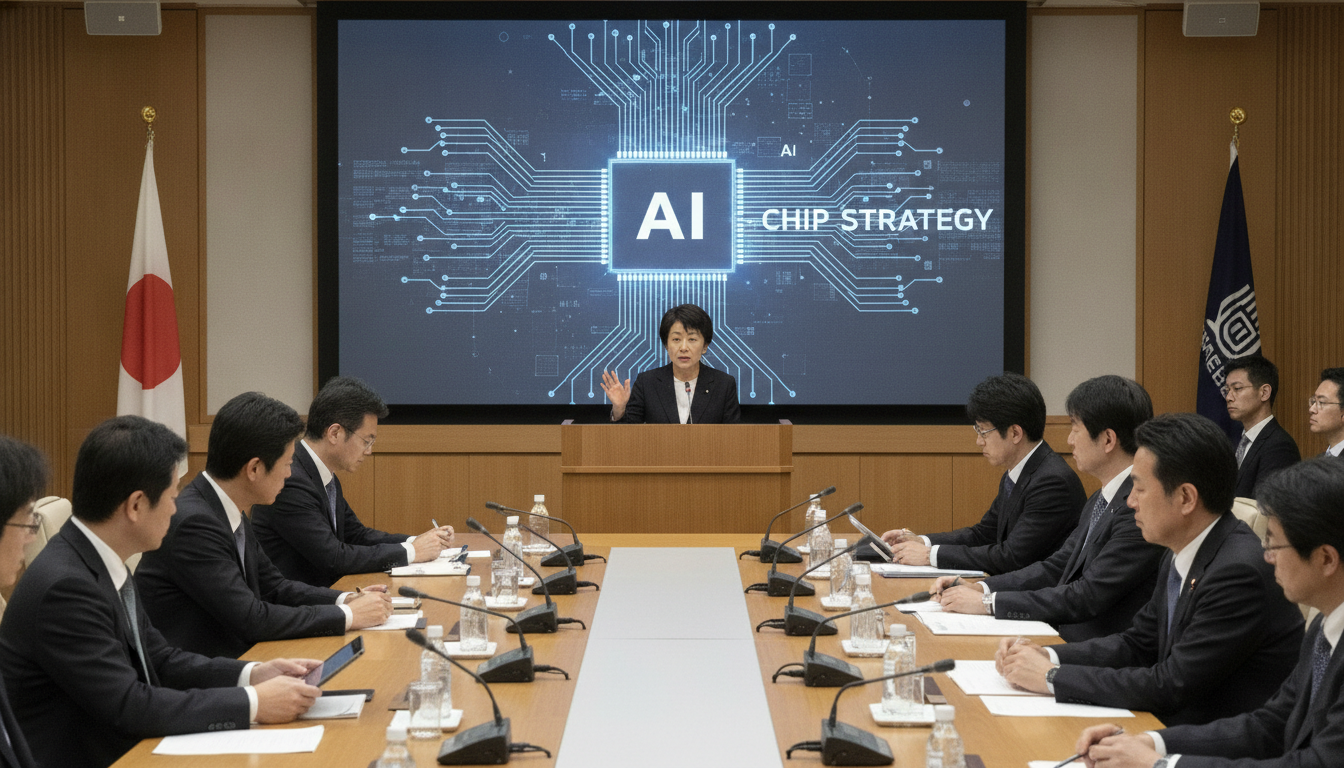
Sanae Takaichi Prioritizes Industry Groups as Meetings with Anthropic, Microsoft Highlight AI and Chip Focus
Prime Minister Sanae Takaichi leans on industry groups rather than frequent one-on-one corporate meetings, with recent talks involving Anthropic and Microsoft executives underscoring a government push on AI and semiconductor policy. As of August 11, 2026, her approach reflects a preference for broad-based consultation with business federations to shape technology and industrial strategy.
Takaichi’s consultation strategy
Sanae Takaichi has reduced the number of private meetings with individual company chiefs compared with her two immediate predecessors, opting instead to solicit input through organized industry gatherings. Officials say this allows the government to capture a wider range of views quickly, streamlining policy formulation across sectors that are central to Japan’s growth agenda. The shift also reflects a priority on coordinating responses to fast-moving issues such as artificial intelligence and semiconductor supply chains.
This consultation model places greater weight on federations and trade bodies, which can aggregate member concerns and present unified proposals to the Cabinet. For a technology-driven agenda, that means companies large and small are channeled through representative forums rather than relying on ad hoc bilateral access.
Meetings with Anthropic and Microsoft signal priorities
Recent engagements with executives from Anthropic and Microsoft have made clear that AI and advanced semiconductors are at the top of the administration’s agenda. These conversations emphasized collaboration on research, talent development, and the secure deployment of AI systems, as well as the upstream manufacturing and tooling needed for next-generation chips. Government ministers described the encounters as part of a broader outreach to ensure Japan remains competitive in critical technologies.
The presence of major cloud and AI firms in Tokyo underscores a twofold objective: attract investment and secure partnerships that can strengthen domestic industrial capabilities. For policymakers, such ties are seen as complements to domestic efforts to boost chip production and to build resilient supply chains.
Engagement with Keidanren and business leaders
Takaichi has continued regular consultations with the Japan Business Federation, known as Keidanren, meeting federation leadership to exchange views on industrial policy and economic recovery. A notable moment came at a year-end dinner where she met Yoshinobu Tsutsui, chairman of Keidanren, reinforcing an ongoing channel with a body that represents many of Japan’s largest corporations. That type of staged engagement allows the prime minister to signal priorities while gathering consolidated feedback.
Keidanren and similar groups provide a forum for consensus-building on issues such as research funding, regulatory reform, and workforce training. The government’s reliance on these organizations reflects a belief that collective industry positions can accelerate policy decisions and implementation.
Policy levers under consideration
Officials have flagged a range of policy tools intended to support AI and semiconductor objectives, including targeted subsidies, public–private research partnerships, and incentives for domestic fab construction. Government statements emphasize a combination of financial support and regulatory clarity to attract long-term investment in chip fabrication and AI infrastructure. These measures are being framed as part of an industrial strategy aimed at both competitiveness and national security.
Regulatory conversations have also touched on data governance, AI safety frameworks, and export controls tied to sensitive technologies. By engaging industry federations and major technology players, the administration aims to align private-sector capabilities with public-interest safeguards.
Industry reaction and practical challenges
Corporate leaders have generally welcomed the prime minister’s outreach, while urging clarity on implementation timelines and details of support packages. Business groups have stressed the need for predictable incentives and workforce initiatives to ensure that investments in semiconductors and AI translate into sustainable domestic capacity. Companies also note the practical hurdles of establishing fabs and training specialized talent, areas where government coordination is seen as essential.
Observers point to the global competition for chips and AI talent as a key constraint, with firms weighing decisions against incentives offered by other countries. For Japanese industry, the balance between attracting foreign partners and nurturing homegrown ecosystems remains a central concern.
International context and cooperation
Takaichi’s meetings with global tech firms come amid broader international efforts to secure supply chains and shape AI governance. Japan’s engagement strategy seeks to position the country as a collaborative partner for research and manufacturing while protecting strategic capabilities. Diplomacy and industry policy are being used in tandem to negotiate cross-border partnerships and technology agreements.
Cooperation with allies and multinational companies is expected to feature in upcoming policy announcements as Tokyo moves to align domestic measures with international standards and investment flows. The prime minister’s consultation approach aims to ensure that Japan speaks with a coordinated voice on these complex issues.
Sanae Takaichi’s reliance on industry groups and selective direct talks with leading AI and cloud firms marks a calibrated approach to managing rapid technological change, balancing broad stakeholder input with targeted engagements to secure investment, build capacity, and set the rules that will govern AI and semiconductor development in Japan.

