
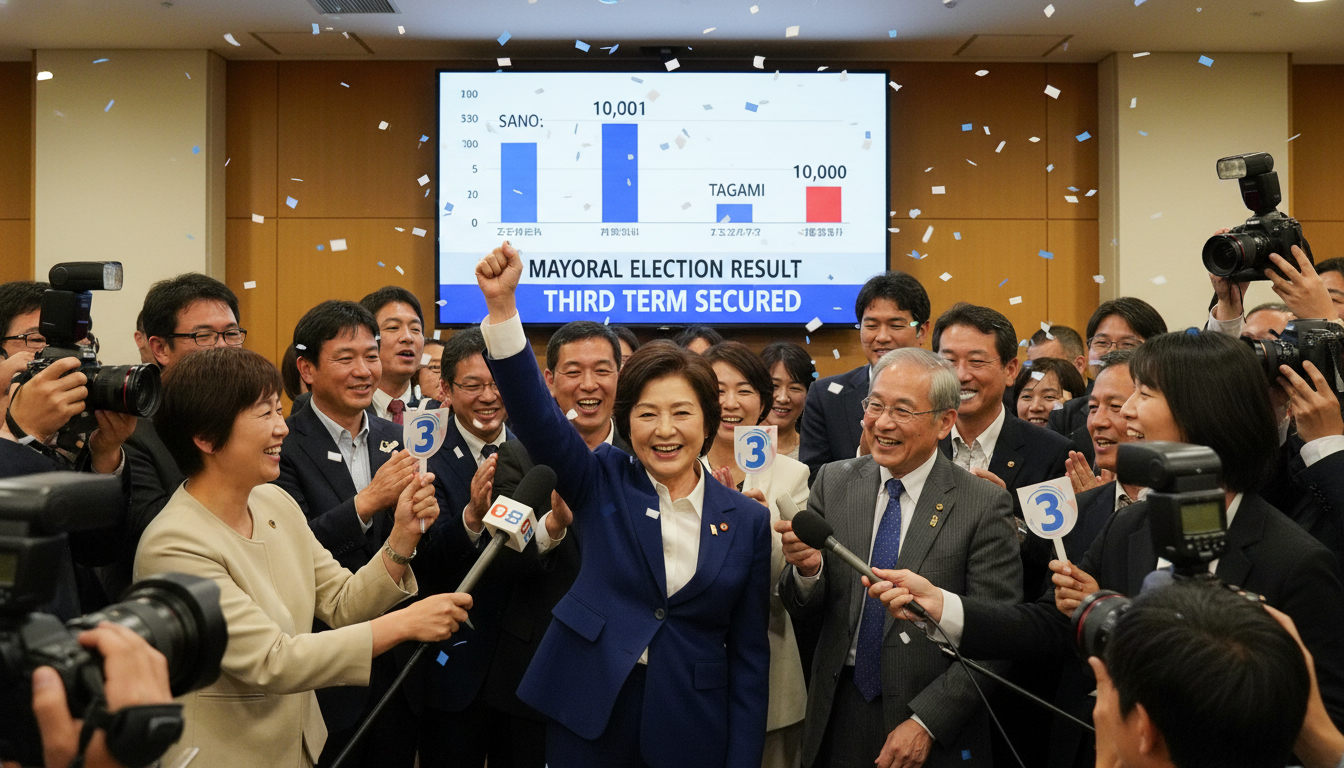
Tagami mayoral election 2026: incumbent Tsuneo Sano wins third term by one vote
Incumbent Tsuneo Sano won the Tagami mayoral election on May 31, 2026 by a single vote, 3030–3029, with turnout at 66.53% of 9,177 eligible voters in Niigata.
The Tagami mayoral election ended in an exceptionally tight result on May 31, 2026, as incumbent Tsuneo Sano secured a third term by the narrowest of margins. Official tabulations released after polls closed showed Sano edging former town councilor Sachiyo Imai by one vote, a result that underscored a sharply divided electorate in the small Niigata town. The close finish drew attention across the prefecture to local governance and the importance of each ballot.
Narrow margin decides election
The official count recorded 3,030 votes for Sano and 3,029 for Imai, with 46 ballots ruled invalid, producing the single-vote difference that determined the race. Election officials said the totals reflect the certified returns from polling stations across Tagami and that the margin held after the standard tabulation process. The single-vote outcome will likely prompt renewed public discussion about voter participation and the weight of individual ballots in local contests.
Vote totals and turnout dynamics
Turnout for the race was 66.53% of 9,177 eligible voters, down from 71.04% in the 2018 contest, indicating lower engagement compared with the previous mayoral election. The reduction in turnout was one factor that made every vote decisive in a contest decided by a single ballot. Invalid ballots numbered 46, a figure election observers noted as significant given the tiny margin, and officials said they followed prescribed procedures in determining ballot validity.
Incumbent’s record and campaign focus
Sano campaigned on a record of local welfare measures implemented during his two terms, highlighting policies such as the issuance of premium shopping vouchers, full subsidies for elementary school lunches, and financial support for infertility treatments. He credited those initiatives with easing household expenses and supporting young families and elderly residents, and he framed his stewardship as continuity for ongoing local programs. Sano also emphasized municipal stability and administrative experience as reasons to entrust him with a third term.
Challenger’s platform and coalition-building
Sachiyo Imai, a 41-year-old former town councilor with four terms in office, presented a campaign focused on practical support for seniors and families, including shopping assistance for elderly residents and expanded services for child-rearing households. Imai sought to leverage her legislative experience and action-oriented reputation to argue for more responsive local services and closer cooperation with higher levels of government. Her campaign drew visits from national and regional ruling party lawmakers and nearby municipal legislators, who rallied in hopes of building broader support.
Local council alignment and political dynamics
A large portion of Tagami’s town council rallied behind Sano during the campaign, promoting an “All Tagami” message that emphasized town unity and collaboration with the mayor’s office. That unified local backing contrasted with Imai’s strategy of cultivating outside support from Diet members and neighboring councilors to bolster ties with prefectural and national authorities. The divergent approaches reflected broader questions about governance style in the town: whether to prioritize continuity through established municipal networks or to pursue change through external partnerships.
Tagami’s narrow result follows a different margin in 2018, when Sano defeated Imai by 296 votes, illustrating a notable shift in voter sentiment over the past eight years. The 2026 outcome leaves the town’s political landscape closely balanced and presents immediate practical challenges for the incoming term, including responding to residents’ calls for improved services while managing budgetary and administrative constraints.
The one-vote victory in the Tagami mayoral election will place renewed emphasis on consensus-building as Sano begins his third term, with the need to bridge a divided electorate and address the priorities raised during a competitive campaign.

