
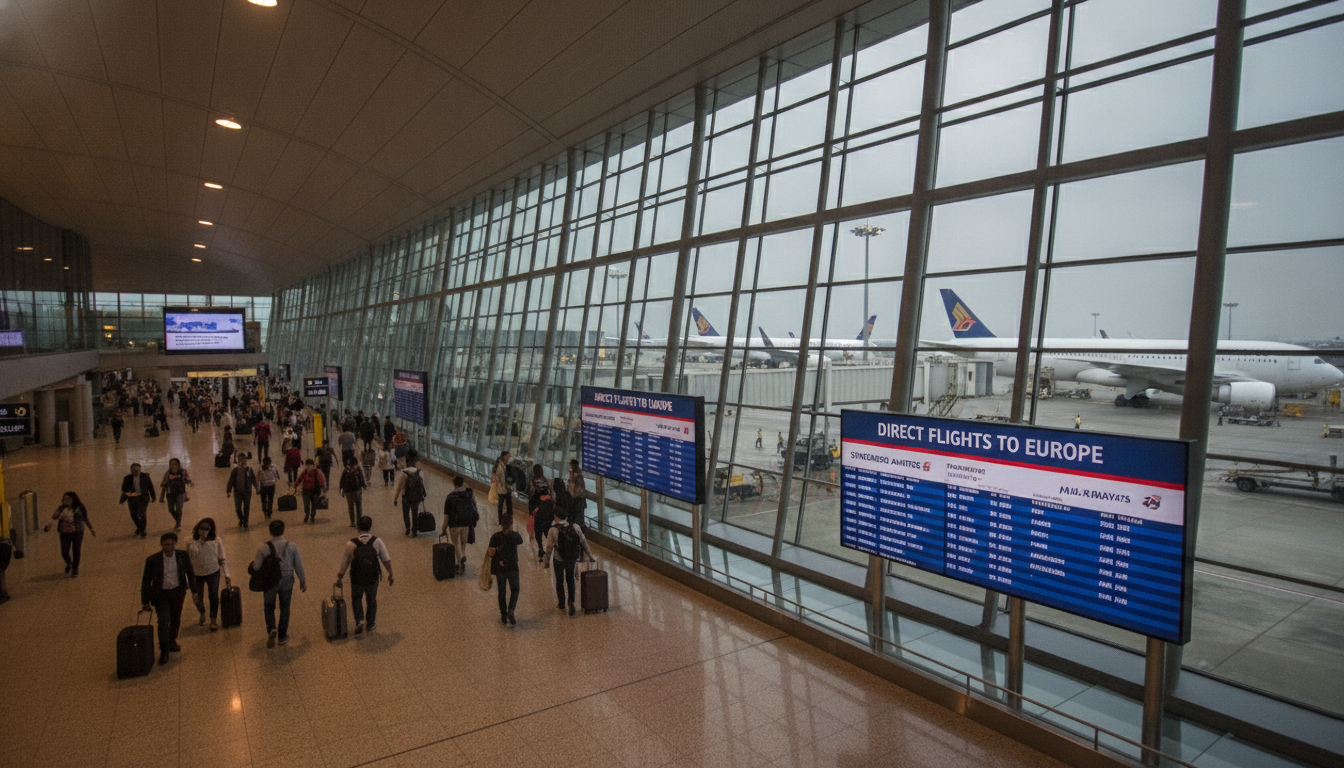
Southeast Asian Carriers Expand Direct Flights to Europe as Middle East Hubs Recover
Southeast Asian carriers boost direct flights to Europe, adding routes to the U.K., Italy and Germany to serve passengers displaced by Middle East disruptions.
Southeast Asian carriers are increasing nonstop services to Europe as travelers seek alternatives to traditional connections through Middle Eastern hubs disrupted by regional conflict. Airlines based in Singapore, Bangkok and Hanoi have announced capacity and frequency changes aimed at capturing passengers who previously routed through Gulf carriers. The shift is reshaping long-haul schedules and presenting new options for both leisure and business travelers between Asia and the Continent.
Route expansions into the U.K., Italy and Germany
Singapore Airlines has been among the most prominent carriers expanding service, adding and restoring flights to major European markets such as the U.K., Italy and Germany. Other operators from Southeast Asia are following suit with seasonal and year-round links designed to offer direct alternatives for passengers. These new and expanded routes seek to shorten total journey times and reduce reliance on connections in the Middle East.
Airlines are focusing on routes where demand is strongest, including business corridors and popular tourist destinations, while also experimenting with niche city pairs. The expansions reflect strategic network moves to capture market share from disrupted competitors and to accommodate shifting passenger preferences. Carriers emphasize schedule reliability and onboard connectivity as selling points for the longer nonstop sectors.
Gulf hub disruption and passenger rerouting
The recent conflict affecting parts of the Middle East has slowed the recovery of several Gulf hubs, prompting airlines and travelers to reconsider transit plans. As gate times and transfer options at those hubs have been constrained, passengers increasingly prefer direct services even if they come at a premium. Southeast Asian carriers have positioned themselves to absorb some of that traffic by offering one-stop or nonstop journeys that avoid the affected airspace.
Industry executives say the change is not a complete replacement of Gulf connectivity but a tactical response to short- and medium-term disruption. Cargo and transfer traffic that relies on Gulf transshipment remains complex to reroute, but passenger flows have shown the quickest response to available nonstop alternatives. The result is a measurable uplift in bookings on direct Asia-Europe services operated by regional carriers.
Fleet utilization and schedule adjustments
To support longer-range operations, airlines have deployed a mix of widebody aircraft and reallocated capacity from other international sectors. Singapore Airlines and other carriers have adjusted frequencies and, in some cases, brought forward plans to refurbish cabins or reassign aircraft to transcontinental routes. These operational changes aim to optimize aircraft utilization while maintaining connectivity to key European airports.
Airlines also face logistical challenges, including crew rotations, maintenance scheduling and slot allocations at congested European airports. Carriers report working closely with airport authorities to secure desirable arrival and departure times and to coordinate turnaround services for the new flights. Efficient ground handling and reliable slot windows have become critical to sustaining the expanded schedules.
Demand trends and cargo opportunities
Passenger demand for Europe has rebounded strongly in the wake of pandemic travel rebound, with leisure and business segments both contributing to load factors. Southeast Asian carriers are leveraging this resurgence by marketing nonstop convenience and enhanced in-flight services. Promotional fares and codeshare partnerships have also been used to broaden market reach and to feed connecting traffic from secondary cities.
Beyond passengers, airlines see an opportunity in air cargo, where direct services can offer faster transit times for time-sensitive shipments. Carriers have adjusted bellyhold and freighter allocations on key Europe routes to accommodate growing demand for goods movement. The combination of passenger uplift and cargo revenue helps underwrite the commercial viability of longer nonstop routes.
Risks, costs and long-term strategy
Operating long-haul direct flights carries elevated costs, including fuel, overflight charges and crew expenses, which airlines must balance against fare levels and load factors. Southeast Asian carriers acknowledge that some of the recent route additions are opportunistic and may be scaled back if Middle Eastern hub capacity returns or if demand softens. Nonetheless, executives view the current environment as a chance to test new markets and deepen direct connectivity between Asia and Europe.
Regulatory considerations and airspace permissions also influence route planning, especially where alternate overflight paths increase flight times. Airlines continue to monitor geopolitical developments closely and to adapt network plans as conditions change. For now, the strategy centers on offering passengers reliable, direct travel options that reduce dependence on third-party hubs.
The expanded services from Southeast Asian carriers are creating tangible choices for travelers and cargo customers moving between Asia and Europe. As airlines refine schedules and assess performance, passengers can expect more nonstop options in the coming months, while carriers weigh the commercial sustainability of these longer sectors against evolving regional dynamics.

