
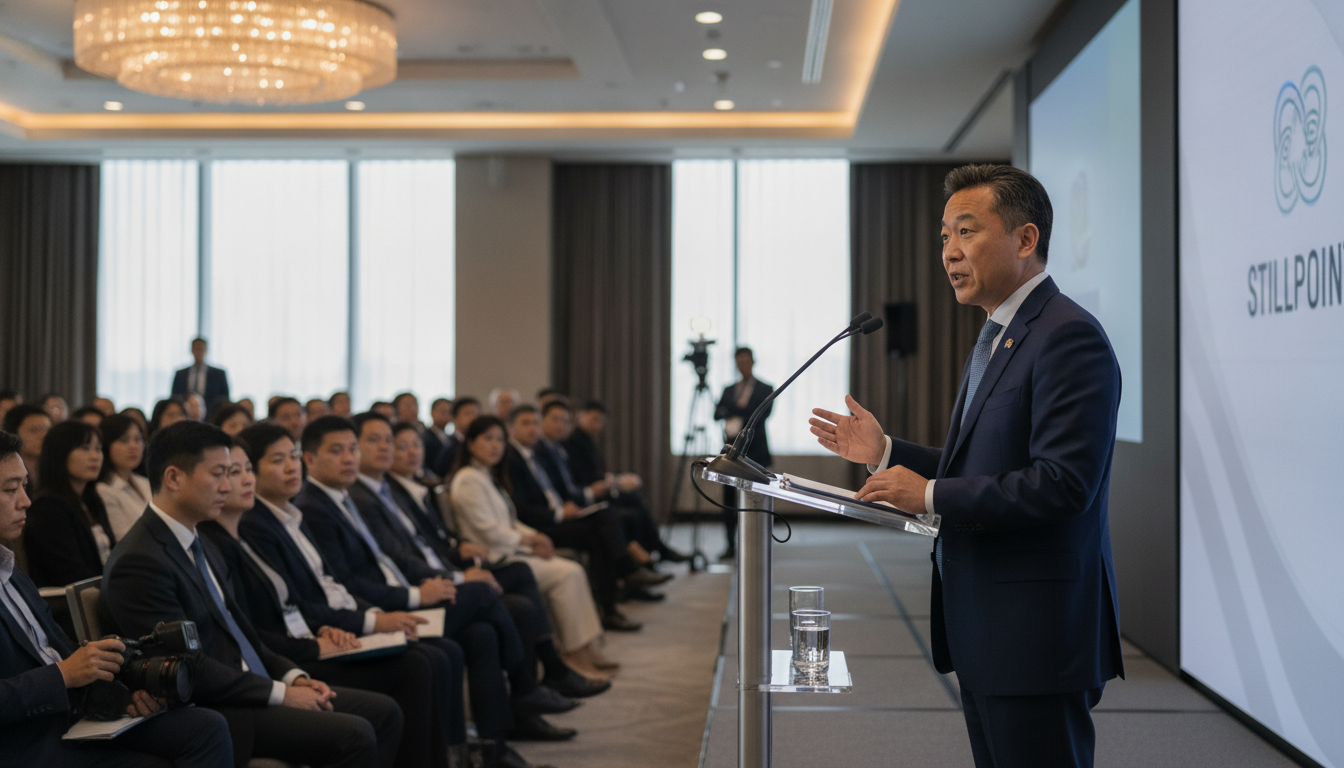
Eric Wong of Stillpoint Investments Predicts Rise of Asian Americans in Corporate Leadership
Eric Wong says Asian Americans in corporate leadership will increase as experience from Asia and the US, stronger mentorship, and demographic shifts create clearer pathways for advancement.
Eric Wong, chief investment officer and founder of Stillpoint Investments, said he expects to see more Asian Americans in corporate leadership in coming years following a career that bridged Asia and the United States. Wong founded Stillpoint after 11 years at Blue Ridge Capital, where he served as a managing director based across Beijing and New York, and he began his career more than two decades ago at Morgan Stanley in Hong Kong. His forecast frames diversity as both a social imperative and a business advantage for firms operating across global markets.
Stillpoint Investments’ founding and mandate
Stillpoint Investments was launched by Wong after his tenure at Blue Ridge Capital, positioning the firm to benefit from his two-decade track record in markets spanning Asia and North America. Wong holds the title of chief investment officer and has described the new firm as one that draws on deep regional expertise to assess long-term value. The firm’s founding underscores a broader trend of investment professionals leveraging cross-border experience to create niche platforms.
Career path at Blue Ridge Capital and Morgan Stanley
Wong spent 11 years at Blue Ridge Capital, rising to managing director while working between Beijing and New York, a background he cites as formative for his views on leadership and culture. He began his financial career at Morgan Stanley in Hong Kong more than 20 years ago, a period that gave him early exposure to both institutional finance and Asia-focused market dynamics. Those roles, Wong says, helped build the operational and market insight he now applies at Stillpoint.
Forecast for Asian American leadership growth
Wong told interviewers he expects a steady increase in the number of Asian Americans occupying senior corporate roles, driven by an expanding talent pipeline and the accumulation of executive experience across industries. He pointed to the growing number of professionals who combine Western management training with operational experience in Asian markets as a key source of future leaders. That dual exposure, he argued, will make candidates more attractive to boards and executive committees seeking global perspective.
Wong emphasized that the shift will not be instantaneous but cumulative, reflecting demographic changes as well as an increase in Asian Americans who have served long enough in senior roles to be considered for top positions. As more professionals reach the experience threshold required for C-suite and board roles, the optics and norms of corporate promotion are likely to adjust. Wong framed this as an expected evolution rather than a mandate, tied to meritocratic recognition and shifting corporate needs.
Barriers to advancement he identifies
Despite his optimism, Wong acknowledged continuing obstacles that slow progress for Asian American executives, including limited visibility in sponsorship networks and a mismatch between cultural expectations and leadership signaling. He cited the persistent issue of underrepresentation in senior management panels and boardrooms as evidence that structural barriers remain. These gaps, he warned, can perpetuate a cycle in which fewer role models exist to attract and mentor rising talent.
Wong suggested concrete remedies companies can adopt, such as formalized sponsorship programs, transparent promotion criteria, and expanded leadership training that acknowledges cultural diversity in management styles. He stressed that sponsorship—active advocacy by senior leaders on behalf of promising executives—often matters more than traditional mentoring for securing high-level appointments. Companies that institutionalize these practices, he argued, will move faster toward representative leadership.
Implications for corporate governance and strategy
An increase in Asian American leaders, Wong said, could reshape corporate governance by bringing different risk perspectives and regional insights to strategic decisions. Boards and executive teams that include directors with lived experience of Asia–US market linkages may be better positioned to assess geopolitical and supply-chain risks. Wong framed representation not only as a fairness issue but as a strategic asset for firms operating in interconnected economies.
He also noted that diverse leadership can affect investor perception and stakeholder engagement, especially for companies with deep commercial ties to Asian markets. Investors increasingly evaluate governance through the lens of diversity and long-term resilience, and companies that reflect their markets at the leadership level may enjoy stronger credibility. Wong recommended that companies measure progress with clear metrics and report on leadership diversity in ways that align with broader governance disclosures.
Stillpoint’s investment stance and Asia–US connectivity
Drawing on Wong’s background in Beijing and New York, Stillpoint Investments positions itself to leverage insights from both markets, according to his remarks in the interview. Wong emphasized the value of operational knowledge gained in Asia combined with institutional practices learned in the United States as a basis for investment discipline. That dual perspective, he suggested, provides an analytical edge when assessing cross-border opportunities and management teams.
Wong also indicated that his firm will look for companies and executives who demonstrate the capacity to operate across cultural and regulatory environments, a criterion that often favours leaders with bilingual and bicultural experience. He described such capabilities as increasingly relevant for firms seeking regional expansion or resilient supply-chain strategies. For Stillpoint, the interplay between leadership quality and geographic expertise appears central to deal selection.
The momentum behind greater representation of Asian Americans in corporate leadership, Wong concluded, will be driven by time, mentorship, and measurable changes within companies. As more professionals accumulate senior experience and organizations adopt structured development practices, the composition of boards and executive teams is likely to reflect the demographics and commercial realities of a global economy.

