
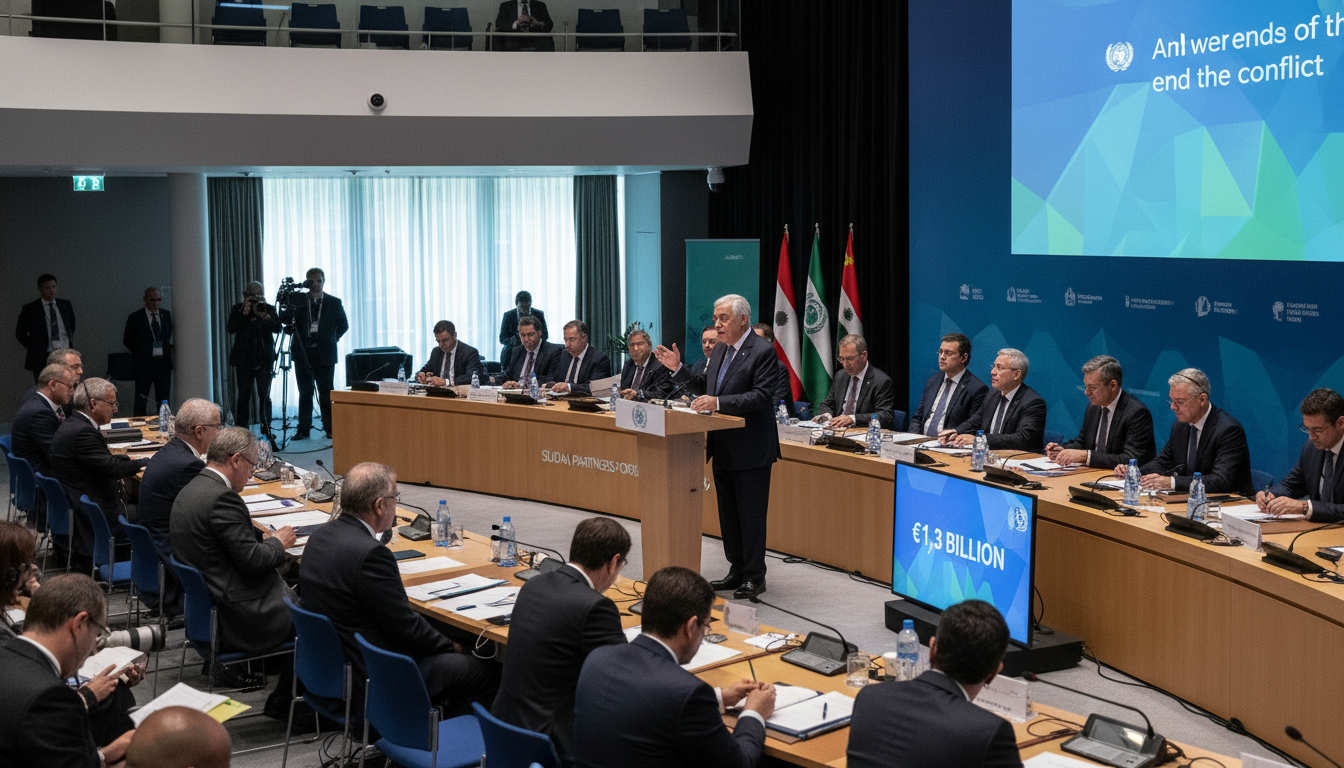
Sudan civil war: Donors pledge €1.3bn in Berlin as UN urges an end to the ‘nightmare’
Donors pledge €1.3bn in Berlin as world leaders mark the third anniversary of the Sudan civil war; UN urges end to the ‘nightmare’ and renewed ceasefire push.
The third anniversary of the Sudan civil war was marked in Berlin by international donors and officials who pledged €1.3 billion for humanitarian relief while the United Nations renewed urgent calls for an end to the violence. The gathering, held away from the battlefield and excluding both warring parties, sought to marshal funding and revive stalled diplomatic efforts amid mounting regional instability. UN Secretary-General Antonio Guterres delivered a stark appeal that “this nightmare must end,” framing the meeting as both a humanitarian response and a diplomatic signal.
Donors pledge €1.3 billion in emergency aid
The Berlin meeting produced commitments totaling €1.3 billion intended to ease an expanding humanitarian catastrophe inside Sudan. Germany announced a national pledge of €212 million and urged other states to follow through on pledges that target food, medical care and shelter for displaced populations. Organizers said the funds aim to sustain lifesaving operations while diplomatic channels work to secure pauses in the fighting that would allow aid to reach hard-to-access areas.
UN appeals highlight civilian toll and sexual violence
United Nations officials used the conference to underline the scale of civilian suffering caused by the Sudan civil war and to press for protection of non-combatants. Guterres said nearly 34 million people inside Sudan now require humanitarian assistance and that more than 4.5 million have been driven from their homes, creating both internal displacement and cross-border strain. He also raised alarm about widespread sexual violence against women and girls, urging that protection and accountability be central to any response.
Sudanese government condemns the forum as ‘colonial tutelage’
Khartoum’s Foreign Ministry sharply rejected the Berlin meeting, denouncing the gathering as a “colonial tutelage approach” that sidelines Sudanese sovereignty. The ministry said it would not accept external bodies or governments convening to decide the country’s future while bypassing the Sudanese government, and warned that equating state forces with a “criminal, multinational terrorist militia” would undermine regional and international security. The statement reflects deep mistrust of Western-led initiatives and complicates efforts to build an inclusive negotiation track.
Diplomatic format excluded combatants, focused on regional actors
The conference drew about a dozen foreign ministers and more than 60 delegations, but deliberately excluded the Sudanese Armed Forces and the Rapid Support Forces from the talks. Conveners argued that the aim was to rally humanitarian support and to pressure for renewed talks, rather than to negotiate directly with the combatants at this stadium. The exclusion has prompted mixed reactions: some diplomats say it preserves international unity to focus on aid, while critics contend it may limit the forum’s leverage over the fighting parties.
African Union and regional voices call for a ceasefire
Regional officials attending the talks emphasized the conflict’s spillover risks and the need for a negotiated cessation of hostilities. African Union chairman Mahmoud Ali Youssou told attendees the AU is alarmed by the scale of destruction and wants intensified engagement to converge efforts toward a ceasefire. Neighboring countries and regional blocs have warned that continued instability in Sudan threatens border security, refugee flows and economic routes across the Horn of Africa and the Sahel.
Humanitarian logistics, access and donor accountability
Donors at the conference stressed not only financial pledges but also the practical challenges of delivering aid amid active fighting and fractured authority. Humanitarian coordinators warned that funding alone cannot solve access problems caused by frontlines, bureaucratic impediments and insecurity along supply corridors. Several delegations called for clearer mechanisms to track commitments and to ensure that assistance reaches civilians regardless of shifting control on the ground.
Three years after fighting erupted in April 2023, the Sudan civil war remains a complex political and security crisis, with humanitarian need outstripping response capacity and with deep divisions among domestic players and international stakeholders. While the Berlin pledges provide immediate relief resources, diplomats and aid agencies acknowledged that meaningful progress will depend on combining funding with credible pressure and mediation to secure sustained pauses in fighting. The path ahead will require coordination between international donors, regional organizations and, ultimately, the parties within Sudan to translate pledges into protection and stability for millions of affected people.

