
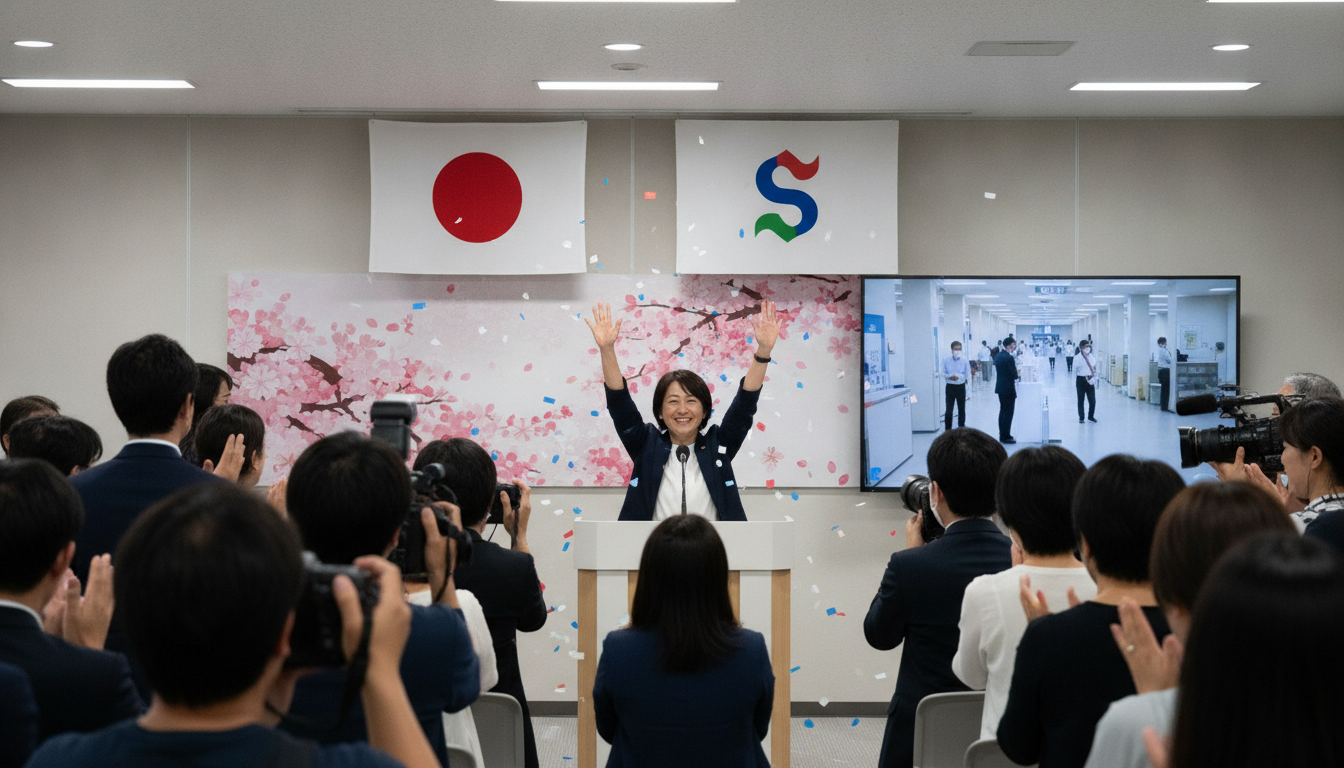
Satoko Kishimoto Wins Re-election in Suginami Mayoral Election as Turnout Rises
Satoko Kishimoto wins re-election in the Suginami mayoral election on June 29, 2026, with a stronger turnout and a campaign focused on social services, schools and partnership rights.
Incumbent Secures Second Term
Satoko Kishimoto, 51, secured re-election in the Suginami mayoral election when votes were counted on June 29, 2026. Kishimoto defeated three other high-profile candidates to claim another term overseeing the Tokyo ward’s local government.
The field included former ward assembly member Shin Owada, 45, who was endorsed by the Liberal Democratic Party, international business consultant Yoshihiko Masuda, 68, recommended by the regional party Saisei no Michi, and former mayor Ryo Tanaka, 65. All four ran as independents, but endorsements and party backing shaped the closing weeks of the campaign.
Voter Turnout and Electoral Context
Official tallies showed voter turnout at 42.54 percent, up from 37.52 percent in the previous Suginami election. The number of registered voters for the contest was 478,530, indicating a modest but notable rise in participation compared with the last cycle.
Election observers and local analysts said the increase reflected heightened public interest in municipal policy debates and the unusually competitive field, which included both party-backed and high-profile independent challengers.
Key Issues in the Campaign
Kishimoto ran on a record of community engagement and a “dialogue-based” approach to governance, urging continuity of policies she introduced during her first term. She highlighted initiatives such as upgrading local children’s centers, making school lunch fees for elementary and middle schools free, and establishing a ward partnership system to support same-sex couples.
Opponents concentrated on alternative visions for fiscal management and administrative priorities, but the campaign largely revolved around social services, education and the ward’s approach to inclusivity. These local matters resonated with voters concerned about everyday living standards and public services.
LDP Strategy and High-Profile Support
The Liberal Democratic Party made an unusually assertive play in Suginami, endorsing Shin Owada — its first direct mayoral endorsement in the ward in 27 years. The party also ran a coordinated “set” strategy that paired the mayoral contest with a ward assembly by-election, seeking to maximize turnout for its slate.
Former Prime Minister Fumio Kishida campaigned in the ward supporting a 30-year-old newcomer, Takeshi Sugiura, who stood in the by-election for a ward assembly seat. Kishida’s appearances, including back-to-back support visits, underlined the party’s intention to project national figures into local races.
Campaign Tactics and Digital Outreach
Kishimoto’s campaign relied heavily on grassroots organizing by citizen groups and a selective digital presence rather than paid YouTube advertising. She publicly pledged not to use YouTube ads while deploying posts and messages on X (formerly Twitter) and Instagram to share policy points and endorsements.
Supporters said the strategy emphasized direct engagement, with volunteers mobilizing door-to-door outreach and local events. Opponents used a mix of traditional campaigning and party networks, creating a contrast in how each campaign sought to reach voters across the ward.
Implications for Local and National Politics
Analysts noted that the result reinforced a trend of mixed outcomes for party-backed candidates in metropolitan local elections, where incumbents with visible local records can outperform national endorsements. The LDP’s failure to capture the mayoralty despite prominent campaigning points to the limits of top-down influence in dense urban wards.
The concurrent ward assembly by-election drew nine candidates vying for two seats, reflecting broader political fragmentation and intense competition for municipal representation. Observers will watch whether the mayor’s victory stabilizes policy direction in Suginami or sparks renewed opposition activity at the assembly level.
Kishimoto has signaled she will continue policies focused on community services, school support and inclusive procedures in local government, framing her re-election as a mandate to maintain dialogue-driven administration and expand services that target families and marginalized residents.

