
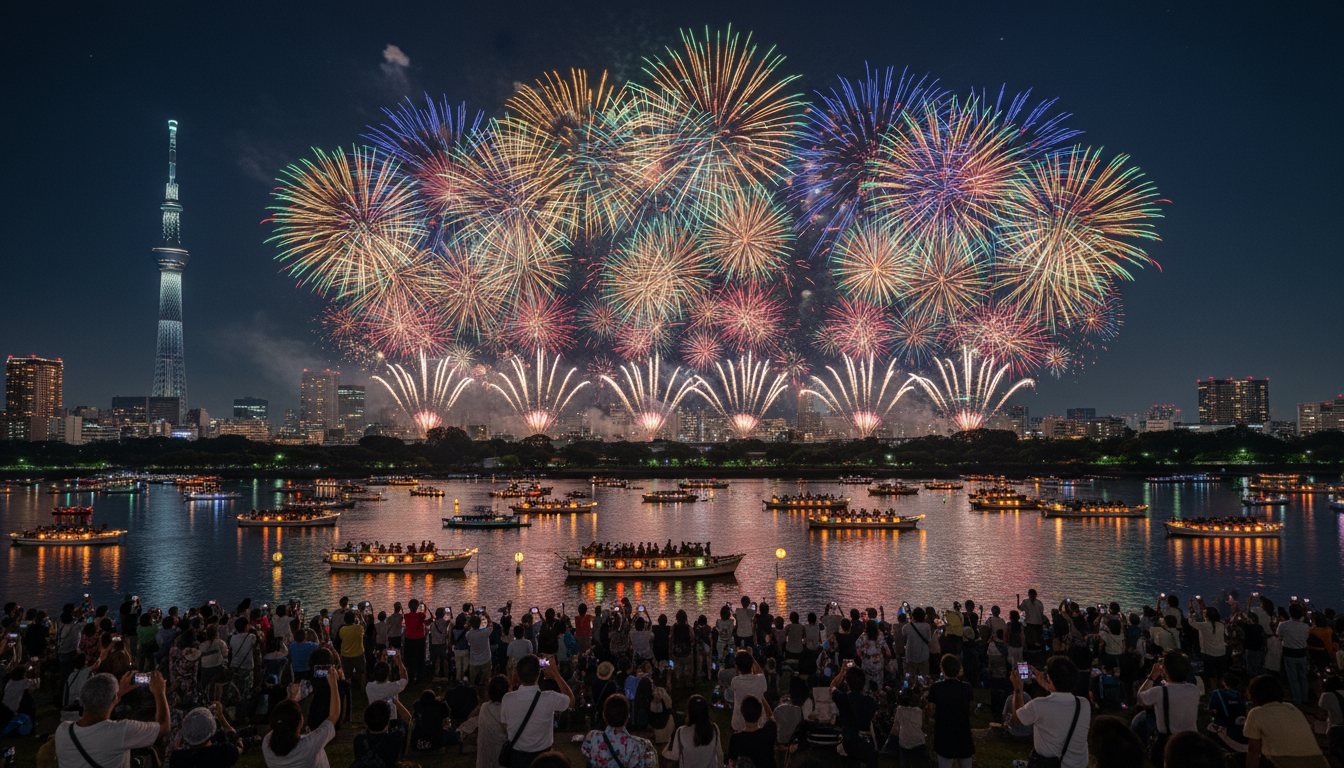
Sumidagawa Fireworks Festival set for July 25, 2026 with 20,000 shells and paid sponsor seats announced
Tokyo’s Sumidagawa Fireworks Festival will be held on Saturday, July 25, 2026, beginning at 7:00 p.m., with organizers planning approximately 20,000 fireworks and special paid viewing areas for citizen sponsors. (sumidagawa-hanabi.com)
The Sumidagawa Fireworks Festival, Tokyo’s long-running summer spectacle, is scheduled to run from 19:00 to 20:30 on July 25, 2026, and will be staged from two launch sites along the Sumida River. (travel.watch.impress.co.jp)
Event date and core details confirmed
The organizing committee has published its plan confirming the 49th Sumidagawa Fireworks Festival will take place on Saturday, July 25, 2026, with the main display starting at 7:00 p.m. and concluding at approximately 8:30 p.m. (sumidagawa-hanabi.com)
The program will use two separate launch areas along the Sumida River, distributing roughly 20,000 shells between them to create coordinated sequences across the river’s skyline. This arrangement follows recent formats that stage simultaneous and complementary volleys from different points. (matcha-jp.com)
Organizers stress that the event is weather dependent and will be canceled in the event of severe conditions. Final decisions on postponement or cancellation typically are announced on the official site and through municipal channels. (sumidagawa-hanabi.com)
Scale of attendance and historical context
The Sumidagawa Fireworks Festival is one of Tokyo’s largest annual public gatherings and traditionally draws crowds approaching one million people along the riverbanks and adjacent streets. Recent official counts show year-to-year variation, with the previous year reported at around 910,000 attendees and other years exceeding one million. (city.sumida.lg.jp)
Because of those volumes, the festival has major implications for transport, public safety and local businesses. City and metropolitan authorities coordinate crowd-management plans, transport schedules, road closures and emergency services well in advance. (city.sumida.lg.jp)
The size and historical depth of the display — a revival of Edo-period festivities now presented as a competitive and community event — make the Sumidagawa Fireworks Festival a central feature of Tokyo’s summer calendar. Spectators can expect dense crowds, packed viewing routes and an intense urban atmosphere on the night. (en.wikipedia.org)
Paid citizen-sponsor seats and application timeline
This year’s organizers are again offering paid “citizen sponsor” (市民協賛) seats that provide reserved viewing space in designated areas along the river. Applications for these seats open online on Sunday, May 10, 2026 at 12:00 JST, and are handled on a first-come, first-served basis. (sumidagawa-hanabi.com)
The sponsor scheme offers a range of seating types and prices. Depending on the location and seat type, the smallest individual invitations are listed from around ¥8,000, while larger reserved areas and five-person sections are priced up to ¥25,000 per “mouth” or unit. The official materials specify the number of allocated units for each venue and describe whether the invitation provides a simple tarp space or a chair. (city.taito.lg.jp)
Organizers make clear that the funds raised through the citizen-sponsorship program contribute to running costs for the event. Applicants should follow the official instructions precisely; web-based forms and Japanese-language documents are the primary channel for arrangements. (sumidagawa-hanabi.com)
Viewing zones, transport and crowd-control measures
The festival’s program and municipal guidance identify specific viewing zones and temporary traffic measures on both Sumida and Taito ward sides of the river. Designated spectator areas, selected sponsor seating sites and pedestrian corridors are mapped each year and published by the organisers and local governments. (city.taito.lg.jp)
Public transport authorities and ward offices typically publish special advisories and temporary service adjustments to accommodate the event. Spectators should expect station congestion, directional flow controls and extended exit times on key lines serving Asakusa, Ryogoku and surrounding stations. Planning to arrive early and to use alternative routes can reduce delays on the night. (city.sumida.lg.jp)
Given historical passenger volumes, police and municipal agencies implement visible security and medical stations along primary viewing corridors. Attendees are advised to follow official signage, respect restricted zones and be mindful of first-aid and emergency-vehicle access points throughout the event perimeter. (city.sumida.lg.jp)
Advice for visitors: tickets, timing and practical preparation
With sponsor seats sold on a first-come basis, people intending to secure a reserved space should be prepared for the online application window on May 10, 2026 at 12:00 JST. The official PDF and online materials list seat types, the number of available units, and payment instructions; applicants should read those documents carefully before starting their application. (sumidagawa-hanabi.com)
For spectators planning to view from public areas, the practical reality is early arrival and patience. Popular riverside stretches fill hours in advance, and even intermediate vantage points can become congested quickly. Bringing lightweight seating, sun/rain protection and small supplies will help manage heat and crowds on a summer evening. (sumidagawaparade.com)
Foreign visitors and non-Japanese speakers should note that official application pages and many event notices are published primarily in Japanese. While some commercial viewing options and private cruises offer English-language services, the event’s municipal pages and sponsorship forms are aimed at Japanese readers and will require familiarity with the application procedures. (sumidagawa-hanabi.com)
Safety recommendations and what local authorities emphasize
Public-safety messaging around the Sumidagawa Fireworks Festival focuses on heat illness prevention, crowd etiquette and unobstructed emergency access. In past years, authorities have treated these issues as priorities given the event’s large attendance and summer weather conditions. Spectators are urged to bring hydration, stay aware of surrounding crowd movements, and avoid blocking footpaths or access roads. (city.sumida.lg.jp)
Because of dense crowds and the narrow riverfront environment, festival marshals and police may enforce no-seating zones and limit how long groups may occupy certain stretches. Event staff will also manage re-entry and exit routes to preserve safety and ensure ambulances or fire services can reach any point if needed. (city.sumida.lg.jp)
Those with mobility needs, infants, or large groups should consider paid viewing options such as sponsored seats, private boats, or rooftop packages that offer clearer access, reserved space and, in some commercial cases, multilingual assistance. Booking these arrangements well ahead of the event reduces last-minute logistical pressure. (visit-sumida.jp)
Local impact and tips for nearby businesses and residents
The Sumidagawa Fireworks Festival is a significant economic driver for local businesses, bringing thousands of extra customers to restaurants, retailers and hospitality venues in neighborhoods adjacent to the river. Ward offices coordinate guidance for merchants on special licensing, waste management and pedestrian flows during the event. (city.taito.lg.jp)
Residents in the immediate area should expect planned road closures, noise and elevated foot traffic for several hours before and after the display. The city typically issues advance notices about service windows, garbage collection adjustments and public-transport advisories so that local life can be managed around the single-night spike in visitors. (city.taito.lg.jp)
For local businesses, clear signage, scheduled staffing and queue-management measures help maintain service standards for both regular patrons and visiting spectators. Businesses often prepare special menus and extended hours to capitalise on the influx, but must also coordinate with municipal guidance to avoid obstructing pedestrian routes. (city.sumida.lg.jp)
How to apply for citizen sponsor seats and official contacts
The official Sumidagawa Fireworks Festival website contains a recruitment booklet in PDF that lays out sponsor seat categories, allocation counts and the exact web application procedures. Applicants should download the official document, confirm seat types, check payment options and attempt online submission promptly when the window opens at 12:00 JST on May 10, 2026. (sumidagawa-hanabi.com)
Contact information for the festival organizing committee is listed on the official site; queries about sponsorship and seat delivery are handled through the Sumida ward office cultural affairs desk identified in the announcement. Phone and office hours are published for inquiries, though applicants should note the primary materials and application forms are in Japanese. (sumidagawa-hanabi.com)
Commercial alternatives such as river cruises, rooftop packages and private viewing areas remain available through travel and event operators, some of which advertise English-speaking staff and inclusive packages. These options often include food and beverage service and can be a practical route for international visitors who prefer guided arrangements. (kkday.com)
Final preparations and reminders ahead of the festival include checking official social channels for last-minute notices, verifying train and bus timetables for the event evening, and confirming any reserved-seat vouchers or digital tickets before departure. Official cancellation notices for severe weather are typically broadcast via the festival site and local government information pages. (sumidagawa-hanabi.com)
Organizers and municipal partners emphasize respectful conduct, clear passage for emergency vehicles, and the conservation of public spaces after the event. Attendees who follow signage, staff directions and local regulations contribute to a safer and more successful festival for everyone. (city.sumida.lg.jp)
The Sumidagawa Fireworks Festival remains one of Tokyo’s signature summer events, offering both a traditional spectacle and a complex logistical challenge for planners and visitors alike. For Tokyo residents and visitors preparing for July 25, 2026, early planning, careful attention to official instructions and realistic expectations about crowds will be essential to enjoying the display.

