
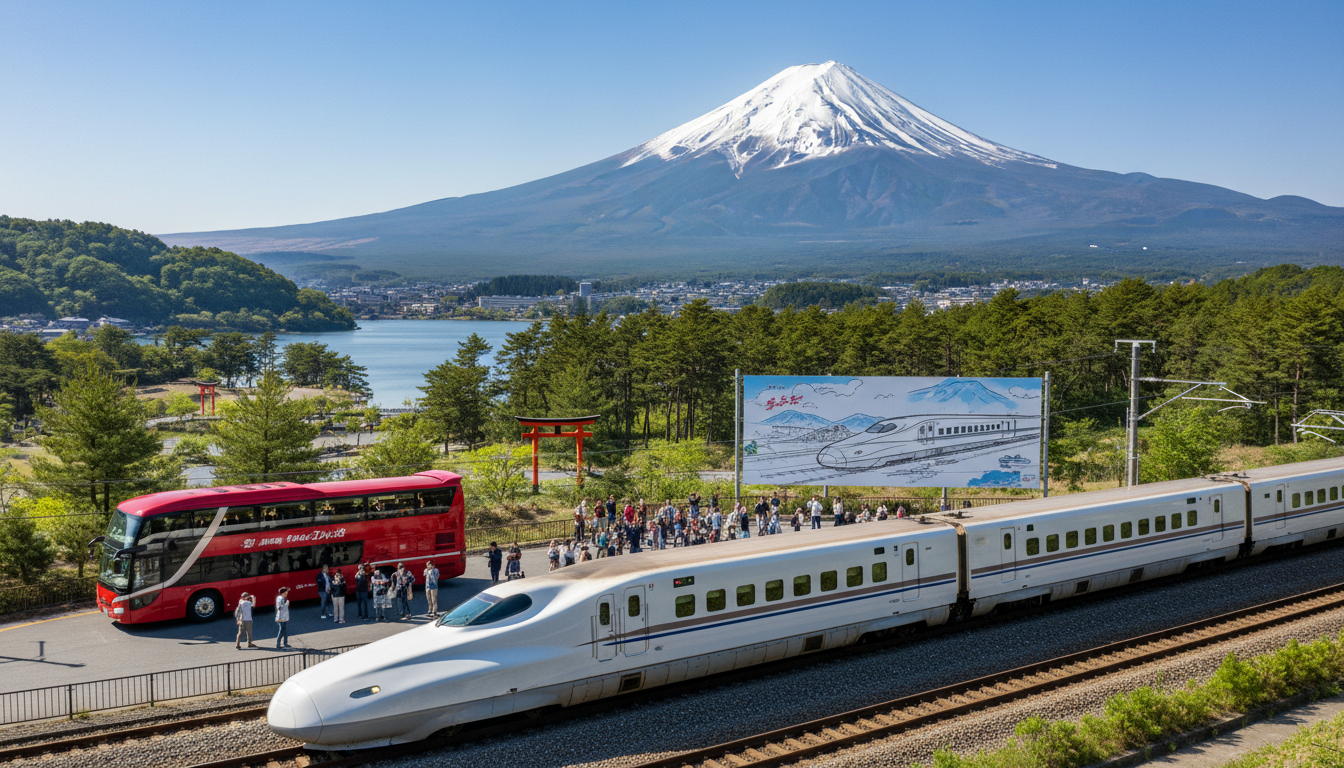
Mt Fuji and Hakone 1-Day Bus Tour Returns with Bullet Train Return to Tokyo
New full-day Mt Fuji and Hakone 1-Day Bus Tour returns with Shinkansen return — guided trip from Tokyo covering Mt. Fuji, Lake Ashi and Mt. Komagatake ropeway.
The Mt Fuji and Hakone 1-Day Bus Tour has resumed services from Tokyo, offering a full-day guided itinerary that reaches Mt. Fuji before continuing to Lake Ashi and the Mt. Komagatake Ropeway, with coach outbound and a Shinkansen bullet train trip back to the city. Operators say the reinstated schedule combines road access for the outbound leg with a high-speed rail return, aiming to shorten travel time and provide a seamless experience for day-trippers. The tour is being offered by several sightseeing companies and travel agencies catering to both international visitors and domestic travelers seeking a one-day excursion from Tokyo.
Itinerary Details and Route
The tour begins with an early coach departure from central Tokyo, typically from major pickup points in Shinjuku or Tokyo Station, and proceeds toward the Mt Fuji area by highway. Travelers are usually taken to viewpoints around the Fuji Five Lakes region, where clear-weather visibility determines whether Mt Fuji can be seen in full. After the Fuji stop, the itinerary moves on to Hakone, including a visit to Lake Ashi and an ascent by the Mt Komagatake Ropeway to view the volcanic caldera and surrounding peaks.
Boat cruises on Lake Ashi and short shore-side walks are commonly included in the Hakone leg, giving visitors an opportunity to sample seasonal scenery and local food stalls. Guides provide historical and geological context at each stop, and the tour’s schedule is sequenced to allow for lunch and short breaks while maintaining the full-day format. The return portion differentiates this offering: instead of completing the loop by coach, participants board a Shinkansen bullet train for a faster return to Tokyo.
Shinkansen Return and Travel Time
Tourists returning by Shinkansen benefit from a reduced rail travel time compared with coach-only round trips, with the high-speed segment cutting what can be a long road journey back to the metropolitan area. Organizers coordinate bus-to-station transfers in Hakone and reserve Shinkansen seats as part of the package to ensure timely departures. The combination of coach outbound and rail return is presented as a logistical improvement that minimizes road congestion exposure and offers a relaxing end to a long day.
Using the Shinkansen also introduces a more predictable arrival time in Tokyo, which appeals to travelers with evening plans or onward connections. Tour operators emphasize punctuality and coordination with rail timetables, noting that weather or traffic on the outbound coach leg can affect the scheduled return. When visibility of Mt Fuji is poor, the tour proceeds with planned stops in Hakone so the Shinkansen return still provides a reliable means to conclude the day.
What’s Included, Booking and Pricing
Packages typically include coach transportation for the outbound segment, a guided tour with English-language commentary, entrance fees for specified attractions, and a reserved Shinkansen seat for the return to Tokyo. Lunch may be provided in some options, while others allow for an independent meal stop to sample regional cuisine. Operators generally list inclusions clearly at the time of booking and advise customers about what to bring, including layered clothing and comfortable footwear.
Booking is offered through travel agencies, online platforms, and hotel concierge desks, with advance reservations recommended during peak travel seasons. Prices vary by operator, season, and whether meals and ropeway tickets are bundled, and some tours offer discounted rates for children and residents. Cancellation and refund policies differ; travelers should review terms at the point of purchase and consider travel insurance for unforeseen changes.
Seasonal Visibility and Best Times to Visit
Visibility of Mt Fuji is highly dependent on weather and season, and operators advise selecting tour dates in months traditionally known for clearer skies. Winter and early spring often yield crisp views, while summer tends to bring higher humidity and cloud cover that can obscure the summit. Hakone itself offers distinct seasonal attractions: cherry blossoms in spring, verdant greenery in summer, foliage in autumn, and clear mountain scenery in winter.
Tour guides typically tailor commentary and on-ground recommendations to the season, pointing out vantage points that maximize the chance of seeing Mt Fuji on a given day. Travelers are encouraged to check weather forecasts and understand that refunds or partial credit policies may apply if poor visibility significantly alters the planned sightseeing experience. For photographers and sightseers prioritizing views of the summit, selecting dates during drier months increases the likelihood of clear panoramas.
Accessibility, Luggage and Visitor Guidance
The tour is structured as a full-day excursion and requires participants to be mobile enough for short walks, stair ascent at ropeway stations, and boarding and disembarking coaches and trains. Accessibility provisions vary by operator; wheelchair users and those with limited mobility should consult providers in advance for accommodations and to confirm the availability of accessible transport and facilities. Luggage allowances are typically limited to daypacks and small carry-ons, as coach and ropeway vehicles have restricted storage.
Visitors are advised to dress in layers, bring sun protection and rain gear as needed, and carry necessary personal items such as medications and hydration. Because the itinerary includes higher-elevation stops, temperatures can be several degrees cooler than in central Tokyo, so an extra layer is recommended even in summer. Guides will often provide safety briefings for ropeway rides and lake cruises and will outline procedures in case of sudden weather changes or schedule adjustments.
Local Economic Effects and Operator Notes
The resumption of this full-day Mt Fuji and Hakone 1-Day Bus Tour reflects broader efforts by local tourism stakeholders to revive day-trip demand from Tokyo and support businesses in the Fuji Five Lakes and Hakone areas. Tour operators, hotels, and attraction managers have coordinated to streamline operations that combine coach access with Shinkansen returns, aiming to boost visitor throughput while managing peak congestion. Local vendors around Lake Ashi and ropeway terminals have reported increased interest in packaged tours that bring steady flows of day visitors.
Operators emphasize sustainable practices in communications with customers, encouraging reduced waste, the use of designated paths, and respectful behavior at natural sites. Some companies have introduced capacity controls, staggered departure times, and multilingual guidance to balance demand with conservation goals. The combined transport model is presented as a way to distribute visitors more evenly across the day and reduce the environmental footprint associated with long coach-only returns.
Traveler Tips and Alternatives
Travelers considering the Mt Fuji and Hakone 1-Day Bus Tour should compare itineraries, departure points, and inclusion lists before booking, and verify pickup locations relative to their Tokyo accommodations. Those seeking a more flexible schedule may prefer self-guided options using public transport, while visitors prioritizing convenience and commentary might opt for the guided package with Shinkansen return. For photographers and hikers, an overnight stay in the area can provide additional chances to capture sunrise or sunset views of Mt Fuji.
When booking, check whether the Shinkansen segment is on the standard service or a reserved seat on a specific train model, and confirm exact return station details in Tokyo. Travelers with early morning departures should allow extra time for urban traffic to coach pickup points, and families with small children should check for child rates and seating arrangements. Lastly, travelers are encouraged to carry cash for small purchases in Hakone, where some stalls and vendors may not accept cards.
Operators continue to refine logistics to respond to demand and seasonal conditions, and several travel companies are promoting the combined coach-and-bullet-train format as a practical compromise between cost and speed. For day-trippers based in Tokyo who want to experience Mt Fuji and Hakone without an overnight stay, the tour offers a concentrated introduction to the region’s landscape and heritage.
The Mt Fuji and Hakone 1-Day Bus Tour balances access and convenience, combining highway coach travel for flexible sightseeing with a Shinkansen return to reduce time on the road and ensure a timely arrival back in Tokyo. This reinstated service aims to serve both international visitors and domestic travelers looking for a single-day escape from the city, while providing operators with a more efficient routing that supports local tourism recovery.

