
Tai Chi Health Benefits Gain Attention as World Tai Chi Day Highlights Balance, Immunity and Sleep
World Tai Chi Day events spotlight Tai Chi health benefits, with research showing gains in balance, immunity, stress reduction and sleep across age groups worldwide.
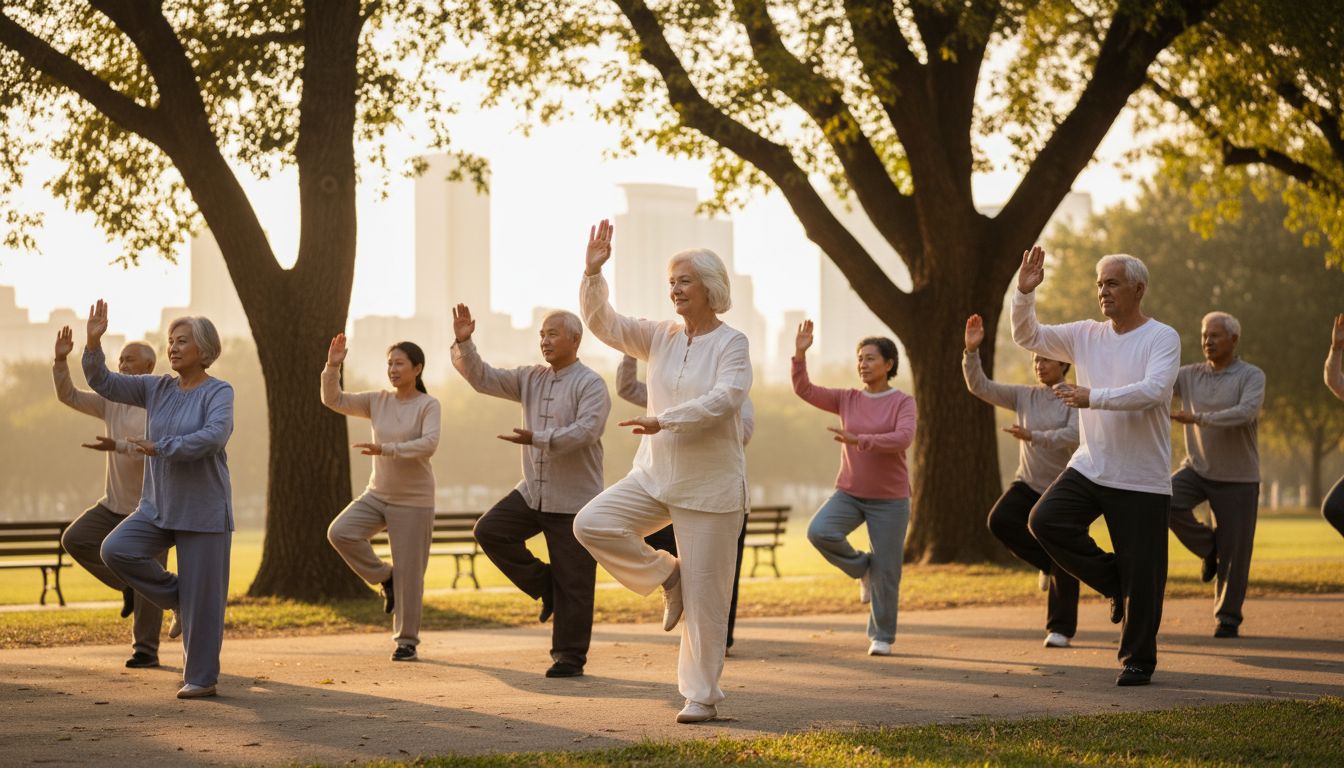
Tai Chi has drawn renewed attention this spring as communities prepare for World Tai Chi Day on April 27, an annual event that showcases the practice’s growing reputation for improving health. Public demonstrations and local classes are being promoted as more than cultural displays: experts and recent studies increasingly characterize Tai Chi as a low‑risk, high‑value practice for physical and mental well‑being.
Global participation brings focus to practice
World Tai Chi Day is observed by thousands of participants across more than 80 countries each year, combining martial traditions with public health messaging. Organizers use the occasion to promote Tai Chi health benefits to broad audiences, from schoolchildren to older adults.
The event typically features group forms, sword and fan demonstrations, and beginner workshops intended to lower barriers to entry. In many cities, local governments and health organizations partner with instructors to offer free or subsidized sessions aimed at demonstrating practical health outcomes.
Styles and suitability for different populations
Tai Chi is not a single uniform activity but a family of styles, including Yang, Chen, Sun, Wu and Hao, each emphasizing different movement patterns and intensities. Yang style is commonly taught to large groups for its slow, flowing movements, while Chen incorporates more vigorous jumps and martial techniques suited to physically fit practitioners.
Instructional choice matters for outcomes: higher‑stance and compact styles such as Sun or Wu may suit older adults and those with limitations, whereas Chen can offer greater cardiovascular and strength benefits for younger or more athletic students. Instructors and class descriptions should be reviewed to match style and pace with individual needs.
Targeted programs for specific conditions
A growing number of certified programs tailor Tai Chi sequences to particular health concerns, including arthritis, fall prevention, back pain, osteoporosis and diabetes. The Tai Chi for Health Institute and other training bodies have developed structured curricula that are taught by certified instructors in community settings and clinical programs.
Public health agencies, including the Centers for Disease Control and Prevention, have cited evidence supporting these targeted programs as complementary interventions. Such courses are intended to be gentle, progressive and adaptable, enabling participants with chronic conditions to practice safely under instructor guidance.
Evidence on balance, falls and mobility
Clinical research has repeatedly linked Tai Chi practice with improved balance and reduced falls among older adults. One randomized exercise trial reported substantially fewer falls among participants who practiced a simple eight‑movement Tai Chi routine several times weekly compared with those in stretching or mixed‑exercise groups.
The practice’s emphasis on weight shifting, single‑leg stances and core engagement appears to retrain postural responses and enhance proprioception. For communities and care providers, incorporating Tai Chi into fall‑prevention strategies offers an accessible, nonpharmacological option with measurable outcomes.
Physiological studies on stress, immunity and sleep
Researchers have explored Tai Chi’s effects beyond mobility, documenting reductions in physiological stress markers and improvements in mood. Laboratory measurements have shown changes in heart rate variability and brainwave activity consistent with reduced sympathetic arousal after regular practice.
Studies of older adults also suggest enhanced immune responses: participants in some trials displayed higher antibody levels following vaccination when they had engaged in ongoing Tai Chi practice. Separate trials and observational studies report better sleep quality among both anxious young adults and seniors with cognitive impairment who attended Tai Chi classes regularly.
Practical guidance for finding classes in Japan
Those interested in trying Tai Chi in Japan can often find classes at municipal community centers, senior clubs, public health centers, and private martial arts studios. Many YMCAs, sport complexes and hospital outpatient programs also include Tai Chi either as part of rehabilitation or wellness programming.
When selecting a class, look for instructors who describe experience with health‑oriented forms, a clear progression for beginners, and accommodations for mobility limitations. Prospective students should inform instructors of medical conditions and, where appropriate, consult a healthcare provider before starting a new exercise regimen.
Local language offerings, online streaming classes, and specialized Tai Chi for Health curricula make it easier to begin regardless of fitness level. For older adults or people recovering from injury, short, frequent sessions and classes focused on balance or arthritis can deliver early, encouraging results.
As interest grows, municipal health campaigns and community organizers are increasingly citing Tai Chi health benefits in public outreach and preventive care efforts. Whether practiced as a gentle form of movement, a complement to medical care, or a community activity, Tai Chi offers a wide range of documented benefits that make it worth trying for many residents.

