
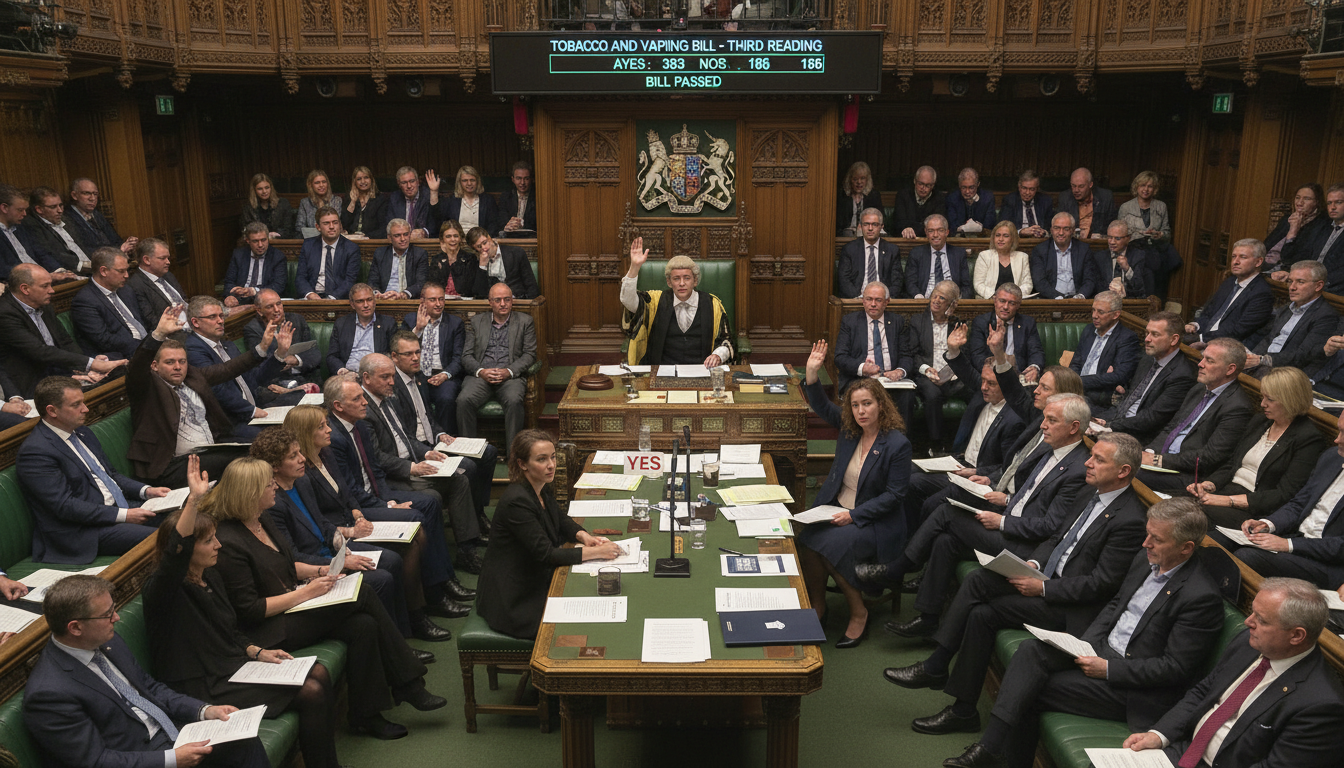
Tobacco and Vapes Bill clears Parliament, pledges a “smoke-free generation” by banning lifetime tobacco sales for those born from 2009
UK Parliament passes the Tobacco and Vapes Bill, which bars anyone born on or after January 1, 2009 from ever buying tobacco and grants ministers new powers on vaping and nicotine regulation.
The United Kingdom’s Parliament approved the Tobacco and Vapes Bill on Wednesday, advancing a plan that will prevent people born on or after January 1, 2009 from ever legally purchasing tobacco. The measure, described by ministers as a step toward a “smoke-free generation,” also expands government authority to regulate vaping products, flavours and advertising.
Parliamentary approval and next steps
The bill completed its parliamentary stages this week and is expected to become law following royal assent in late April 2026. Health Secretary Wes Streeting introduced the legislation in 2024 as part of a broader public health drive to reduce smoking-related illness.
Once enacted, ministers will be able to set detailed regulations for tobacco and nicotine products, adjust permitted ingredients and limit packaging and branding targeted at children. Officials say the new framework will allow faster responses to emerging products and marketing tactics.
Scope of the lifelong sales ban
Under the law, the lifetime ban applies to anyone born on or after January 1, 2009, meaning the cohort will never be able to purchase tobacco legally at any age. Existing adult smokers will remain able to buy tobacco under current rules, distinguishing this policy as a generational prohibition rather than an immediate universal ban.
The policy effectively raises the legal purchasing age for tobacco each year for successive cohorts, institutionalising a gradual phase-out of legal tobacco access for younger generations. Retailers will be required to comply with new verification and sale restrictions under secondary regulations.
New curbs on vaping and nicotine products
The Tobacco and Vapes Bill also gives ministers strengthened powers to regulate vaping and other nicotine products. Authorities will be able to control product flavours, packaging designs and labelling that they judge to appeal to children, and may limit or ban branding aimed at younger people.
Separate provisions will prohibit vaping in specified public areas, with proposed bans in playgrounds, cars carrying children, and outside schools and hospitals. Advocates say these measures aim to reduce youth exposure to both vaping and smoking behaviours.
Public health case and projected impact
Ministers framed the bill as the most significant public health intervention of a generation, arguing it will cut future smoking rates and reduce pressure on the National Health Service. Health officials and campaigners say the measure is intended to prevent lifelong nicotine addiction and the chronic diseases linked to smoking.
Independent analyses cited during debate noted the large burden of tobacco-related disease in England, with tens of thousands of deaths and hundreds of thousands of hospital admissions annually, and multi‑billion‑pound costs to the NHS. Health charities welcomed the legislation as a long-term investment in population health.
Political debate and opposition
The bill’s trajectory reflects swings in political support; a similar approach was first proposed in 2023 and then shelved before the 2024 general election, only to be revived by the current government. The proposal has drawn criticism from some opposition figures who called for repeal if elected.
Nigel Farage, leader of Reform UK, denounced the measure as misguided and pledged to overturn it if his party gained power. Backers defended the policy as proportionate and necessary to protect children and reduce future healthcare burdens.
Challenges for implementation and enforcement
Officials acknowledge that translating the legislation into practice will require new enforcement arrangements, retailer education and public information campaigns. Authorities will need to monitor compliance, deter illicit supply and coordinate with devolved administrations on local enforcement approaches.
Public health groups and retailers have both called for clear guidance on enforcement and transitional arrangements, warning that poorly designed rules could create loopholes or disproportionate burdens on small businesses. Ministers say secondary regulations and consultations will clarify operational details.
The Tobacco and Vapes Bill marks a major shift in Britain’s approach to tobacco control by locking in a generational phase‑out of legal tobacco sales and broadening regulatory tools for nicotine and vaping products. Supporters say it will protect children from addiction and future disease, while critics forecast enforcement and choice issues that will play out in coming years.

