
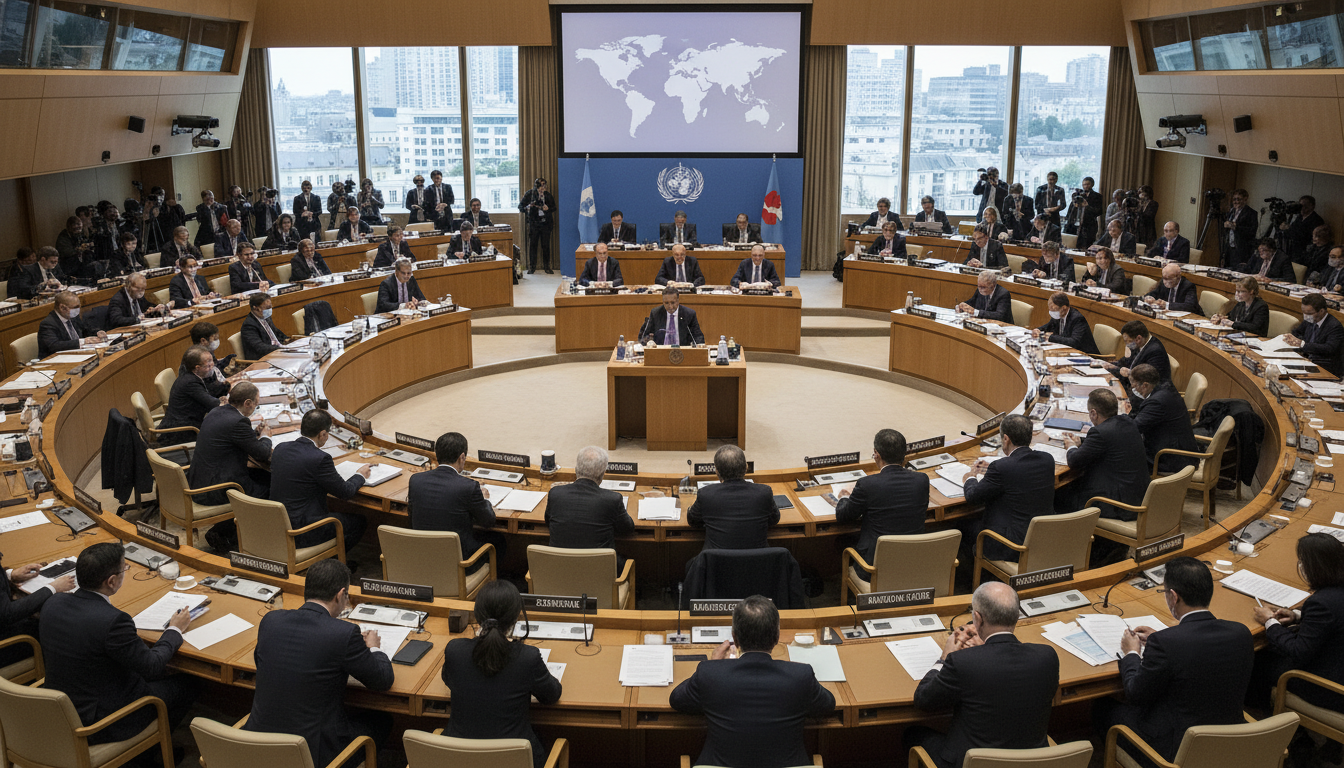
WHO Member States Extend Negotiations on Pathogen Access and Benefit Sharing Annex
WHO Member States extend negotiations on the Pathogen Access and Benefit Sharing (PABS) annex, resuming 27 April–1 May with informal talks ahead of the May World Health Assembly.
The World Health Organization’s member states have agreed to prolong talks on the Pathogen Access and Benefit Sharing annex to the WHO Pandemic Agreement, setting a resumed negotiating session from 27 April to 1 May and preparatory informal discussions beforehand. The extension aims to resolve outstanding technical and political points before the agreement is presented for consideration at the World Health Assembly in May. Delegations said the move reflects a shared priority to create an operational system for rapid pathogen sharing balanced with fair distribution of resulting vaccines, diagnostics and treatments.
Extended Schedule for PABS Negotiations
The Intergovernmental Working Group determined extra time is required to bridge differences on core text and implementation details of the PABS annex. Negotiators will meet informally in the run-up to the late-April session to narrow options and prepare compromise language that can be finalized during the resumed talks.
Officials framed the schedule extension as a targeted effort to ensure negotiators can reach consensus on complex provisions rather than rushing incomplete language into the World Health Assembly agenda. The resumed formal session is intended to produce a text that Member States can adopt or advance without reopening basic structural debates.
Key Technical and Legal Questions Remaining
Delegates identified several interlinked issues that still require resolution, including how benefits from shared pathogens will be defined, measured and allocated. Legal arrangements underpinning transfers, such as contractual terms and intellectual property safeguards, were highlighted as areas needing clear rules to avoid future disputes.
Governance mechanisms to oversee the PABS system also remain under negotiation, with discussions focusing on transparency, dispute settlement and the roles of WHO and other bodies. Member States have emphasised the need for pragmatic arrangements that can be operationalised quickly in a crisis while protecting the public interest.
Statements from WHO Leadership and Negotiators
WHO Director-General Dr Tedros Adhanom Ghebreyesus welcomed the decision to extend talks and urged delegations to build trust and solidarity as negotiations continue. He framed the PABS annex as central to delivering equitable pandemic response tools and called for a balanced outcome that serves global public health.
Co-chairs of the Intergovernmental Working Group signalled that negotiators from diverse regions are intensifying efforts to find common ground. Representatives from Brazil and the United Kingdom, both serving as IGWG bureau co-chairs, said they expected ambitious and equitable text and stressed the importance of completing work ahead of the May assembly.
Practical Mechanics: Sharing, Contracts and Benefit Distribution
At the heart of the PABS debate is a dual objective: enable rapid sharing of pathogens with pandemic potential while ensuring those who contribute gain fair access to medical countermeasures developed from that material. Delegations discussed operational pathways for transferring samples, data and associated information, alongside mechanisms to guarantee benefit flows to source countries.
Discussions touched on model contractual clauses, timelines for material transfer, and triggers for benefit distribution such as vaccine doses, licensing terms or technology transfer. Some countries pushed for legally enforceable obligations, while others favoured more flexible, voluntary frameworks to encourage rapid cooperation during emergencies.
Equity Concerns and Global Solidarity
Many Member States framed their negotiating positions through the lens of equity, warning that unequal access during the COVID-19 pandemic must not be repeated. Low- and middle-income countries have repeatedly called for stronger guarantees that vaccines, therapeutics and diagnostics arising from shared pathogens will reach vulnerable populations everywhere.
High-income delegations acknowledged the equity imperative but raised questions about incentives for private-sector participation and the legal feasibility of certain distribution commitments. Delegates said negotiators are exploring blended approaches combining binding obligations, financial mechanisms and voluntary partnerships.
Path to Adoption at the World Health Assembly
With the World Health Assembly scheduled for May, the IGWG plans to submit a consolidated PABS text for assembly consideration, contingent on successful late-April negotiations. Member States said the goal is to arrive with a draft annex that reflects compromise across competing priorities and can secure the broad support needed for adoption.
If consensus remains out of reach, delegates indicated the assembly could be asked to endorse further intersessional work or set a timetable for finalisation. However, most negotiators expressed determination to complete the annex given its central role in the broader WHO Pandemic Agreement.
The decision to extend negotiations underscores the complexity of balancing rapid pathogen sharing with fair benefit distribution, and it highlights the diplomatic effort required to translate pandemic lessons into durable, equitable rules. As talks resume, delegations will be under pressure to convert commitments into clear, implementable language that can withstand the scrutiny of Member States at the World Health Assembly in May.

