
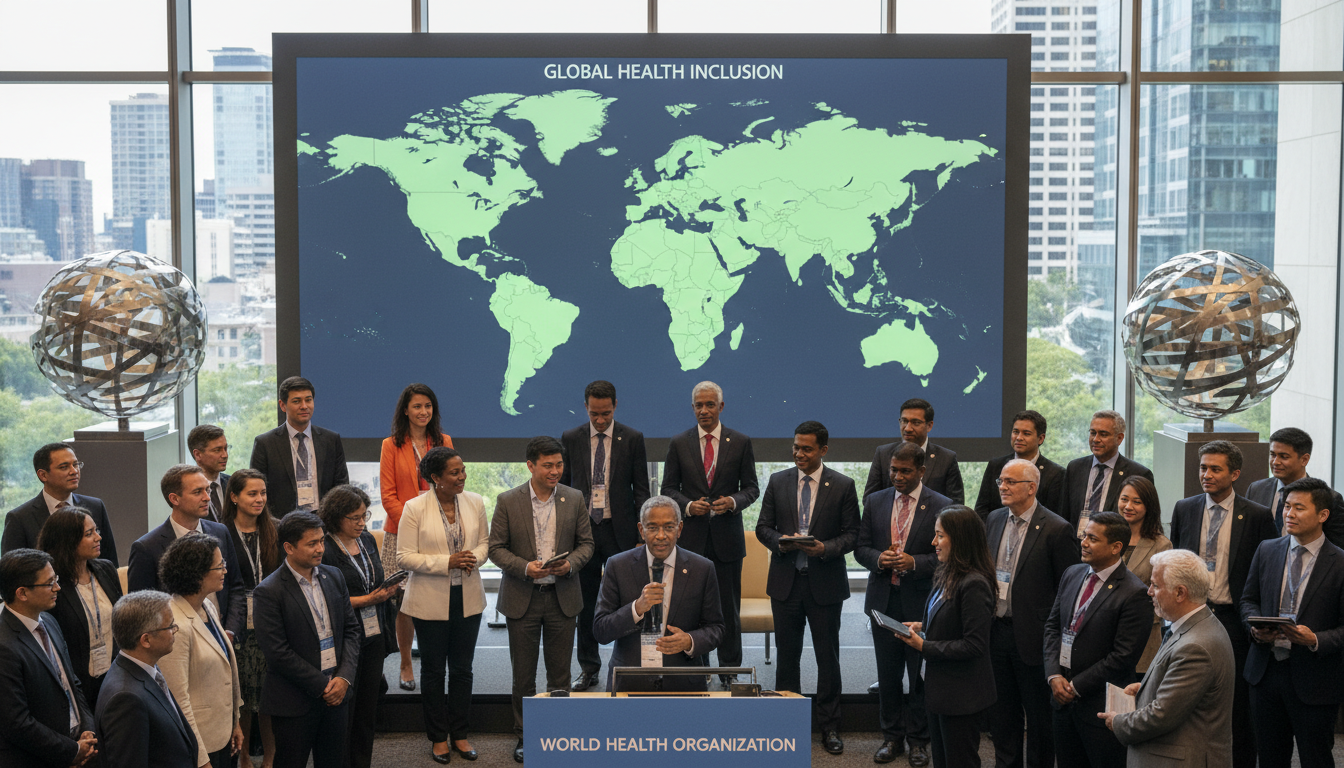
WHO: Two-thirds of countries now include refugee and migrant health in national laws, WHO report finds
WHO report finds two-thirds of countries include refugee and migrant health in national frameworks; progress set against gaps in data, training and emergency planning.
The World Health Organization says a new global report establishes the first baseline for refugee and migrant health, showing that more than 60 countries now include refugees and migrants in national health policies and laws. The assessment, drawn from responses by 93 Member States, marks a major policy shift toward inclusive, migrant-responsive health systems. WHO officials say the findings underline both the gains in policy inclusion and the continuing gaps in data, preparedness and culturally sensitive care for displaced and mobile populations.
WHO establishes the first global baseline on migrant and refugee health
The report compiles national responses from 93 Member States to measure progress on integrating refugee and migrant health into health systems. WHO presents the data as a starting point for annual tracking and policy accountability at global, regional and national levels.
WHO emphasizes that this baseline will help governments and partners monitor where inclusion is underway, where services remain patchy, and which interventions most effectively promote health equity for migrants and refugees.
Two-thirds of surveyed countries include migrants in laws and policies
According to WHO, over 60 countries — roughly two thirds of those surveyed — now include refugees and migrants in national health policies or legislation. The change reflects growing political willingness to recognize mobile populations in health planning and legal frameworks.
WHO notes that inclusion in law does not automatically ensure access to services, but it provides a policy foundation to expand coverage, finance care and coordinate multisectoral responses that reach diverse migrant groups.
Significant gaps persist in data, preparedness and training
The report highlights several persistent shortfalls: only around 37% of reporting countries routinely collect migration-related health data within national health information systems. Fewer than half include refugees and migrants in emergency preparedness and disaster-response plans.
Training is another weak point. Under 40% of countries report systematic training for health workers in culturally responsive care, and only about 30% have implemented targeted communication campaigns to combat misperceptions and discrimination against refugees and migrants.
Access remains uneven across migrant groups
WHO warns that service access varies considerably by legal status and setting. Refugees who are part of formal resettlement or protection frameworks often have better access, while migrants in irregular situations, internal displacement settings, migrant labourers and international students face inconsistent coverage.
The report also finds limited participation of refugees and migrants in health governance and decision-making processes, reducing the opportunity to design services that reflect lived experience and local needs.
Country case studies illustrate practical advances
The report includes examples from all six WHO regions showing how inclusion can be operationalized. Thailand’s expansion of migrant health insurance, Belgium’s use of cross-cultural communication mediators, and Chile’s integration of migrant community representatives into primary health planning are cited as models.
WHO presents these case studies as practical templates that other countries can adapt, underscoring that context-specific approaches and community engagement are central to improving refugee and migrant health outcomes.
Digital verification and partnerships to support continuity of care
WHO highlights a new development in digital health that could improve continuity of care: the International Organization for Migration has become the first international organization to join the WHO-hosted Global Digital Health Certification Network. The move aims to enable secure verification of health records across borders.
WHO says interoperable digital systems, combined with stronger data practices, can help migrants access verifiable health information wherever they move, while protecting privacy and supporting cross-border clinical continuity.
WHO urges coordinated action and sustained financing
The organization calls on governments, donors and partners to accelerate inclusion by embedding refugees and migrants across health policies, improving disaggregated data collection, and coordinating across sectors such as housing, education and social protection. WHO also urges tailored strategies for different migrant subgroups and meaningful inclusion of migrant voices in governance.
WHO stresses the importance of training health workers in culturally sensitive care, countering misinformation and discrimination, and safeguarding financing so that policy gains translate into tangible services and stronger health security for all populations.
The WHO baseline underscores that refugee and migrant health is increasingly part of national policy agendas, yet turning commitments into consistent services will require better data, multisectoral coordination, community engagement and predictable funding.

