
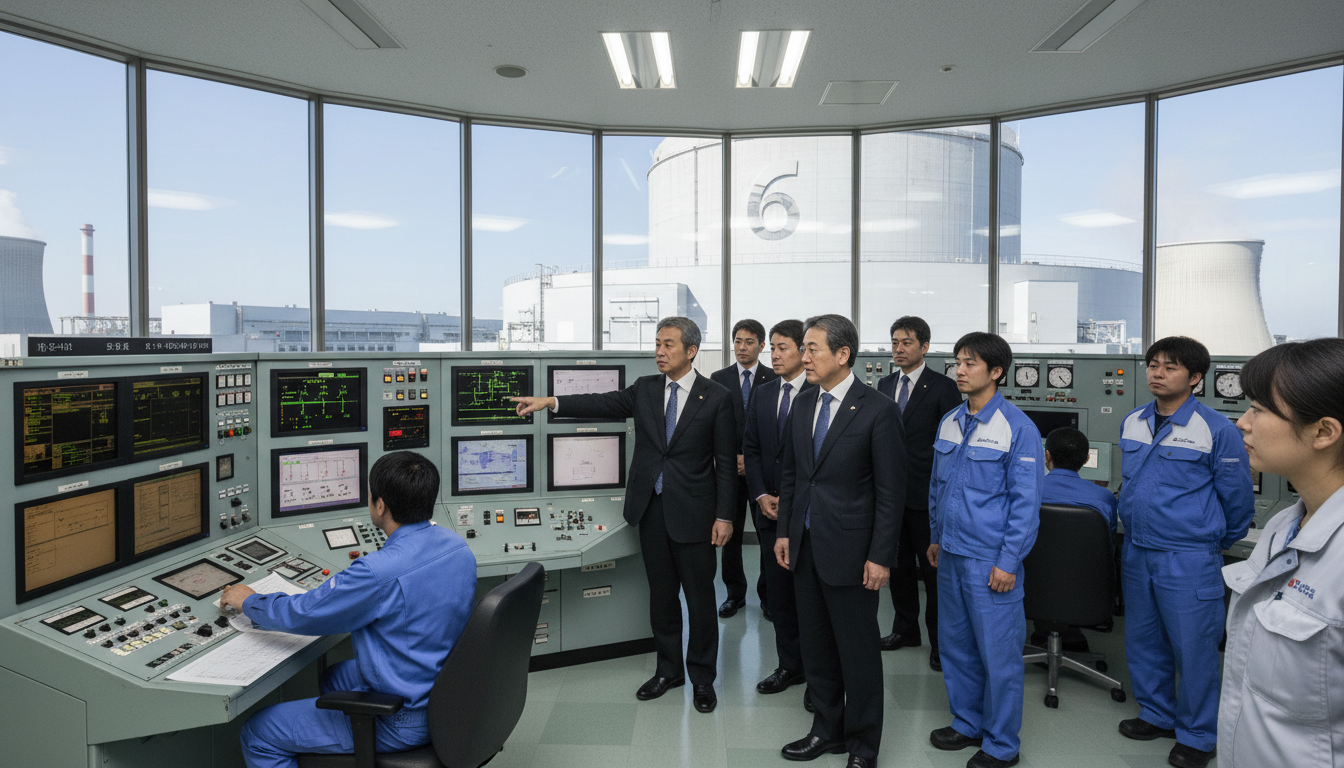
Tepco Restarts Kashiwazaki-Kariwa No.6 Reactor in First Commercial Restart Since Fukushima
Tepco resumed commercial operation of Kashiwazaki-Kariwa No.6 reactor at 4 p.m. Thursday, marking the utility’s first commercial restart since the 2011 Fukushima disaster.
Tokyo Electric Power Company Holdings (Tepco) announced the full commercial restart of the Kashiwazaki-Kariwa No.6 reactor at 4 p.m. on Thursday, restarting a unit that has been offline for about 14 years. The Kashiwazaki-Kariwa No.6 reactor restart is the first commercial resumption of operations by Tepco since the 2011 Fukushima nuclear accident and follows a final round of inspections conducted earlier in the day. The plant is located in Niigata Prefecture, and Tepco said the unit showed no abnormalities during full-capacity checks.
Reactor No.6 Returns to Full Commercial Operation
The No.6 reactor entered full commercial operation at 4 p.m., according to the company statement, moving from test runs to routine electricity production. Tepco said the unit completed a pre-operation inspection that confirmed normal performance in the reactor, generator and turbine while operating at full output. The company then issued an internal certificate confirming completion of the pre-use checks to plant general manager Takeyuki Inagaki.
Final Inspections Found No Abnormalities
Tepco reported that the final pre-operation inspection carried out earlier on Thursday detected no abnormalities in key systems, enabling the utility to proceed with commercial loading. Officials inspected mechanical and electrical systems during full-capacity operation and verified the integrity of equipment before issuing the certificate. The certificate was handed to the plant’s general manager as the formal sign-off allowing the No.6 unit to begin supplying power commercially.
Delays Followed Technical Issues After January Restart
The commercial restart had originally been scheduled for late February but was pushed back by roughly 50 days after a sequence of technical issues arose following an initial return to service in January. Tepco paused the commercial handover to investigate and resolve those issues, citing the need for additional checks before declaring routine operation. Company statements indicated the additional time was used to conduct targeted inspections and retuning to ensure stable, long-term operation.
First Commercial Restart for Tepco Since 2011
The Kashiwazaki-Kariwa No.6 reactor restart marks a milestone for Tepco as the first reactor the utility has placed back into commercial service since the Fukushima Daiichi crisis in 2011. The restart is likely to be viewed within Japan’s broader efforts to balance energy security, emissions targets and public safety concerns. Tepco has been under heightened scrutiny since the disaster, and this resumption is the latest step in a cautious program of returning select reactors to service after regulatory reviews and upgrades.
Local and Operational Context in Niigata Prefecture
Kashiwazaki-Kariwa, located on the Sea of Japan coast in Niigata Prefecture, has long been a focal point for local economic and safety discussions tied to nuclear generation. Plant operations historically contribute to local employment and municipal revenues, while community groups and municipal authorities maintain strong interest in safety assurances and transparent information from the operator. Tepco’s confirmation of completed inspections and the issuance of the procedural certificate will be central to communication with local stakeholders in the coming days.
The company did not provide new projections for the unit’s contribution to regional power supply, but commercial operation means the reactor will begin feeding electricity into the grid under normal dispatch. Tepco must continue routine monitoring and periodic reporting as the reactor transitions into sustained service.
Tepco’s restart of Kashiwazaki-Kariwa No.6 will be watched by policymakers and industry observers as part of Japan’s energy policy recalibration, which balances nuclear capacity, renewable deployment and fossil fuel use. The utility will also need to maintain a visible record of compliance with safety checks to address lingering public concern stemming from the 2011 events.
The Kashiwazaki-Kariwa No.6 reactor restart comes after extensive checks and a temporary delay to resolve technical matters discovered after an earlier reactivation. Tepco’s declaration that no abnormalities were found in the reactor, generator and turbine allowed the company to formally certify pre-use inspections and resume commercial electricity production. As the unit moves into routine operation, Tepco and local authorities will continue to monitor performance and communicate updates to the public.

