
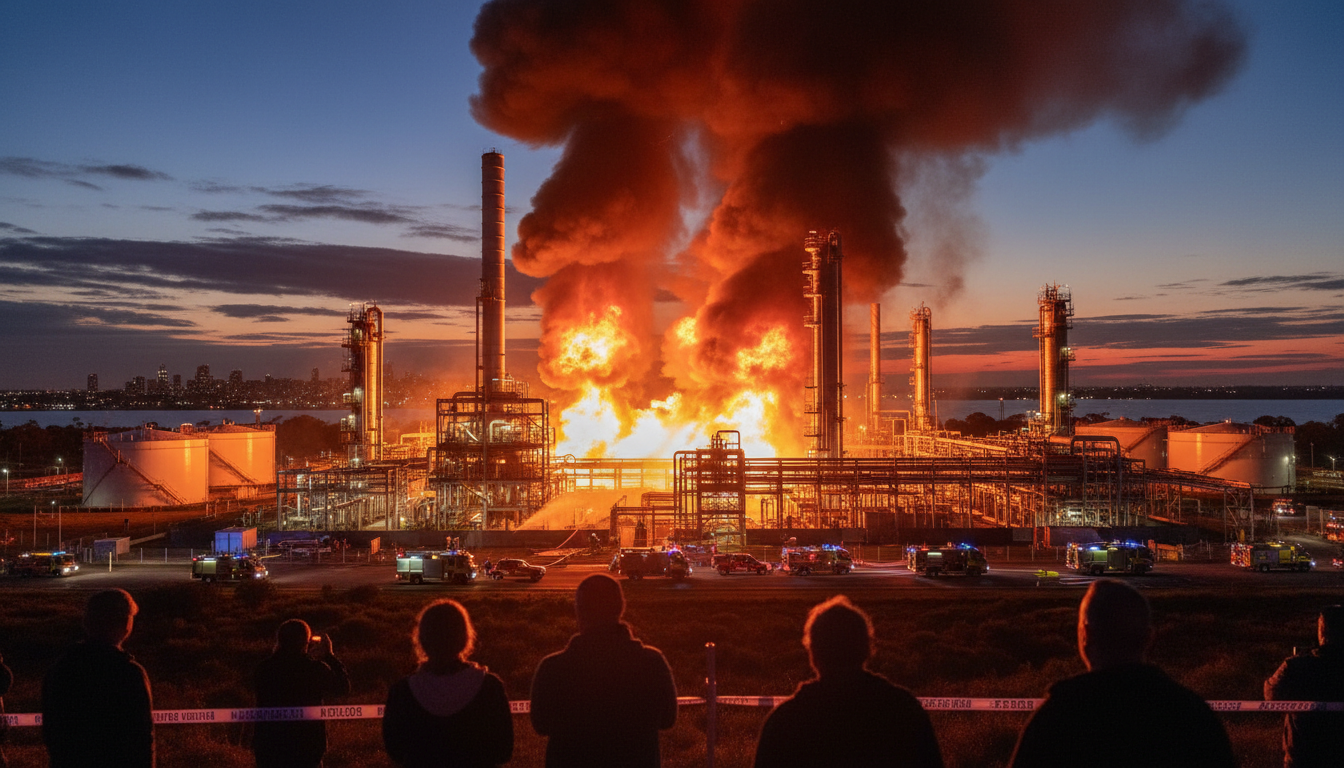
Geelong refinery fire deepens petrol shortages as Canberra seeks emergency imports
Geelong refinery fire halts output at Viva Energy’s Geelong plant, worsening petrol supply in southeast Australia as Canberra seeks emergency imports from Asia.
A major fire at the Viva Energy Geelong refinery has halted operations and further strained petrol supplies to several southeastern Australian states. The Geelong refinery fire — at one of the country’s two remaining processing plants — intensified concerns over fuel security already heightened by disruptions to global supply linked to the U.S.-Israeli war on Iran. Canberra officials said the federal government is urgently seeking additional shipments from Asian suppliers to stabilise domestic markets.
Major blaze at Viva Energy Geelong refinery halts production
The blaze occurred in the facility’s processing area late in the week, forcing an immediate shutdown of affected units and triggering on-site emergency protocols. Local emergency services and refinery safety teams concentrated on extinguishing flames and containing hazardous materials as a precautionary measure. Viva Energy confirmed operations at the Geelong site were suspended while a safety and damage assessment was carried out.
Supply disruption felt across southeastern Australia
The Geelong refinery fire has reduced local refining capacity, translating into tighter supplies of petrol and diesel for states and territories in the southeast. Retailers and wholesalers report increased pressure on delivery schedules and inventory levels, with some service stations beginning to experience lower on-shelf availability. Industry analysts warn that, absent prompt alternative shipments, motorists in metropolitan and regional areas could face higher prices and intermittent shortages.
Federal response: emergency imports and coordination
Prime Minister Anthony Albanese’s office said Canberra is actively engaging with Asian suppliers and trading partners to secure emergency fuel imports to cover shortfalls. Federal agencies are coordinating with state governments to prioritise distribution to critical services and transport hubs while monitoring wholesale markets. Officials also indicated that strategic petroleum reserves and commercial stockpiles are being reviewed to determine how best to cushion immediate impacts.
Damage assessment, investigations and restart timeline
Viva Energy and workplace safety regulators have begun a joint inspection to determine the cause and extent of damage from the Geelong refinery fire. Engineers will assess structural integrity, processing units and control systems before planning repairs and a phased restart of production. Company spokespeople cautioned that exact timelines remain uncertain and will depend on investigation outcomes and the availability of replacement parts and specialist contractors.
Market reaction and price implications for consumers
Wholesale fuel margins moved higher amid news of the Geelong refinery fire as traders priced in tighter regional supplies and potential transport bottlenecks. Pump prices are likely to rise if imports do not arrive quickly enough to offset lost output, industry observers said. The combination of domestic refining disruption and elevated international shipping and insurance costs related to geopolitical tensions may prolong pressure on retail fuel costs in the months ahead.
Policy debate intensifies over refining capacity and resilience
The Geelong refinery fire has renewed public and political debate about Australia’s long-term fuel security and the decline in domestic refining capacity. Policymakers and energy commentators are expected to scrutinise reserve policies, import dependency, and incentives for local refining or fuel storage. State and federal leaders may face calls to accelerate contingency planning and investment in logistical infrastructure to reduce vulnerability to single-site disruptions.
The government and Viva Energy said they will provide regular updates as investigators complete damage reviews and as imported shipments are arranged. In the short term, authorities urged businesses and consumers to avoid panic buying and to use fuel prudently while contingency supplies are mobilised.

