
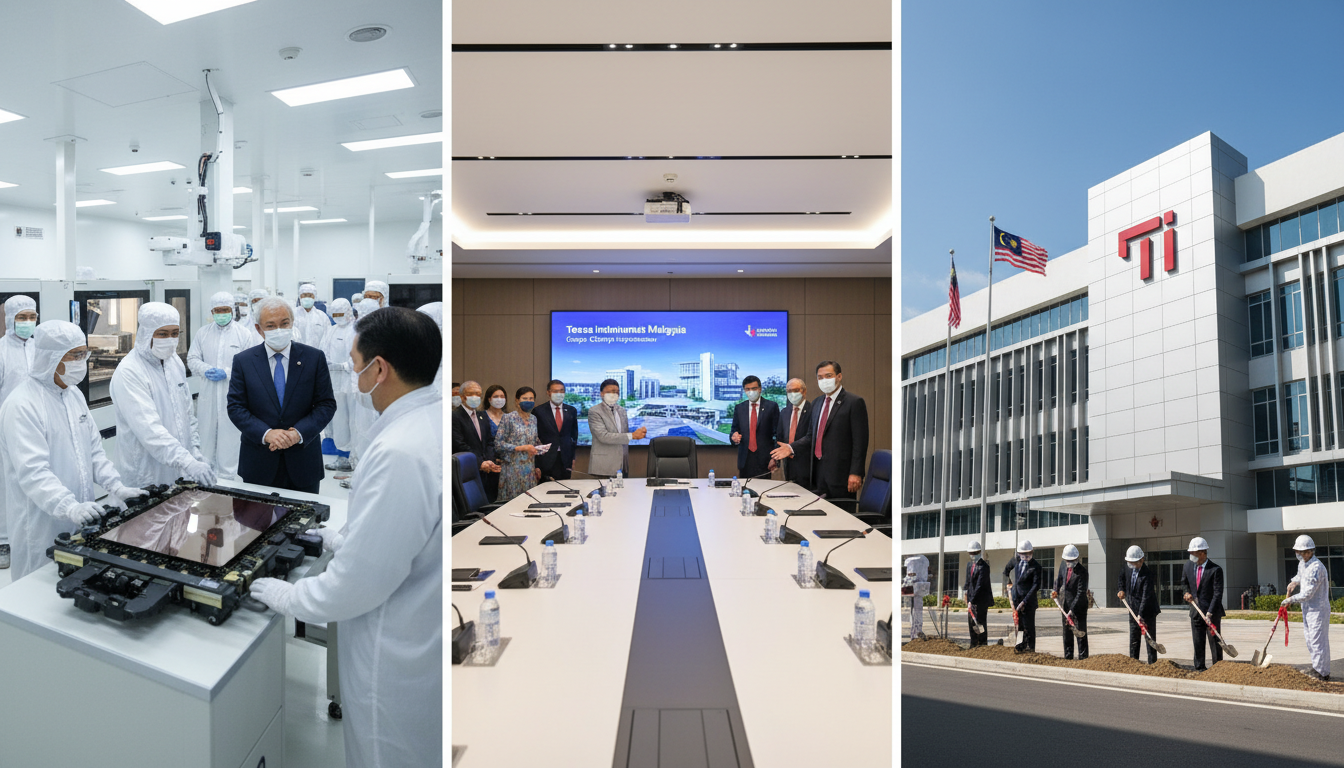
Texas Instruments expansion targets Japan, Malaysia and US to boost analog chip production for AI infrastructure
Texas Instruments expands analog semiconductor production in Japan, Malaysia and the US to meet surging AI infrastructure demand and secure supply chains.
Texas Instruments expansion into Japan, Malaysia and the United States marks a strategic push to increase production of analog semiconductors that support AI infrastructure. A senior company executive said the moves are intended to bring more “foundational” chips in-house as demand for sensing, power management and connectivity rises. The expansion reflects a broader industry shift toward diversifying manufacturing footprints for resilience and capacity.
Planned factory projects in Japan, Malaysia and the US
The company has identified multiple sites across Japan, Malaysia and the United States for new or expanded manufacturing capacity for analog chips. These facilities will focus on devices used for sensing, controlling, powering and connecting systems rather than for heavy computation. Company officials described the investments as foundational, aiming to ensure a stable supply of analog components that feed into larger AI deployments.
Executives say the projects will be staggered to align with demand and existing supply-chain constraints, with some work expected to begin in the near term while other phases roll out over several years. The approach balances near-term output increases with longer-term capacity planning to support customers building AI data centers, edge devices and industrial systems.
Analog semiconductors framed as critical for AI infrastructure
Analog chips play roles in power management, signal conversion and device interfacing that are essential to AI infrastructure but often overlooked in headlines focused on processors. Texas Instruments, the world’s largest maker of analog semiconductors, is positioning these parts as indispensable to large-scale AI deployments that require efficient power delivery, accurate sensing and robust connectivity. The company argues that increasing in-house analog capacity will help ecosystem partners scale AI systems more reliably.
Industry analysts note that while digital processors handle computation, the analog layer remains a bottleneck in many systems and benefits from close integration with manufacturing. By expanding analog output, Texas Instruments expects to reduce lead times and improve margins for customers integrating sensors, power regulators and interface components into AI hardware stacks.
Investment scale and production goals
Company statements indicate the investments are significant though precise dollar figures and specific production targets have not been disclosed publicly. The expansion will cover wafer fabrication, assembly and testing capabilities tailored to analog device requirements, including higher-voltage process technologies and legacy nodes still in widespread use. Executives emphasize that ramping internal capacity is intended to complement, not replace, partnerships with foundries and subcontractors.
Operational plans reportedly include targeted upgrades to existing plants as well as greenfield development where logistics, workforce and supplier ecosystems support long-term production. The phased strategy seeks to match capital deployment with expected market uptake for analog components driven by AI-related applications.
Regional supply-chain impacts and industrial partnerships
The moves into Japan and Malaysia are likely to deepen local supplier networks and create opportunities for component assembly and testing services in those markets. In Japan, existing electronics clusters and engineering talent offer advantages for rapid integration of analog production lines. Malaysia’s established semiconductor manufacturing base and competitive operating costs make it an attractive site for both assembly and certain wafer processes.
In the United States, expansion aims to secure domestic supply for critical customers and to align with policy incentives encouraging local semiconductor capacity. Across all three regions, Texas Instruments plans to work with regional suppliers and logistics providers to shorten lead times and increase supply-chain resilience against geopolitical and pandemic-related disruptions.
Market reaction and competitive landscape
Market participants and competitors are watching the expansion as a sign that demand for analog components will sustain multi-year growth tied to AI deployments. Firms that supply materials, assembly services and test equipment could see increased orders as new lines come online. Competitors focused on mixed-signal and power-management devices may respond with their own capacity moves or partnerships to protect market share.
Customers in automotive, industrial automation, telecommunications and cloud infrastructure view increased analog capacity as broadly beneficial, lowering the risk of shortages that could delay system rollouts. Analysts caution that bringing production online involves lead times and technical challenges, so the market impact will unfold over quarters rather than overnight.
The Texas Instruments expansion underscores a pragmatic recalibration across the semiconductor sector: while advanced logic chips capture headlines, the analog components that enable sensing, power and connectivity are equally critical to scaling AI infrastructure. By broadening its manufacturing footprint in Japan, Malaysia and the US, the company aims to secure supply, reduce bottlenecks and better serve customers building the next generation of intelligent systems.

