
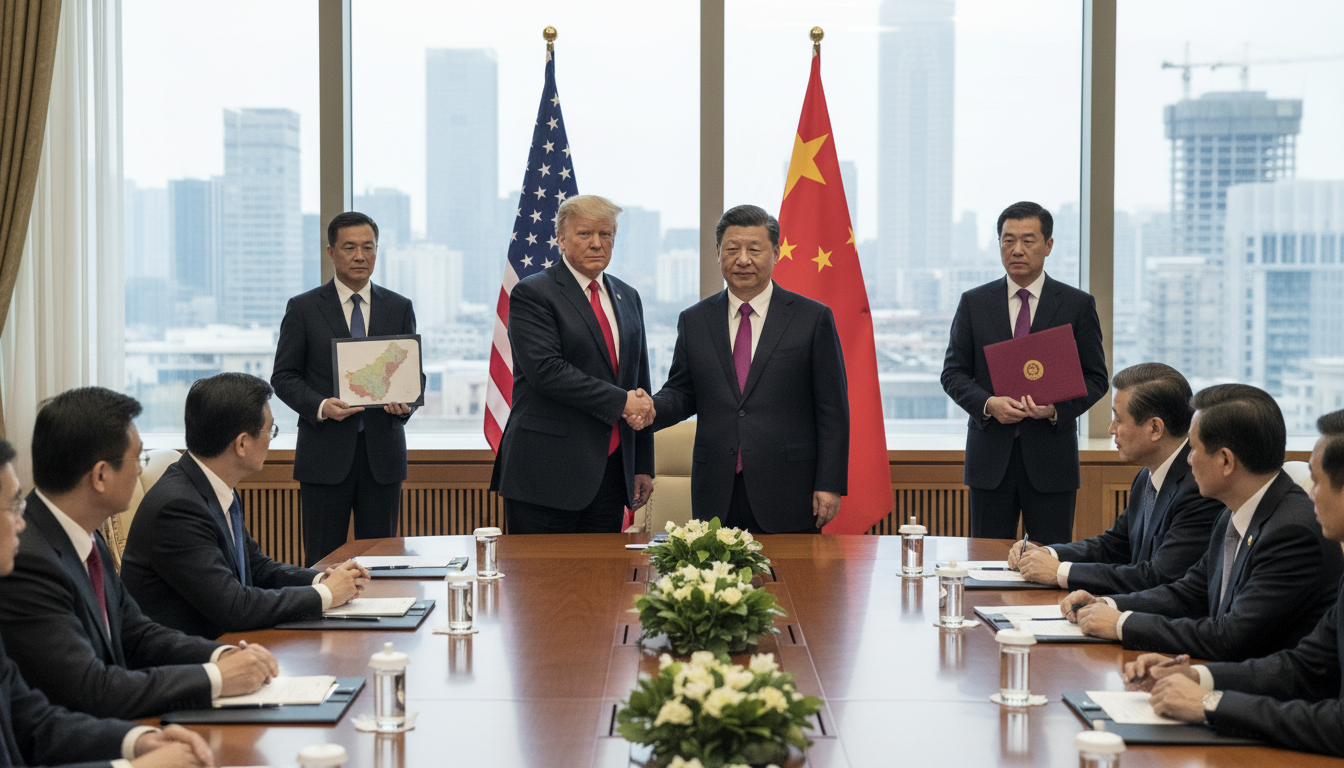
Trump’s visit to China opens on May 13, 2026, with Taiwan a central focus
Trump’s visit to China begins May 13, 2026, with talks on trade, Iran and Taiwan. Tokyo watches closely as outcomes could reshape regional security and economy.
Opening summit in Beijing
President Donald Trump arrived in Beijing on May 13, 2026, to meet with Chinese President Xi Jinping in a high-stakes summit that officials say will cover trade frictions, Middle East tensions and the sensitive issue of Taiwan. Trump’s visit to China comes nearly nine years after his previous trip and takes place amid shifting power balances and heightened strategic competition. Both capitals have signaled a mix of practical negotiation and careful posturing as leaders prepare for direct talks.
Agenda set: trade, Iran and Taiwan
Diplomatic aides in Washington and Beijing indicated the agenda will include commerce, energy security and stabilizing channels of communication on Iran-related tensions. Observers expect negotiators to press discussions on tariffs, supply-chain resilience and market access while also addressing recent Middle East developments that have raised concerns about maritime security. Above those items sits Taiwan, which officials on both sides identify as the most delicate and potentially explosive topic of the visit.
China’s long-term preparations
Analysts note that China has prepared extensively for the meeting, deploying diplomatic and economic instruments to strengthen its negotiating position. Experts point to Beijing’s recent moves to deepen economic ties across Asia and its measured military signaling near Taiwan as part of a broader strategy to shape outcomes at the summit. The contrast with the geopolitical landscape nine years ago is widely cited by scholars and policy analysts as a key factor shaping China’s approach to the talks.
Signals of limited cooperation
Officials on both sides have also shown signs of limited, pragmatic cooperation ahead of the summit. Washington and Beijing recently presented a rare public alignment on maritime transit, with U.S. State Department statements noting that both countries oppose the imposition of transit fees in strategic waterways. Such agreements suggest channels for tactical coordination exist even as broader strategic rivalry continues.
Tokyo’s watchful posture
Japan’s government and business leaders are closely monitoring the talks for implications on security and commerce, particularly regarding Taiwan and semiconductor supply chains. Tokyo faces the twin imperatives of maintaining close security ties with the United States while managing a complex economic relationship with China. Japanese officials have said privately that any shifts in cross-strait dynamics or new economic measures could require rapid policy adjustments at home.
Domestic politics and diplomatic optics
For both leaders, the visit carries significant domestic political weight and symbolic value. Trump arrives seeking concrete gains that can be framed as practical achievements, while Beijing aims to display stability and influence without escalating tensions. The optics of the summit—public statements, joint communiqués and side agreements—will be analyzed for signs of convergence and divergence on core bilateral issues.
The outcome of the talks in Beijing is likely to determine whether this visit becomes a starting point for managing specific bilateral problems or a momentary détente that leaves deeper strategic rivalries unresolved.

