
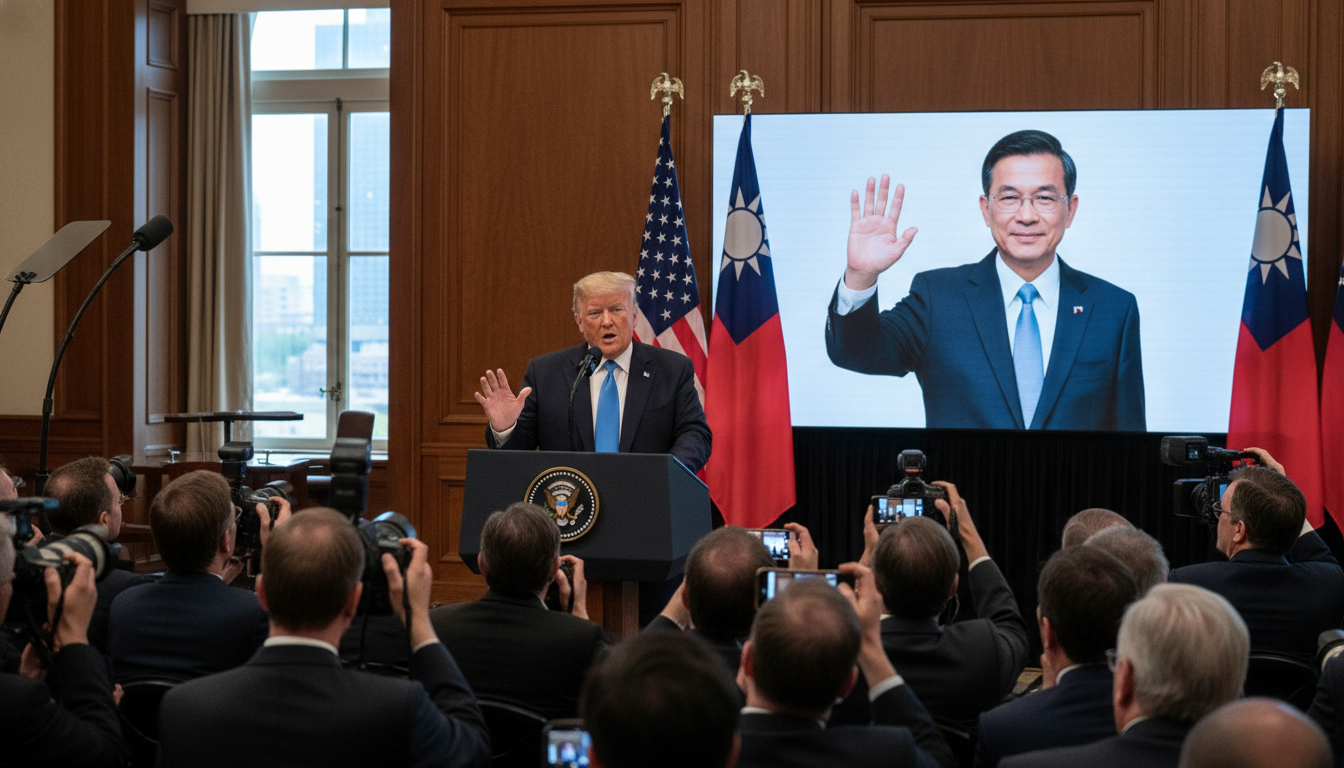
Trump Says He Will Speak With Taiwan President Lai Ching‑te, Risking Strain With China
President Trump said on May 20 he will speak with Taiwan President Lai Ching‑te, a move that could heighten tensions with Beijing and reshape regional diplomatic dynamics.
On May 20, 2026, U.S. President Donald Trump told reporters he intends to speak with Taiwan’s president, Lai Ching‑te, signaling a potentially unprecedented direct contact between the leaders. The pledge to speak with Taiwan president Lai is likely to draw a sharp response from Beijing and raise questions about Washington’s approach to cross‑strait stability. White House officials said no call had been scheduled at the time, leaving the timing and substance of any conversation unclear. The announcement followed Trump’s recent visit to China and has prompted immediate scrutiny from policymakers in Washington, Taipei and Beijing.
Trump Announces He Will Speak With Taiwan President
Trump made the comment at Joint Base Andrews in Maryland as he prepared to depart the United States, saying simply, “I’ll speak to him. I speak to everybody.”
His remark came shortly after a high‑profile meeting with Chinese President Xi Jinping, underscoring a mix of conciliatory language toward Beijing and overtures to Taipei that could complicate diplomacy.
No Direct Presidential Contact Since 1979
U.S. presidents have not engaged in direct talks with Taiwanese presidents since Washington formally recognized Beijing in 1979 and shifted diplomatic recognition away from Taipei.
That long‑standing practice has been a central feature of U.S. policy aimed at managing a delicate balance between acknowledging the People’s Republic of China and maintaining robust unofficial ties with Taiwan.
Taipei Welcomes Opportunity While Stressing Status Quo
Taiwan’s President Lai has said he would emphasize his government’s commitment to maintaining the status quo across the Taiwan Strait if granted an opportunity to speak with the U.S. president.
Lai has repeatedly framed Taiwan’s position as one of defending democratic freedoms and resisting coercion, highlighting concerns about Beijing’s military buildup in the Indo‑Pacific.
Beijing’s Stance and Potential Diplomatic Fallout
China regards Taiwan as part of its territory and has not renounced the use of force to achieve reunification, making any direct contact between U.S. and Taiwanese leaders highly sensitive.
Officials in Beijing have historically reacted strongly to high‑level U.S. engagement with Taiwan, and analysts warn that a call could prompt diplomatic protests, adjustments in military posture, or other retaliatory measures.
Weapons Sales, Legal Obligations and Strategic Interests
The Trump administration has authorized significant arms transfers to Taiwan, and U.S. law requires Washington to provide the island with the means to defend itself.
Trump has also signaled uncertainty about proceeding with a proposed weapons package worth up to $14 billion, a decision that will be watched closely by lawmakers from both parties who view Taiwan as strategically vital.
Economic and Technological Stakes in the Taiwan Strait
Taiwan, with a population of about 23 million, is a crucial supplier of advanced semiconductors and ranks among the United States’ largest trading partners, tying economic interests to security concerns.
Any escalation in cross‑strait tension could disrupt global supply chains for critical technology and deepen economic risks for companies across the region.
Mixed Signals on U.S. Policy After Trump’s China Visit
Trump has described his personal rapport with President Xi as “amazing,” yet his statement about speaking with Taiwan’s president sends divergent messages about the administration’s priorities.
Policy experts say the mixed signals complicate diplomatic clarity and may force allies and adversaries alike to reassess U.S. intentions on security guarantees and regional commitments.
The White House declined to specify when a call with Taiwan’s leader might take place or to provide details of topics that would be discussed, and China’s embassy in Washington had not issued an immediate response.
As officials in Washington and Taipei consider the diplomatic and security implications, attention will focus on whether the planned contact proceeds and how Beijing elects to reply.

